China’s massive AI rollout - podcast
Source Entity
Presented by Annie Kelly with Amy Hawkins; produced by Ivor Manley, Tom Glasser and Ross Burns; executive producers Eli Block and Sami Kent
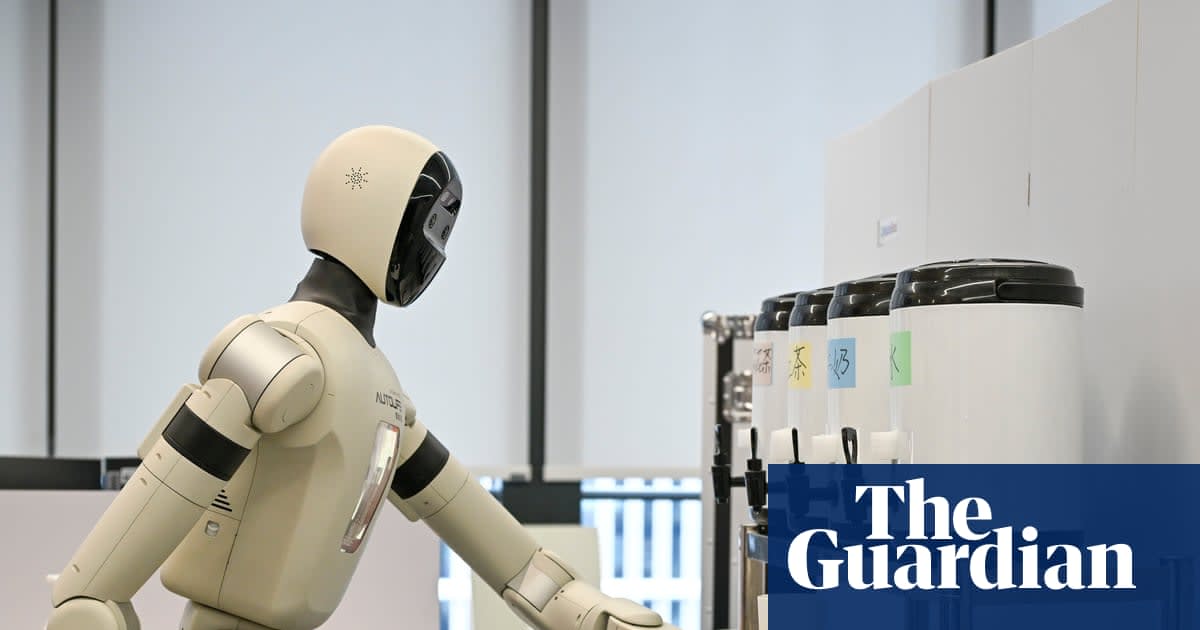
<p>Senior China correspondent <strong>Amy Hawkins </strong>on China’s embrace of AI, from medical avatars to food delivery drones and state surveillance</p><p>While the spread of AI has been met perhaps with a lot of scepticism in the west, China has fully embraced the technology, explains <strong>Amy Hawkins</strong>, from millions of users talking to AI doctors, to the use of intelligent robots in factories, and drones delivering food on the Great Wall of China.</p><p>AI has also been eagerly taken up by the state, not least in the opportunities it provides for further surveillance, the Guardian’s senior China correspondent says.</p> <a href="https://www.theguardian.com/news/audio/2026/jul/13/chinas-massive-ai-rollout-podcast">Continue reading...</a>
The Great Leap Forward into Artificial Intelligence
China is currently undergoing one of the most aggressive and comprehensive integrations of artificial intelligence (AI) in human history. As highlighted by senior correspondent Amy Hawkins, the Chinese approach to AI is characterized by a rapid, state-backed rollout that permeates almost every level of civic and commercial life. While Western nations often grapple with ethical dilemmas, regulatory hurdles, and public skepticism regarding AI's role in society, China has largely bypassed these hesitations in favor of speed and scale. This divergence creates a stark contrast in how the two global powers perceive the utility and risk of autonomous systems.
Revolutionizing Public Services and Healthcare
One of the most striking examples of this rollout is the deployment of AI medical avatars. In a country with a massive population and a chronic shortage of high-quality healthcare providers in rural regions, AI doctors provide a scalable solution to bridge the gap. These systems are not merely chatbots but are evolving into sophisticated diagnostic tools capable of triaging patients and providing preliminary medical advice. This move suggests a future where primary care is digitized by default, significantly reducing the burden on physical hospitals and shifting the healthcare paradigm toward preventative, AI-driven monitoring.
Logistics and the Automation of the Physical World
Beyond the digital realm, China is aggressively automating its physical infrastructure. The use of intelligent robots in factories is part of a broader strategy to maintain global manufacturing dominance while reducing reliance on a shrinking labor force. Perhaps more visually symbolic is the deployment of food delivery drones, even in historically sensitive sites like the Great Wall of China. This demonstrates a commitment to 'last-mile' logistics automation that is far more advanced than current Western counterparts, signaling a shift toward a society where autonomous aerial vehicles are a standard part of the urban and rural landscape.
The Dual-Edge of State Surveillance
However, the embrace of AI is not limited to convenience and health; it is deeply entwined with state security. The Chinese government has eagerly adopted AI to enhance its surveillance apparatus, utilizing facial recognition, behavioral analysis, and massive data harvesting to maintain social stability. By integrating AI into the state's monitoring systems, the government can identify dissidents or track movements in real-time with unprecedented precision. This creates a symbiotic relationship between technological innovation and political control, where the efficiency of the AI rollout serves the objectives of state governance.
Geopolitical Implications and the AI Divide
This rapid rollout underscores a fundamental difference in geopolitical philosophy. While the West focuses on 'AI Safety' and the creation of restrictive frameworks—such as the EU AI Act—China views AI as a critical pillar of national strength and sovereignty. This 'AI arms race' is not just about who has the best LLM, but who can most effectively integrate AI into the physical and social fabric of their nation. The ability to deploy drones and AI doctors at scale provides China with a significant edge in operational efficiency and data collection, which in turn fuels further AI refinement.
Conclusion: A Blueprint for the Future
In summary, China's massive AI rollout represents a bold experiment in total societal digitalization. From the efficiency of factory robots and the accessibility of AI doctors to the omnipresence of state surveillance, the technology is being used to optimize every facet of the nation. While this path offers immense gains in productivity and public service delivery, it also raises profound questions about privacy and autonomy. As China continues to push the boundaries of AI integration, the rest of the world will likely look to these developments as a cautionary or inspirational blueprint for the future of human-AI coexistence.