Chinese automakers are following Tesla’s bet that robots are the next big profit machine
Source Entity
Kirsten Korosec
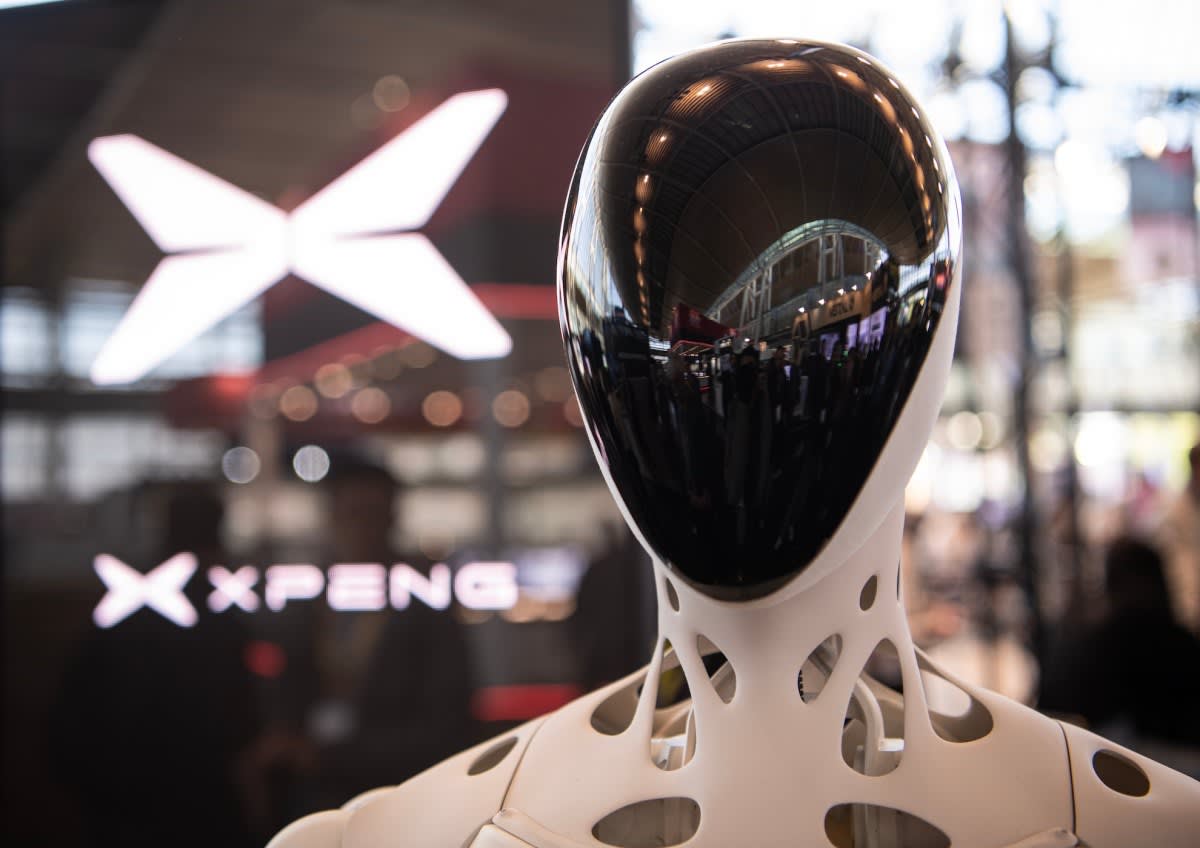
Chinese automakers are pivoting toward humanoid robotics, leveraging advances in AI and manufacturing to mirror Tesla’s strategy. Xpeng’s recent $900 million funding round highlights the growing momentum behind this shift toward autonomous labor.
The Shift Toward Humanoid Robotics
Recent developments in the automotive sector indicate a significant pivot, as Chinese automakers increasingly align their long-term strategies with the development of humanoid robots. This trend, largely popularized by the public-facing advancements of Tesla’s Optimus and Boston Dynamics’ Atlas, suggests that the industry views robotics not as a peripheral experiment, but as a critical future profit engine. By integrating robotics into their business models, these companies are betting that the intersection of automotive manufacturing prowess and advanced artificial intelligence will define the next decade of industrial automation.
The Technological Convergence
The current enthusiasm surrounding humanoid robotics is rooted in tangible technical progress rather than mere speculative hype. The paradigm shift is driven by the application of large language model (LLM) architectures to robotics. Researchers now believe that the same AI techniques that allow LLMs to process complex information can be adapted to enable robots to learn and execute diverse, unstructured tasks. This capability moves robots beyond the rigid, repetitive motions of traditional factory arms, potentially allowing them to navigate and interact with environments in a human-like, intuitive manner.
Automotive Expertise as a Catalyst
Chinese automakers are uniquely positioned to capitalize on this convergence. These firms possess deep expertise in hardware manufacturing, supply chain logistics, and large-scale assembly—all of which are fundamental to building functional humanoid robots. By leveraging their existing automotive infrastructure, these companies can reduce the costs of mechanical components and integrate sophisticated sensor suites at scale. This transition represents a natural evolution for firms that have already mastered the high-stakes engineering required for autonomous vehicle development.
Investment Momentum and Market Valuation
The financial backing for these initiatives is substantial, signaling strong investor confidence in the sector. A primary example is the recent funding milestone achieved by Xpeng’s robotics unit, which secured over $900 million in a round led by IDG Capital and Gaorong Ventures. With a post-money valuation exceeding $6.3 billion, this investment underscores the market's belief that these companies can successfully transition from automotive manufacturers to high-tech robotics innovators, effectively competing with global leaders in the space.
Broader Economic Implications
The move toward humanoid robotics carries significant implications for the global labor market and industrial efficiency. As these robots become capable of performing a wider range of tasks, they could bridge the gap in manufacturing sectors facing aging workforces or labor shortages. Furthermore, the standardization of robotic hardware could lead to a massive reduction in operational overhead for factories globally. While the technology is still maturing, the aggressive entry of Chinese automakers suggests that the race to commercialize humanoid robots is accelerating, setting the stage for a new industrial revolution characterized by autonomous, AI-driven labor.