"If Questions Are Being Raised...": Chirag Paswan To Poll Body Chief
Source Entity
NDTV News Search Records Found 1000
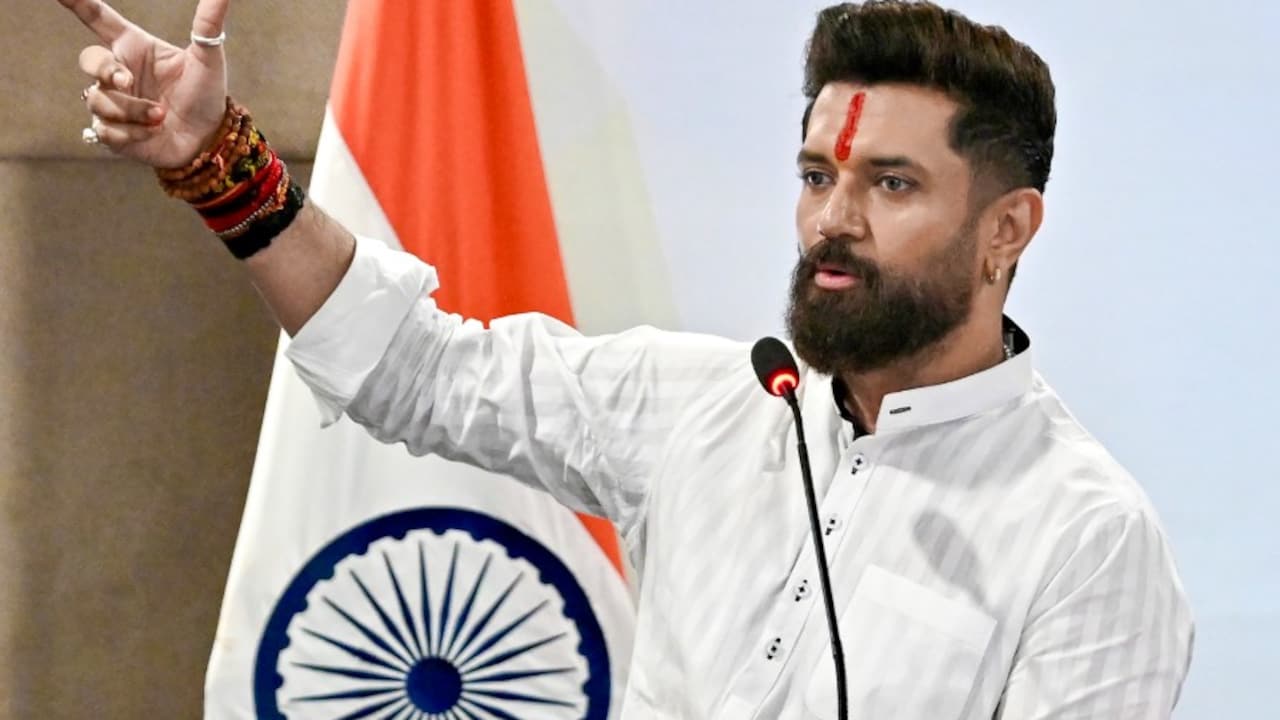
Union Minister Chirag Paswan has urged the Election Commission to address public doubts regarding its neutrality amid controversy over a rescheduled event for Commissioner Gyanesh Kumar. The poll body maintains that such adjustments are routine logistical decisions.
Scrutiny of the Election Commission: A Call for Institutional Clarity
Recent developments concerning the Election Commission of India (ECI) have sparked a notable discourse regarding institutional transparency and public trust. The postponement of an event involving Election Commissioner Gyanesh Kumar in Uttar Pradesh has prompted the poll body to clarify that such scheduling adjustments are routine, driven primarily by logistical and administrative requirements. However, this administrative explanation has not fully quelled the surrounding political chatter, highlighting the delicate balance the ECI must maintain in an era of heightened public and political scrutiny.
The Minister's Perspective on Institutional Integrity
Union Cabinet Minister Chirag Paswan has emerged as a significant voice in this conversation, emphasizing that the burden of maintaining public confidence rests squarely with the Election Commission. Paswan’s comments underscore the expectation that an independent constitutional body must proactively defend its own reputation when faced with skepticism. By explicitly stating that political parties lack the access or the mandate to defend the internal workings of the ECI, Paswan has framed the issue as one of institutional autonomy rather than partisan debate.
Navigating Political Skepticism
While the Opposition has frequently raised concerns regarding the ECI, Paswan’s intervention is notable for its insistence that the Commission itself must clear the air. His stance reflects a broader political reality where the ECI’s perceived neutrality is paramount to the health of the democratic process. By distancing himself from the Opposition's typical rhetoric while simultaneously demanding accountability from the Chief Election Commissioner, Paswan highlights the complex tightrope walk constitutional bodies must perform to remain above the political fray.
The Logistical vs. Political Dichotomy
At the heart of the matter lies the tension between the ECI’s internal administrative processes—such as rescheduling events—and the public’s perception of those actions. The poll body’s assertion that adjustments are part of an ongoing process is a standard bureaucratic defense. Yet, in a high-stakes political environment, even routine logistical shifts can be interpreted through a lens of suspicion. This highlights a growing trend where administrative transparency is increasingly viewed as a prerequisite for political legitimacy.
Implications for Future Governance
Moving forward, the ECI faces the challenge of not just performing its duties with integrity, but also communicating its processes more effectively to the public. As Paswan noted, the goal must be to ensure that not even an iota of suspicion remains regarding the Commission's operations. Whether through more robust press engagement or clearer public statements regarding scheduling, the ECI’s ability to preemptively address doubts will be crucial in maintaining its standing as a pillar of Indian democracy.
Conclusion
The situation serves as a reminder of the vital importance of institutional trust. While the ECI maintains that its scheduling decisions are purely administrative, the political pressure to provide transparency is mounting. By urging the Chief Election Commissioner to take ownership of the narrative, stakeholders are signaling that the ECI’s silence is no longer a viable strategy for navigating modern democratic skepticism.
Multiple Citing Sources
Verification Required?