Osama bin Laden wanted to attack India years before 9/11, CIA file reveals
Source Entity
Latest News: Todays Latest News Headlines from India & World | Hindustan Times | Hindustan Times
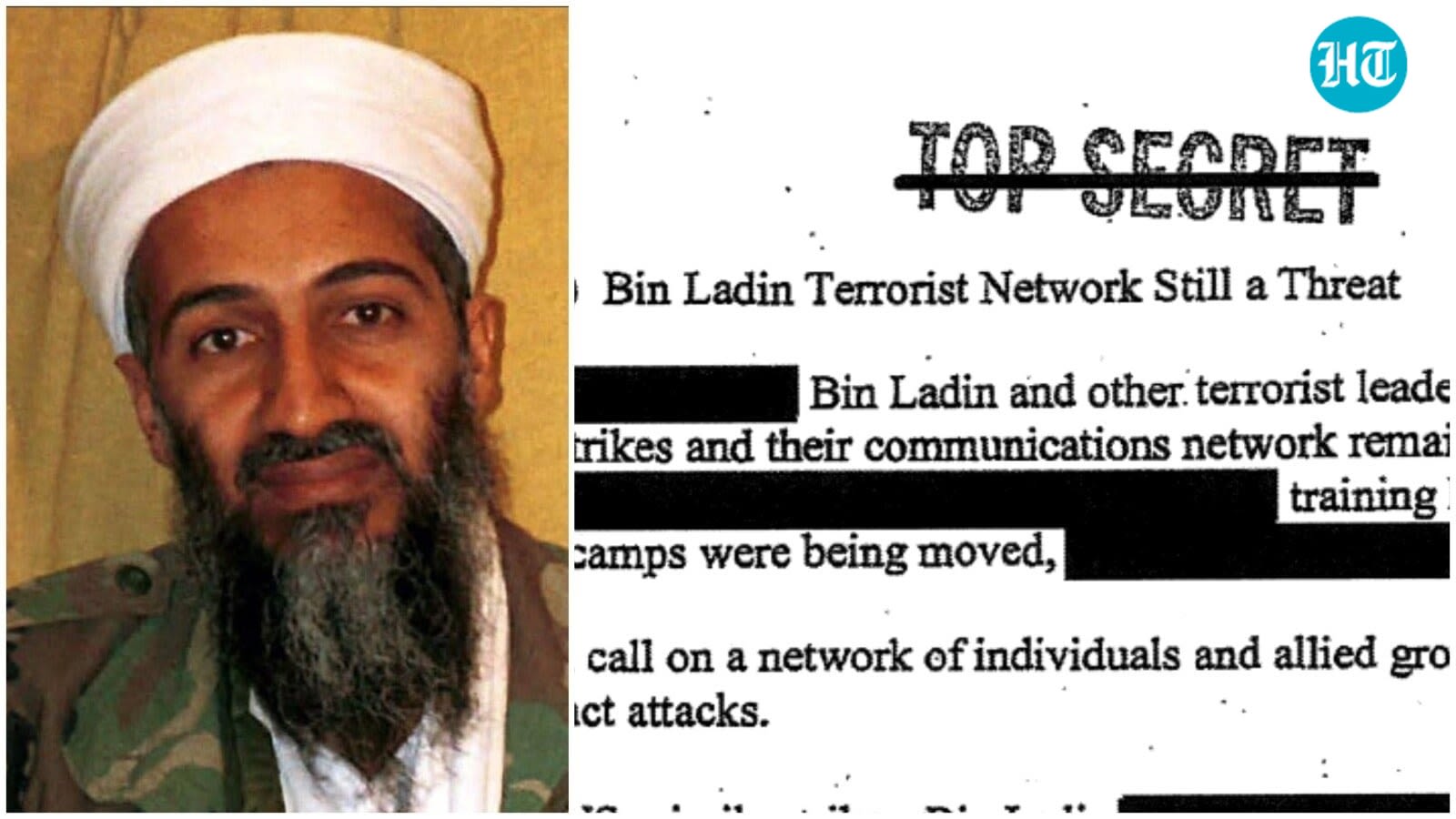
Declassified CIA documents reveal that Osama bin Laden planned terrorist strikes against India and Pakistan as early as 1998. The intelligence, prepared for President Bill Clinton, highlights the global scope of al-Qaeda's ambitions years before the 9/11 attacks.
The Global Ambitions of al-Qaeda: New Declassified Intelligence
The Central Intelligence Agency (CIA) has recently released 71 declassified intelligence reports marking the 25th anniversary of the September 11, 2001, attacks. Among these documents, a critical 1998 brief prepared for then-President Bill Clinton reveals that al-Qaeda’s terrorist aspirations were not solely focused on the West. Instead, the network had identified India, Pakistan, Uganda, and Nigeria as primary targets for violence years before the tragedy that reshaped global geopolitics.
Intelligence Briefs and Presidential Warnings
The declassified document, dated August 28, 1998, provides a chilling look at the intelligence landscape of the late 1990s. Following US missile strikes in Afghanistan intended to neutralize al-Qaeda leadership, the CIA warned that Osama bin Laden had not only survived the attacks but had successfully maintained a sophisticated, decentralized network. This network, spanning at least 60 countries, was deemed capable of executing strikes across diverse regions, specifically naming the Arabian Peninsula, Egypt, India, and Pakistan as regions of concern.
The Strategic Context of the Late 90s
To understand why India and Pakistan were on this hit list, one must look at the geopolitical tensions of the era. The 1998 period was marked by significant volatility in South Asia, including nuclear tests and heightened regional friction. Al-Qaeda’s interest in these nations suggests a strategy of exploiting existing regional instabilities to foster chaos. The newly released files indicate that the CIA was actively tracking these threats, attempting to map out a terrorist infrastructure that was far more global in its reach than the public or policymakers may have fully grasped at the time.
Understanding the Scope of the 9/11 Record Release
This release, totaling more than 70 documents, represents one of the most substantial disclosures of 9/11-related intelligence in recent history. By making these files public, the CIA provides researchers and historians with a deeper understanding of how the intelligence community assessed the evolving threat of non-state actors. The inclusion of these specific warnings regarding India and Pakistan underscores that the intelligence community was observing a burgeoning, multi-front threat that extended well beyond the borders of the United States.
Broader Implications and Historical Reflection
These documents serve as a reminder of the complex security environment that preceded the 2001 attacks. While the 9/11 attacks eventually became the defining event of the era, the warnings regarding India and Pakistan highlight that al-Qaeda’s operational planning was geographically expansive. The focus on these nations suggests that bin Laden viewed global destabilization as a core tenet of his strategy, seeking to ignite conflicts or exploit existing ones to expand his influence.
Future Trends in Intelligence Transparency
The release of these files underscores a growing trend toward transparency regarding the events leading up to the 21st century's most significant terrorist act. By analyzing these declassified documents, experts can better reconstruct the decision-making processes of the Clinton administration and the limitations faced by intelligence agencies of the time. This historical data is essential for understanding how the modern global counter-terrorism architecture was born from the realization that threats were both persistent and global.
Multiple Citing Sources
Verification Required?