Brics embraces AI but leaves job displacement largely unaddressed
Source Entity
MANASH PRATIM GOHAIN
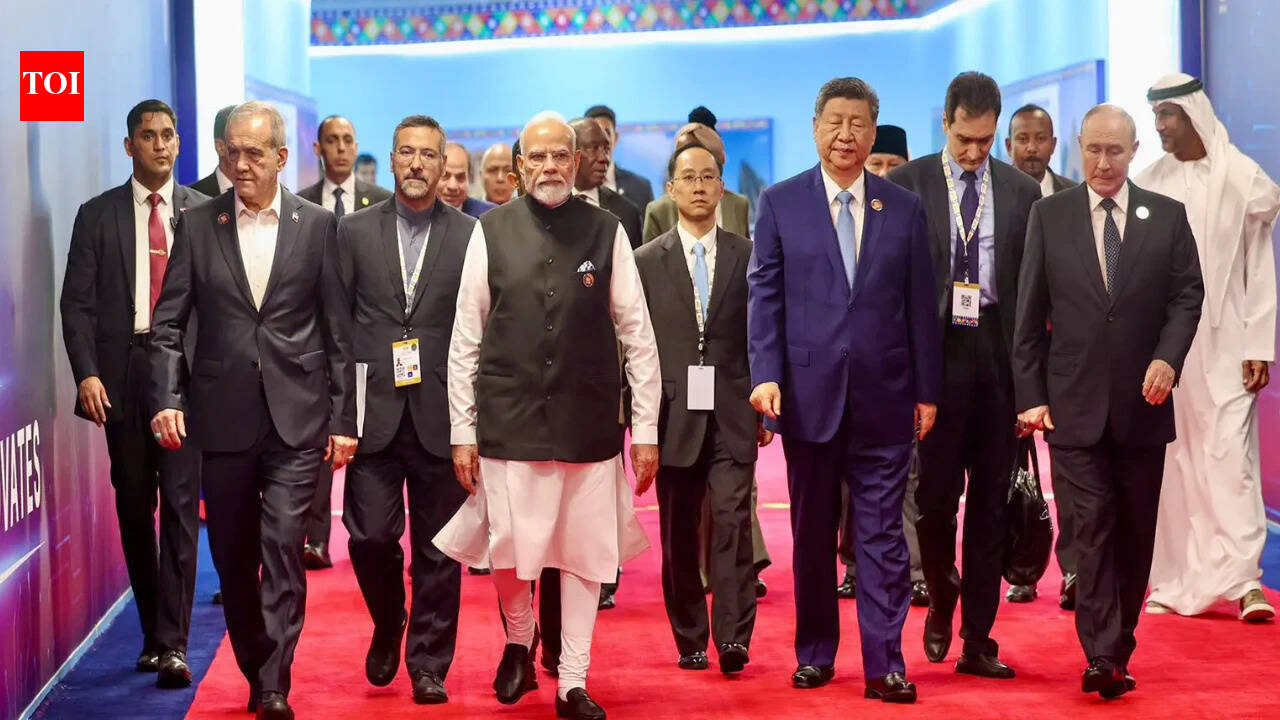
At the 18th BRICS summit in New Delhi, PM Modi and President Pezeshkian discussed strengthening India-UAE ties and the IMEC corridor. The summit also saw Iran raise concerns over US sanctions and regional military aggression amid rising Middle East tensions.
BRICS Summit 2026: Navigating Geopolitical Shifts and Economic Integration
The 18th BRICS summit, hosted in New Delhi this September, has emerged as a pivotal platform for addressing the intersection of regional security and economic infrastructure. As global powers converge, the discourse has centered on the dual necessity of fostering economic stability through projects like the India-Middle East-Europe Economic Corridor (IMEC) and managing the volatile security landscape in the Middle East.
Expanding India-UAE Strategic Ambitions
Prime Minister Narendra Modi’s engagement with the UAE delegation underscores a transformative trajectory in bilateral relations. By focusing on the IMEC project and energy infrastructure, both nations are signaling a shift toward long-term structural integration. This partnership is not merely transactional; it represents a strategic alignment aimed at diversifying supply chains and ensuring energy security, which remains a cornerstone of India’s economic growth strategy.
The Iranian Perspective on Economic Security
President Masoud Pezeshkian’s participation highlights the stark contrast between the BRICS bloc’s economic aspirations and the harsh realities of sanctions. Pezeshkian’s address at the BRICS Business Forum emphasized that economic security is inextricably linked to national sovereignty. He characterized the recent escalation of US sanctions as a 'dangerous phase,' linking these economic constraints directly to the military aggression he attributes to the US and Israel.
Regional Tensions and Maritime Safety
With Middle East tensions reaching a critical spike, the summit provided a necessary venue for high-level diplomatic dialogue. PM Modi’s emphasis on secure sea lanes and the safety of seafarers serves as a broader call for stability in international waters. This message is particularly salient given that the prosperity of the IMEC and other maritime trade routes depends entirely on the de-escalation of regional conflicts that currently threaten shipping lanes.
The Nexus of Security and Trade
Ultimately, the summit reflects a complex balancing act. While India pushes for infrastructure connectivity and regional development, leaders like Pezeshkian bring the urgency of geopolitical conflict to the table. The juxtaposition of these agendas illustrates the challenges facing the expanded BRICS coalition: how to promote economic cooperation when member interests and regional security environments are so profoundly divergent.
Future Trends in BRICS Diplomacy
Looking ahead, the success of the 18th BRICS summit will likely be measured by the ability of member states to harmonize these conflicting pressures. If the bloc can successfully bridge the gap between infrastructure development and conflict resolution, it may solidify its role as a counterweight to traditional geopolitical power structures. However, as noted by the current rhetoric, the path forward will require navigating significant external pressures and internal security dilemmas.
Multiple Citing Sources