Yes, Claude can do Nine Loops
Source Entity
Hacker News
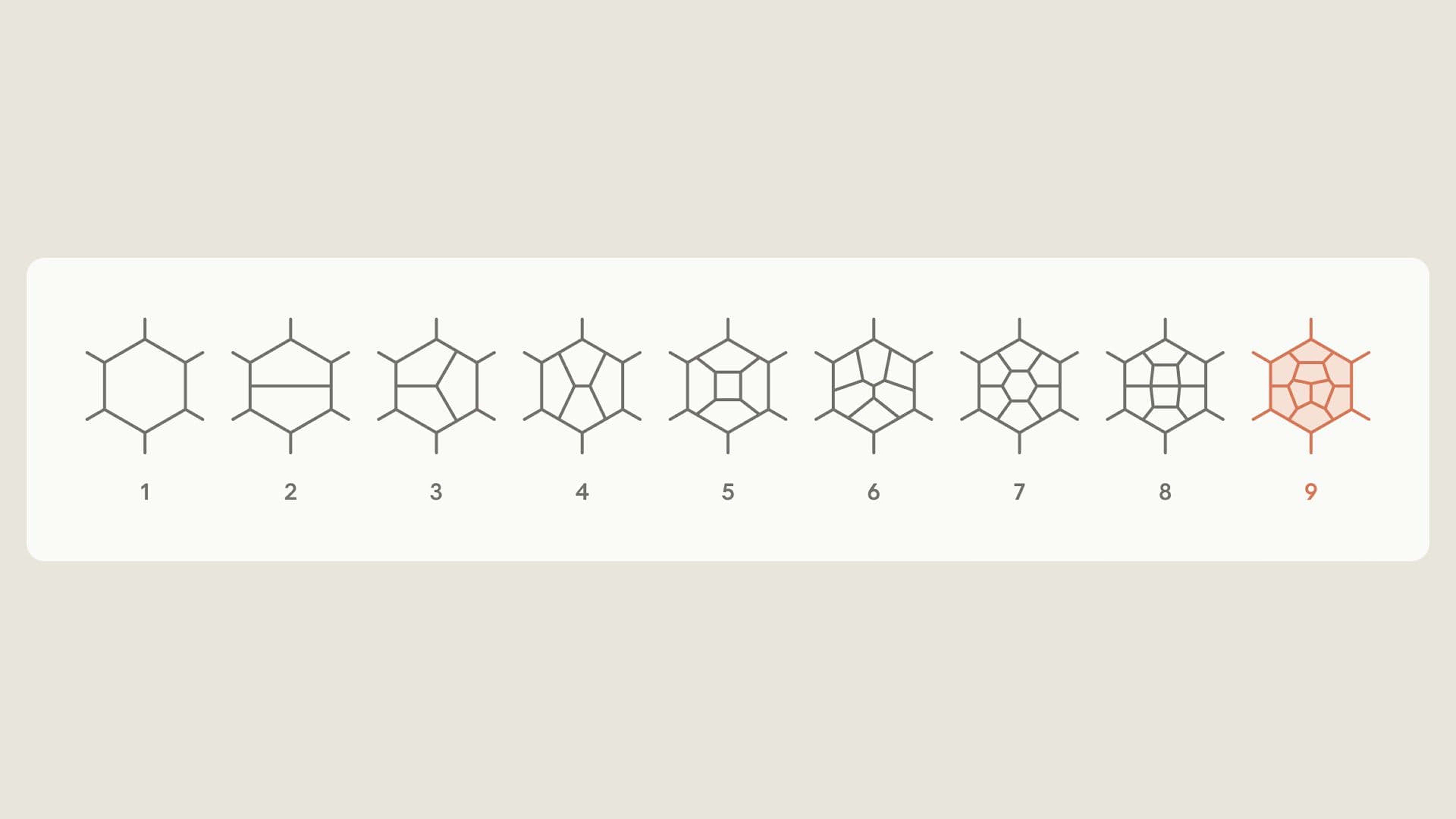
Physicist Matt von Hippel challenged AI companies to solve a complex theoretical physics problem known as Nine Loops. The experiment highlights the rapid, unexpected evolution of AI capabilities in specialized scientific domains.
The Intersection of Theoretical Physics and Artificial Intelligence
In a recent experiment that underscores the rapid advancement of artificial intelligence, physicist and science writer Matt von Hippel issued a public challenge to AI developers regarding a specific problem in theoretical physics: the 'Nine Loops.' This challenge was designed to test the boundaries of large language models (LLMs) when tasked with highly technical, domain-specific calculations that typically require years of academic training and deep conceptual understanding.
The Nature of the 'Nine Loops' Challenge
The 'Nine Loops' problem serves as a litmus test for the reasoning capabilities of modern AI. By presenting a challenge rooted in his former subfield of theoretical physics, von Hippel sought to move beyond general-purpose inquiries and force the models to grapple with the nuanced logic of mathematical physics. For an AI to succeed, it cannot merely rely on rote memorization of textbook answers; it must demonstrate an ability to manipulate complex variables and maintain logical consistency across multiple steps of a calculation.
The Surprising Velocity of AI Progress
Von Hippel’s experience reveals a profound shift in the technological landscape. Having issued the challenge, he noted that it was 'beaten a month later,' a timeline that defies traditional expectations for academic peer review and problem-solving in the sciences. This rapid turnaround time suggests that the underlying architectures of models like Claude are undergoing significant iterative improvements, allowing them to bridge the gap between general linguistic fluency and specialized scientific utility much faster than previously anticipated.
The Role of Science Communication in the AI Era
As a blogger and science writer, von Hippel highlights the growing necessity of reconciling AI capabilities with rigorous scientific inquiry. His work at 4gravitons.com reflects a broader trend where science communicators are increasingly forced to engage with AI as a primary subject matter. This shift is not merely academic; it represents a fundamental change in how scientific knowledge is generated, verified, and disseminated to the public, as AI begins to act as both a research assistant and a potential competitor to human experts.
Broader Implications for Theoretical Research
The success of an AI in solving a problem as specific as Nine Loops invites a discussion about the future of theoretical physics. If AI can tackle complex loops and calculations that were once the exclusive domain of trained physicists, the field may soon see an acceleration in theoretical discovery. However, this also raises questions regarding the reliability and interpretability of AI-generated proofs, necessitating a new form of human-AI collaboration that preserves the integrity of scientific inquiry.
Concluding Thoughts on Future Trends
The 'Nine Loops' challenge serves as a microcosm of the current state of technology: a period where the barrier between human expertise and machine capability is thinning. As von Hippel acknowledges his own status as an enthusiast rather than an AI expert, his experience mirrors that of many professionals grappling with the sudden utility of these tools. Future trends will likely see AI becoming an indispensable, albeit scrutinized, partner in the rigorous pursuit of theoretical knowledge.