‘Khaunga, khane doonga aur khilaunga’: Congress slams PM Modi’s anti-graft pitch
Source Entity
India Latest News: Top National Headlines Today & Breaking News | The Hindu
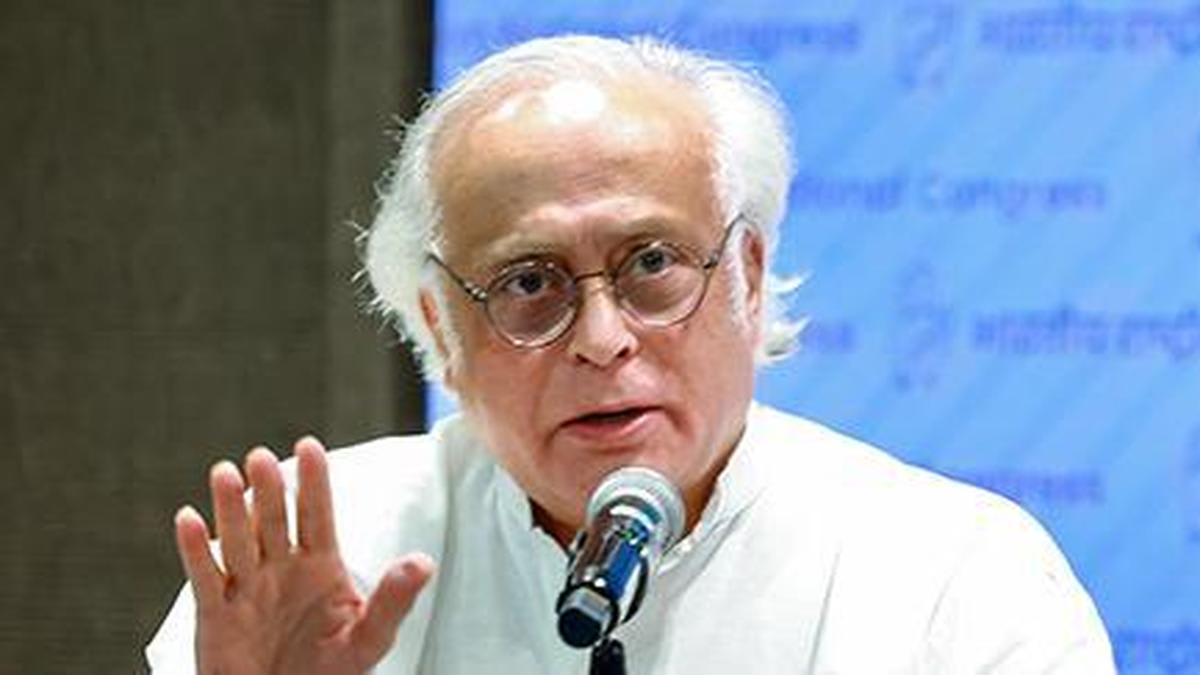
The explosive growth of the Modani empire revealed the true nature of the Modi regime, as was proved by the 100 questions asked of the Prime Minister in the Congress’ ‘Hum Adani Ke Hain Kaun’ series, said Jairam Ramesh
Political Warfare: Congress Challenges PM Modi's Anti-Graft Narrative
In a sharp escalation of political rhetoric, the Indian National Congress has launched a targeted offensive against Prime Minister Narendra Modi, questioning the integrity of his administration's anti-corruption stance. The crux of this attack, articulated by senior leader Jairam Ramesh, centers on the alleged symbiotic relationship between the Prime Minister and the Adani Group. By utilizing the provocative phrase ‘Khaunga, khane doonga aur khilaunga’ (I will eat, let others eat, and I will feed), the Congress party aims to paint the current administration not as a crusader against graft, but as a facilitator of a specific brand of crony capitalism.
The 'Modani' Narrative and Allegations of Cronyism
Central to this political onslaught is the term 'Modani'—a portmanteau of 'Modi' and 'Adani'. This framing is designed to suggest that the meteoric rise of the Adani empire is not merely a result of business acumen, but a direct consequence of political patronage. Jairam Ramesh asserts that the explosive growth of the conglomerate across strategic sectors—including ports, airports, and energy—serves as empirical evidence of a deeper, more systemic issue within the regime. By linking the Prime Minister's identity directly to the corporate entity, the Congress is attempting to dismantle the PM's image as a leader who is 'above' corruption.
Strategic Inquiry: The 'Hum Adani Ke Hain Kaun' Series
To provide a structured basis for these allegations, the Congress has introduced the ‘Hum Adani Ke Hain Kaun’ series. This campaign is not merely a collection of slogans but a strategic attempt to put the government on the defensive through a series of 100 specific questions. By framing their critique as a set of inquiries, the Congress is attempting to shift the discourse from general political accusations to a demand for transparency and accountability. This approach seeks to force the government to provide granular details regarding the awarding of contracts and the regulatory environment that has favored the Adani Group, thereby putting the burden of proof on the Prime Minister's Office.
Historical Context of Anti-Corruption Discourse in India
This clash is a continuation of a long-standing battle over the 'corruption' narrative in Indian politics. For years, the BJP has campaigned on the premise that the previous UPA government was defined by systemic scams. By flipping this script, the Congress is attempting to mirror those tactics, suggesting that the current administration has simply replaced old forms of corruption with a more centralized, corporate-driven model. The use of satirical language like ‘Khaunga, khane doonga’ is a calculated move to resonate with a public that is increasingly sensitive to issues of economic inequality and the concentration of wealth.
Broader Implications and Future Trends
Looking forward, this aggressive stance by the Congress suggests a strategy of 'corporate-centric' political warfare. Rather than focusing solely on policy failures, the opposition is focusing on the intersection of state power and private wealth. This trend is likely to intensify as elections approach, with the Adani-Modi nexus becoming a focal point for the opposition's campaign. The outcome of this narrative battle will depend on whether the government can successfully deflect these allegations as politically motivated or if the '100 questions' can gain enough public traction to demand a formal investigation or a detailed public response.
Conclusion
The clash between Jairam Ramesh and the Modi administration represents more than a typical political spat; it is a battle for the narrative of 'honesty' in Indian governance. By leveraging the 'Modani' label and the 'Hum Adani Ke Hain Kaun' series, the Congress is attempting to redefine the current regime's anti-graft pitch as a facade for cronyism. As the political climate heats up, the focus on corporate influence in government will likely remain a dominant theme in the national discourse.
Verification Required?