'Time for bhajan clubbing but not for serious questions': Cong takes swipe at PM Modi
Source Entity
AADRITA HALDER
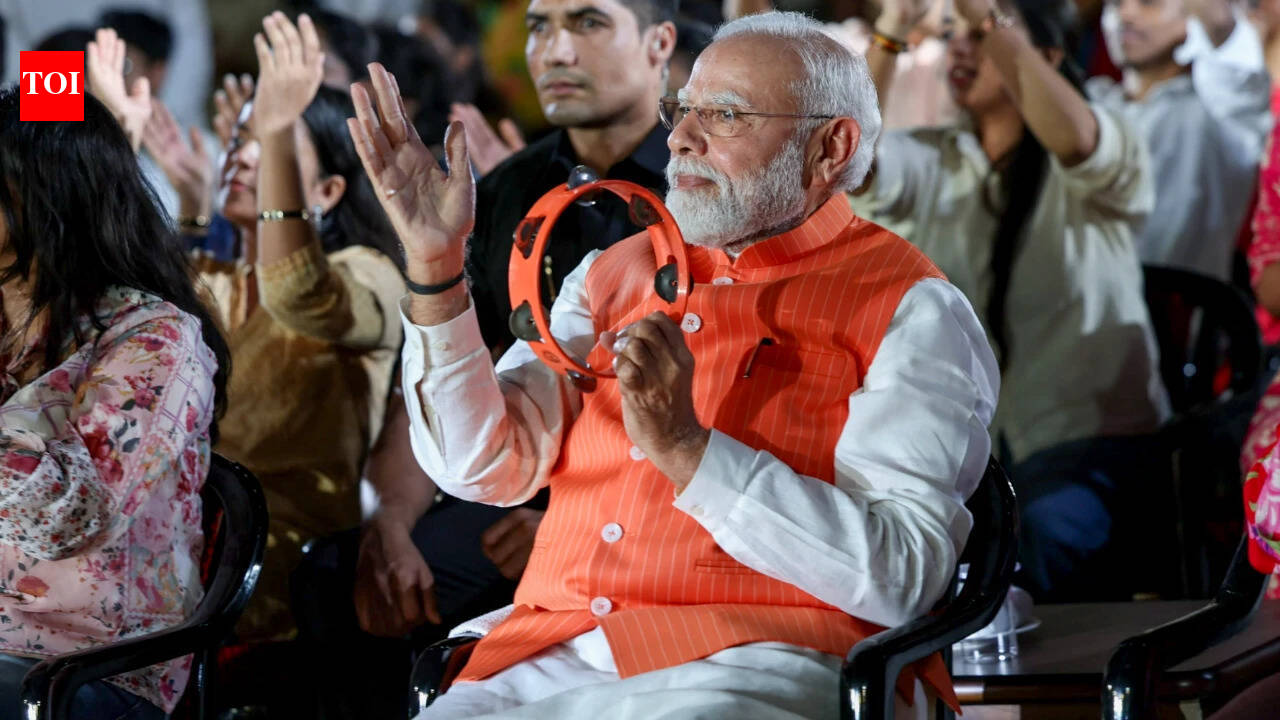
Prime Minister Narendra Modi's participation in a 'Bhajan clubbing' event has sparked sharp criticism from the Congress party. Opposition leaders argue that the PM prioritizes such cultural appearances over addressing critical questions regarding the Election Commission's autonomy.
The Intersection of Cultural Engagement and Political Accountability
Prime Minister Narendra Modi recently attended a 'Bhajan clubbing' event in New Delhi, an emerging cultural trend that reimagines traditional devotional music within a high-energy, concert-like atmosphere. Held at Deen Dayal Upadhyay Park to commemorate the 110th birth anniversary of the Bharatiya Jana Sangh leader, the event saw the Prime Minister actively participating by clapping and playing a tambourine-like instrument during a performance dedicated to Lord Ram. While the event was framed as a celebration of cultural evolution, its political timing has triggered a significant backlash from the opposition.
The Opposition's Critique
The Congress party, led by voices such as Karnataka minister Priyank Kharge, has leveraged the event to sharpen its critique of the Prime Minister’s public priorities. The core of their argument is a perceived imbalance: they contend that while the Prime Minister finds time for public-facing cultural engagements, he remains conspicuously silent on pressing institutional concerns. This rhetorical strategy aims to paint the administration as disconnected from the democratic challenges currently being raised by civil society and political rivals.
Institutional Scrutiny and the Election Commission
The criticism directed at the Prime Minister is deeply intertwined with ongoing debates regarding the independence and procedural integrity of the Election Commission of India. Opposition leaders, including Mallikarjun Kharge, have raised pointed questions regarding the alleged unilateral decision-making processes within the Commission. Specifically, the demand for the resignation of Chief Election Commissioner Gyanesh Kumar highlights a growing friction between the ruling Bharatiya Janata Party and the opposition regarding the stewardship of India's electoral machinery.
Historical Context and Political Symbolism
By holding the event at Deen Dayal Upadhyay Park on the birth anniversary of a foundational figure of the Bharatiya Jana Sangh, the ruling party is reinforcing its ideological roots. For the BJP, such events serve as a bridge between traditional values and contemporary youth culture, effectively mobilizing support through cultural identity. Conversely, the opposition views this as a deliberate distraction from the substantive 'serious questions' they wish to pose, creating a polarized environment where cultural expression is weaponized for political point-scoring.
Broader Implications for Democratic Discourse
The 'Bhajan clubbing' controversy underscores a deepening divide in Indian politics, where the definition of a leader's duty is increasingly contested. The opposition’s focus on the Election Commission suggests that the upcoming political discourse will likely be dominated by concerns over institutional transparency and the 'clubbing of democracy,' a phrase used to contrast the festive nature of the PM's attendance with the perceived erosion of democratic norms.
Future Trends in Political Communication
Looking ahead, this episode signals a trend where cultural events will be increasingly scrutinized by political rivals as indicators of a leader’s policy focus. As the debate over the Election Commission's autonomy continues, the opposition is likely to persist in its attempts to link the government's cultural optics with its institutional record. The challenge for the administration will be to balance its commitment to cultural outreach with the necessity of addressing the mounting pressures regarding institutional accountability.
Multiple Citing Sources