Mamata alleges ‘house arrest’ of party leaders, says BJP workers block route to TMC's rally
Source Entity
India Latest News: Top National Headlines Today & Breaking News | The Hindu
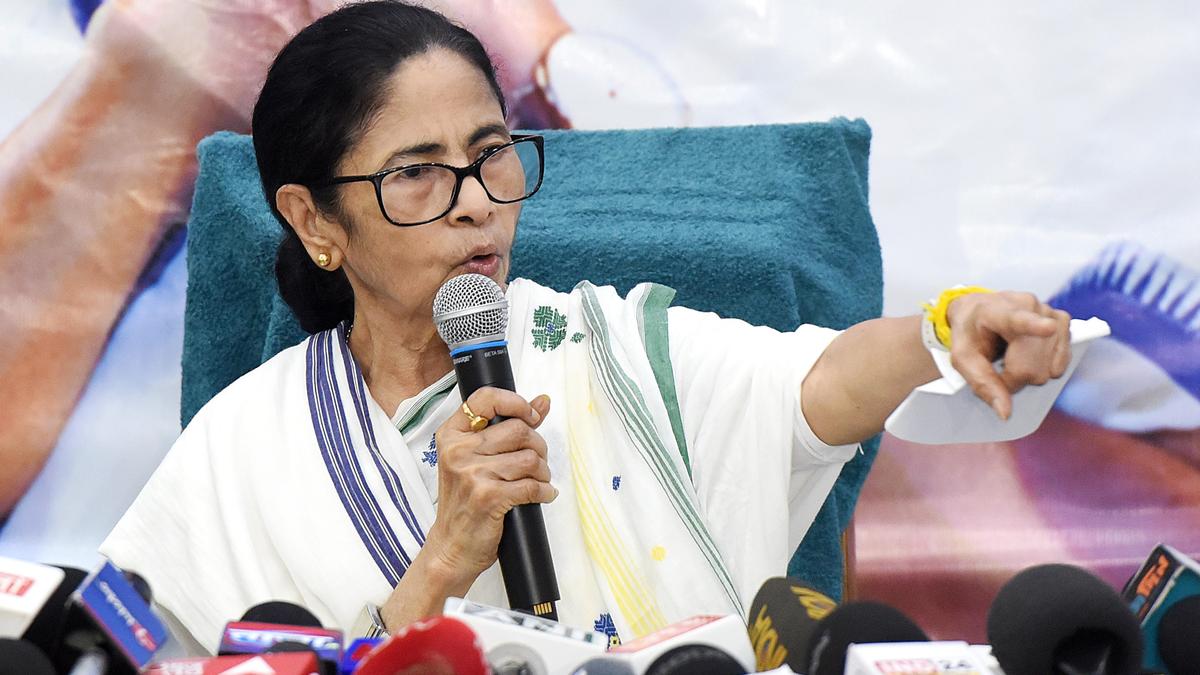
West Bengal CM Mamata Banerjee has accused the BJP and local authorities of orchestrating a de facto house arrest of TMC leaders ahead of a rally. The situation escalated with physical attacks on party members, including an assault on Kunal Ghosh's vehicle, amid broader TMC protests against the Election Commission.
Tensions Escalate in West Bengal: TMC Alleges State-Sponsored Obstruction
Recent developments in West Bengal have brought political volatility to the forefront, as Trinamool Congress (TMC) supremo Mamata Banerjee has leveled serious allegations against the BJP and local law enforcement. According to reports from September 26, 2026, Banerjee claimed that her party leaders were effectively placed under 'house arrest' to prevent them from attending a scheduled rally in Serampore. This obstruction, allegedly facilitated by BJP workers blocking transit routes, marks a significant heightening of pre-election friction in the state.
Physical Confrontations and Security Failures
The atmosphere of intimidation reached a breaking point in the Uttarpara area of the Hooghly district. During his transit to the rally, TMC leader Kunal Ghosh faced a direct assault where his vehicle was surrounded by individuals brandishing black flags. Reports indicate that the situation turned violent, resulting in eggs being hurled at the vehicle and the window being smashed. These incidents suggest a breakdown in the security apparatus, which Banerjee describes as the government turning a 'blind eye' to organized attacks against her party cadre.
Confronting the Executive and the Election Commission
The core of the current political standoff extends beyond local clashes to a broader institutional conflict. Mamata Banerjee has openly accused the Election Commission of India (ECI) of acting in collusion with the BJP to facilitate the party's influence in West Bengal. Her rhetoric has specifically targeted the Chief Election Commissioner (CEC), with the TMC leadership calling for his resignation. By linking the local obstruction of her rallies to the conduct of the ECI, Banerjee is framing the current political climate as a struggle for the integrity of the democratic process in the state.
Historical Context and Political Polarization
This confrontation is deeply rooted in the long-standing political rivalry between the TMC and the BJP in West Bengal. Historically, the state has witnessed intense electoral battles characterized by allegations of political violence and institutional bias. The current strategy of utilizing local roadblocks and protests to disrupt political rallies mirrors previous tactics of political disenfranchisement. The escalation of these events highlights the increasing polarization, where the lines between administrative duty and partisan political activity appear increasingly blurred.
Future Implications for Bengal's Political Landscape
The implications of these events are profound. If the allegations of state-sponsored obstruction hold, it signals a shift toward more aggressive, confrontational campaigning tactics that could lead to further instability. The TMC's vow to continue mass protests until the CEC resigns suggests that the party is preparing for a protracted institutional battle. As the political temperature rises, the ability of state agencies to maintain neutrality will be the critical factor in determining whether the upcoming electoral cycle remains within the bounds of democratic norms or devolves into chronic civil unrest.
Multiple Citing Sources
Verification Required?