Justice Nagarathna advises wider use of mediation to ease burden on family courts
Source Entity
India Latest News: Top National Headlines Today & Breaking News | The Hindu
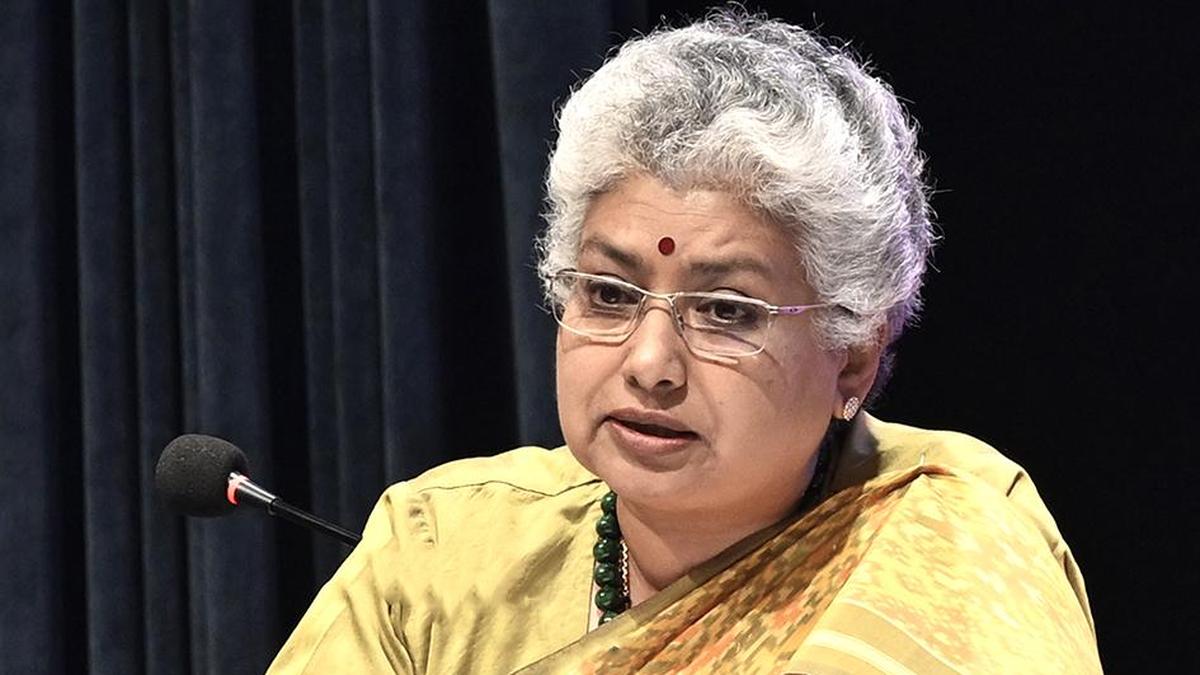
Supreme Court Justice B.V. Nagarathna has highlighted the dual nature of mediation in family law, noting its efficiency while warning of significant risks for women facing domestic violence. She emphasizes that alternative dispute resolution should complement, not replace, judicial adjudication in cases involving power imbalances.
The Dual Nature of Family Dispute Resolution
Supreme Court Justice B.V. Nagarathna recently addressed the complex interplay between Alternative Dispute Resolution (ADR) and traditional courtroom adjudication during a regional conference in Guwahati. Her remarks underscore a pivotal debate in the Indian legal landscape: how to balance the efficiency of mediation with the necessity of protecting vulnerable parties in domestic conflicts.
The Efficiency of ADR vs. Judicial Safeguards
Justice Nagarathna acknowledged that mediation and conciliation offer distinct advantages, including speed, privacy, and confidentiality. These mechanisms are designed to alleviate the significant burden on the judiciary by resolving disputes outside the adversarial framework of traditional litigation. By promoting a less combative environment, ADR can theoretically provide outcomes that are more sustainable for families attempting to navigate separation or custody issues.
The Critical Warning on Power Imbalances
Despite the merits of mediation, Justice Nagarathna issued a stern caution regarding its application in cases involving domestic violence or coercive control. She argued that in scenarios where a serious imbalance of power exists, mediation may inadvertently become a tool for further trauma. When one party is systematically subjugated, the neutral nature of a mediator may fail to address the underlying inequality, potentially forcing a settlement that undermines the woman’s legal entitlements.
Bargaining Position vs. Legal Entitlement
A central tenet of the Justice's argument is that a woman’s bargaining position is often compromised in private settings. Unlike formal adjudication, where the court acts as an equalizer through procedural safeguards and established laws, mediation relies on the parties' ability to negotiate. Justice Nagarathna emphasized that mediation should never be seen as a substitute for adjudication, particularly when the legal rights of women are at stake.
Complementary Roles in the Judiciary
The overarching vision presented by the Supreme Court judge is one of synergy rather than competition. ADR is intended to complement the courts by handling appropriate cases, thereby allowing the judiciary to focus its resources on complex legal battles that require formal adjudication. This nuanced approach seeks to modernize family law while ensuring that the pursuit of efficiency does not come at the cost of justice for the marginalized.
Future Implications for Family Law
Moving forward, the judiciary faces the challenge of implementing screening mechanisms to identify cases unsuitable for mediation. By distinguishing between disputes that benefit from collaborative resolution and those requiring the protective oversight of a judge, the Indian legal system can better serve families. Justice Nagarathna’s insights serve as a vital framework for policymakers to ensure that the evolution of family law remains anchored in the protection of fundamental rights.
Verification Required?