Cyclospora outbreak spreads to 32 states: Symptoms and how to protect yourself
Source Entity
Latest News: Today's Latest News Headlines from India & World | Hindustan Times | Hindustan Times
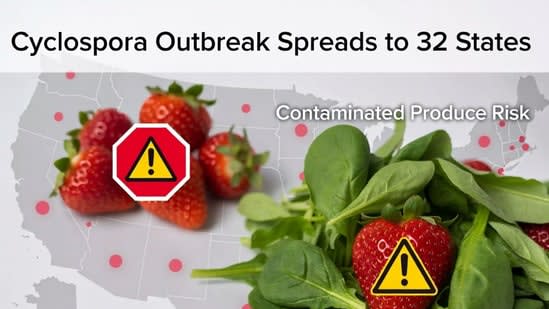
A fast-spreading stomach parasite has sickened thousands of people across more than 30 US states.
Comprehensive Analysis of the Multi-State Cyclospora Outbreak
Across the United States, a significant public health crisis has emerged as a Cyclospora outbreak spreads across 32 states, leaving thousands of individuals suffering from severe gastrointestinal distress. This widespread occurrence indicates a systemic contamination event, likely tied to the industrial food supply chain. Cyclospora cayetanensis is a microscopic parasite that targets the intestinal lining, causing a condition known as cyclosporiasis. The sheer geographical scale of this outbreak—spanning more than 30 states—suggests that the contaminated source is not a local farm but rather a large-scale distributor or an imported produce item that has been integrated into national grocery networks.
The Biological Nature and Transmission of Cyclospora
To understand the gravity of this outbreak, it is essential to examine how Cyclospora operates. Unlike common bacteria like Salmonella or E. coli, Cyclospora is a coccidian parasite. It is transmitted via the fecal-oral route, typically through the consumption of fresh produce—such as berries, cilantro, or lettuce—that has been irrigated with contaminated water or handled by infected individuals in regions where the parasite is endemic. One of the most challenging aspects of this parasite is its resilience; the oocysts (eggs) are highly resistant to environmental stress and cannot be easily removed by standard washing techniques, making the contamination of commercial crops a high-risk scenario for consumers.
Clinical Implications and Diagnostic Challenges
Patients affected by this outbreak typically experience profuse, watery diarrhea, severe fatigue, nausea, and significant weight loss. A critical concern for health providers is the diagnostic lag. Cyclospora does not grow in standard stool cultures, meaning that routine screenings often return negative results. Diagnosis requires specialized acid-fast staining or molecular testing (PCR), which are not available in all clinics. This often leads to a delay in treatment, during which the patient's condition can deteriorate due to dehydration. The current outbreak's scale puts immense pressure on laboratory infrastructure to provide rapid, accurate testing to prevent prolonged morbidity among the thousands sickened.
Supply Chain Vulnerabilities and Regulatory Response
The fact that 32 states are impacted points to a failure in the 'farm-to-table' safety protocol. In the modern globalized food economy, a single shipment of produce from a contaminated region can be distributed to hundreds of supermarkets nationwide within days. This outbreak underscores the necessity for the FDA and CDC to implement more rigorous screening for imported produce from high-risk tropical and subtropical zones. When an outbreak reaches this magnitude, the primary challenge becomes 'trace-back'—the process of identifying the exact farm or processing plant responsible—which is often complicated by the blending of produce from multiple sources at distribution centers.
Long-term Trends and Environmental Factors
Looking forward, the frequency of such outbreaks may increase due to shifting climatic patterns. As global temperatures rise and rainfall patterns change, the environments conducive to Cyclospora survival may expand. Furthermore, the increasing reliance on a few centralized hubs for produce distribution creates a 'single point of failure' risk; one contaminated lot can trigger a national health emergency. We can expect a trend toward more stringent biological auditing of water sources used in irrigation and a push for enhanced transparency in food sourcing to allow for faster recalls and targeted warnings.
Summary and Preventative Outlook
In conclusion, the current Cyclospora outbreak is a stark reminder of the complexities inherent in maintaining food safety across a vast, interconnected network. While the immediate priority is the treatment of the thousands currently ill, the long-term solution lies in systemic agricultural reform and enhanced border biosafety. Consumers are advised to remain vigilant, report symptoms to health authorities immediately, and follow CDC guidelines regarding high-risk produce during active outbreak windows to mitigate further spread.
Verification Required?