How Kinahan's hearing unfolded inside the courtroom in Dublin
Source Entity
BBC News
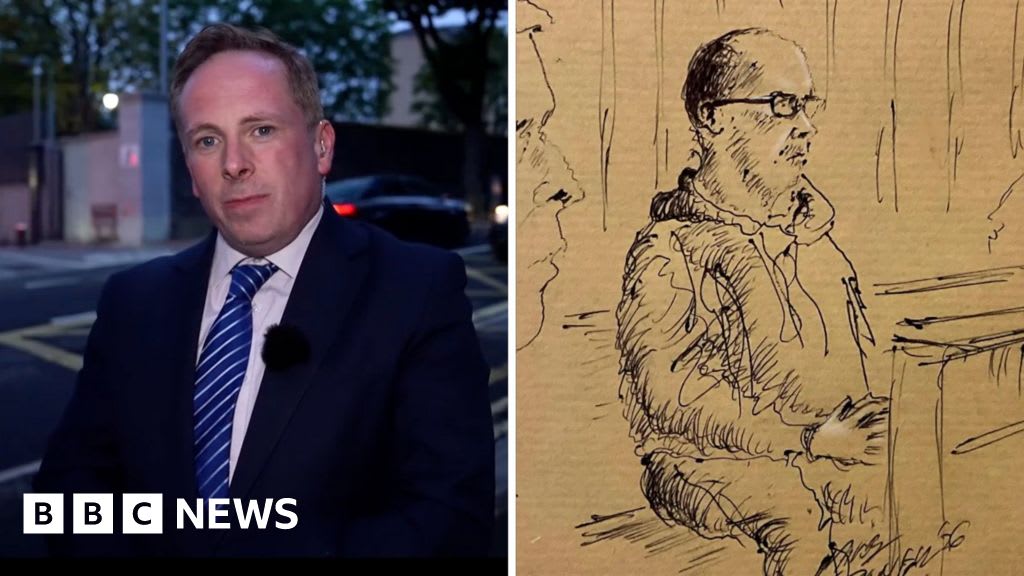
Suspected crime boss Daniel Kinahan has been extradited from Dubai to Dublin to face charges of directing a criminal organization. He has been remanded in custody after appearing before the Special Criminal Court.
The Extradition and Legal Reckoning of Daniel Kinahan
The recent appearance of Daniel Kinahan before the Special Criminal Court in Dublin marks a significant milestone in the long-standing efforts to dismantle one of the world's most notorious organized crime syndicates. Following his extradition from Dubai, where he was apprehended in April, Kinahan now faces the formal charge of directing the activities of a criminal organization between October 2015 and April 2017. This legal development represents a culmination of years of international cooperation aimed at bringing leaders of global trafficking networks to justice.
The Charges and Judicial Context
Kinahan, aged 49, was remanded in custody after a brief appearance in the non-jury Special Criminal Court. His acknowledgement of the futility of seeking bail—stating, "I think we all know I won't be getting bail"—underscores the gravity of the charges and the state’s robust approach to handling high-profile organized crime figures. The use of the Special Criminal Court, which operates without a jury to prevent the potential for witness intimidation, reflects the Irish state's commitment to ensuring a secure and impartial trial for cases involving sophisticated criminal enterprises.
Impact of the Kinahan Cartel
According to the UK’s National Crime Agency, the Kinahan cartel has exerted a destructive influence for over two decades. The syndicate is implicated in the global trafficking of vast quantities of narcotics and illicit firearms. By operating as a transnational entity, the cartel has long evaded traditional law enforcement boundaries, necessitating the complex, multi-jurisdictional extradition process that finally brought Kinahan back to Ireland.
Security Measures and Public Safety
Reports highlighting the heavy security presence in Dublin, including snipers on rooftops and the use of decoys during transport, illustrate the high-stakes environment surrounding this trial. The international nature of the group, which has maintained operations across multiple continents, necessitates extraordinary precautions to ensure the safety of the judicial process. These measures serve as a physical manifestation of the state's resolve to counter the influence of a cartel that has historically operated with a high degree of impunity.
Broader Implications and Future Trends
This trial is expected to have far-reaching implications for international anti-organized crime efforts. By successfully extraditing and prosecuting a figure of Kinahan's stature, authorities are setting a precedent for the dismantling of similar decentralized criminal networks. The transition from evasion to incarceration for such high-level targets signals a shift in the balance of power, suggesting that the era of 'untouchable' cartel leaders is facing a concerted, global legal challenge. As the trial progresses, it will likely provide further insight into the structural operations of the cartel, potentially leading to further investigations and legal actions against associated elements of the organization.