David Willey, esteemed BBC Vatican correspondent, dies aged 93
Source Entity
BBC News
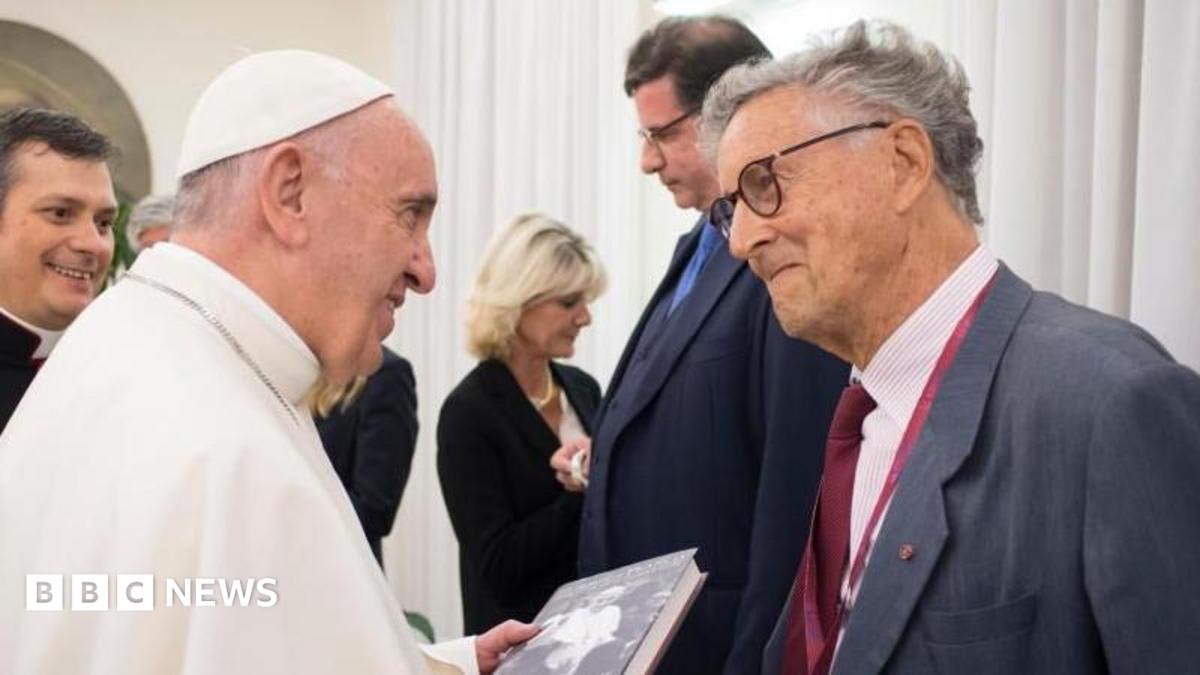
One of the BBC's longest-serving foreign correspondents, he reported on five popes during his career.
Remembering David Willey: A Titan of Vatican Correspondence
The passing of David Willey at the age of 93 marks the end of a significant era in international journalism. As one of the BBC's longest-serving foreign correspondents, Willey occupied a unique vantage point in global affairs, serving as a critical bridge between the secretive corridors of the Holy See and the English-speaking world. His career was not merely a job in reporting but a lifelong chronicle of the Roman Catholic Church's evolution during a period of immense social and theological upheaval.
A Witness to Five Papacies
To have reported on five different popes is a feat of professional endurance and historical significance. Willey's tenure spanned a transformative arc in the papacy, likely beginning in the wake of the Second Vatican Council and extending into the modern era of Pope Francis. By documenting the transitions between these leaders, Willey provided a continuous narrative thread that allowed the public to understand the shifting priorities of the Church—from the traditionalist struggles of the mid-20th century to the contemporary focus on climate change, poverty, and institutional reform. His work captured the essence of how the papacy transitioned from a largely European-centric monarchy to a global spiritual leadership.
Navigating the Complexity of the Vatican Beat
The role of a Vatican correspondent is uniquely challenging, requiring a blend of religious scholarship, diplomatic tact, and investigative rigor. The Vatican is not only the center of the Catholic faith but also a sovereign city-state with its own complex bureaucracy, the Roman Curia. Willey's ability to maintain his position for so long suggests a masterful navigation of this environment. He had to balance the need for journalistic objectivity with the delicate nature of reporting on a faith-based institution that often guards its internal deliberations with extreme secrecy. His legacy is defined by his ability to decode the 'Vatican-speak' of official communiqués into clear, accessible news for a global audience.
The BBC Legacy and Foreign Correspondence
Willey's career reflects the gold standard of the BBC's foreign correspondence tradition. During his time, the BBC was the primary lens through which much of the world viewed international events. By remaining stationed in Rome, Willey embodied the 'deep dive' approach to journalism—where a reporter becomes an expert in a specific geography and culture over decades. This contrasts sharply with the modern trend of 'parachute journalism,' where reporters are flown in for short-term assignments. Willey's depth of knowledge allowed him to spot nuances in papal decrees or diplomatic shifts that a transient reporter would likely miss.
The Evolution of Religious Reporting
Looking forward, the death of a veteran like Willey prompts a reflection on how reporting on the Vatican has changed. In Willey's early days, information was carefully rationed by the press office. Today, the papacy utilizes social media and direct digital communication to bypass traditional media filters. While this increases transparency, it also removes the need for the kind of expert interpretation that Willey provided. Future correspondents will likely focus less on 'access' and more on analyzing the vast amounts of digital data and public statements emitted by the Holy See, making the analytical skill set Willey possessed more valuable than ever.
Conclusion
David Willey was more than a reporter; he was a historian in real-time. His death leaves a void in the specialized field of religious journalism. By documenting the lives and legacies of five popes, he provided an invaluable record of the Catholic Church's attempts to remain relevant in a rapidly secularizing world. His career serves as a testament to the power of long-form, dedicated foreign correspondence in fostering a deeper global understanding of institutional power and faith.