Deepathoon row: Tamil Nadu flags wider religious fallout of lamp lighting before Supreme Court
Source Entity
The Indian Express
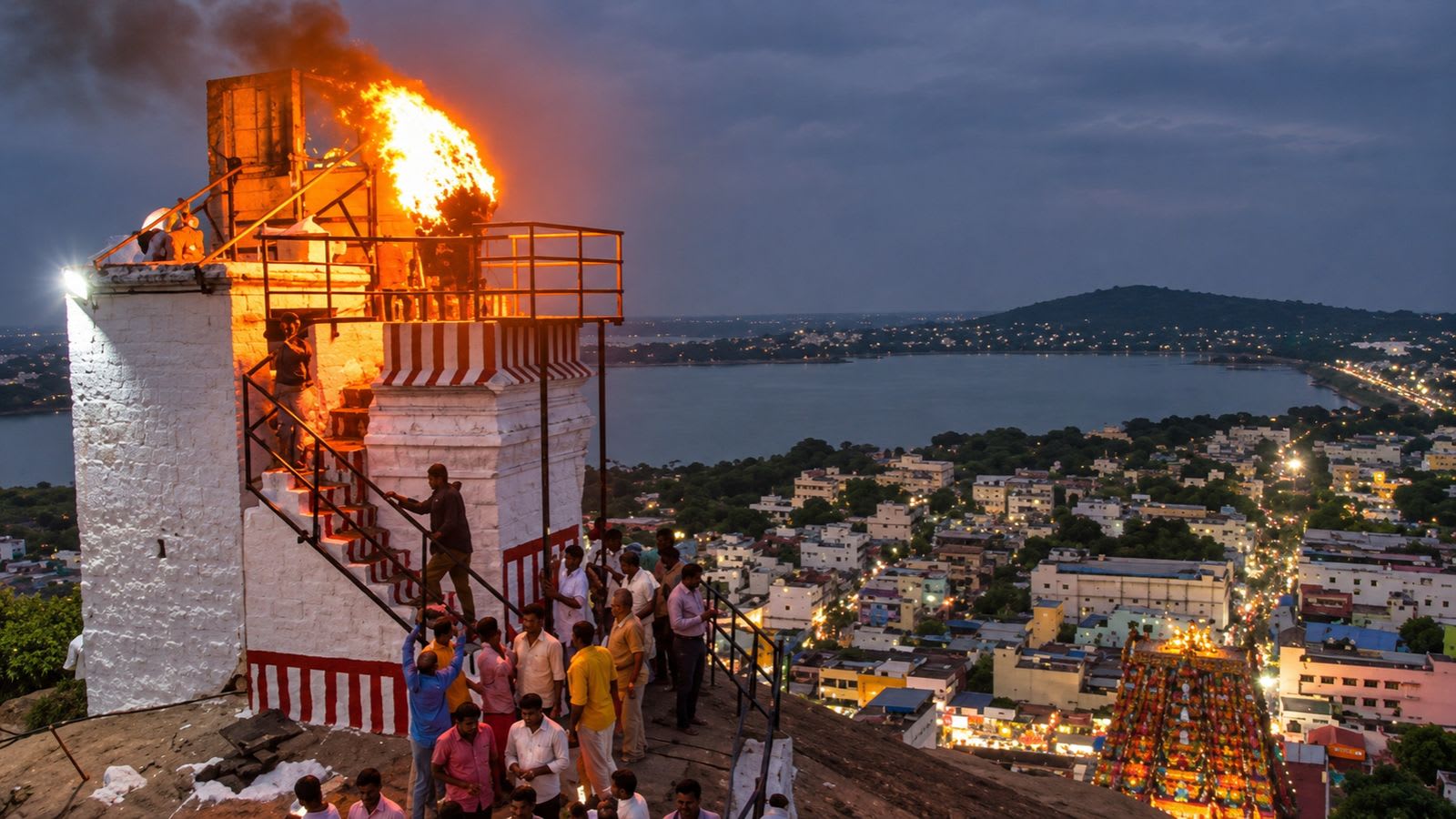
The Tamil Nadu government has approached the Supreme Court to challenge a High Court order allowing the lighting of Karthigai Deepam lamps at a disputed site near the Sikandar Badusha Auliya Dargah. The state warns that this precedent could lead to widespread religious disputes over survey pillars across India.
The Deepathoon Dispute: A Challenge to Secular Governance
The ongoing legal battle regarding the 'Deepathoon'—a stone pillar situated near the Sikandar Badusha Auliya Dargah on Thiruparankundram hill—has reached the Supreme Court. The Tamil Nadu government, representing the Madurai District Collector, is seeking to stay a Madras High Court order that permitted the performance of the traditional Karthigai Deepam lamp-lighting ritual at this specific site. This conflict underscores the delicate balance between local religious practices and the administration of public land.
The State’s Argument: Preventing a Precedent
Senior advocate Gopal Sankaranarayanan, representing the state, has presented a compelling argument regarding the potential for systemic unrest. The core of the state's concern is not merely the specific lamp-lighting ritual but the broader legal implications of associating religious significance with survey pillars. The government argues that if the High Court’s order is allowed to stand, it may inadvertently provide a roadmap for similar religious claims to be asserted over various survey markers throughout the country.
The Risk of Religious Polarization
The state government’s apprehension centers on the fear that such judicial precedents will encourage communal claims over public infrastructure. By imbuing survey pillars—typically used for demarcation and land administration—with religious identity, the state contends that it may open a Pandora’s box of litigation. This could lead to a fragmented landscape where administrative markers become flashpoints for religious assertion, complicating land management and public order.
Judicial Review and Administrative Stability
Before the bench of Justices Aravind Kumar and Vipul M Pancholi, the state emphasized that allowing this ritual could trigger a ripple effect. The administration argues that the judiciary must consider the 'wider religious fallout' before validating such claims. The case highlights the tension between preserving long-standing traditions and maintaining the neutral, secular character of government-administered public spaces.
Broader Implications for Land Disputes
This case is symptomatic of larger challenges in India where religious sites and historical landmarks overlap with public or disputed land. The outcome of the Supreme Court's deliberations will likely set a significant legal precedent for how Indian courts handle attempts to claim religious usage rights over non-religious, state-owned structures. The potential for 'religious colors' to be assigned to survey pillars poses a direct challenge to the administrative integrity of land records.
Conclusion
The Supreme Court’s intervention will be pivotal in determining whether the specific ritual at the Deepathoon can be reconciled with the state's interest in preventing widespread, decentralized religious claims. As the nation watches, the court's decision will likely influence how authorities manage similar disputes, balancing the sentiments of local communities against the necessity of maintaining clear, neutral demarcation of public property.