Definitely not Windows (Win 11 parody)
Source Entity
Hacker News
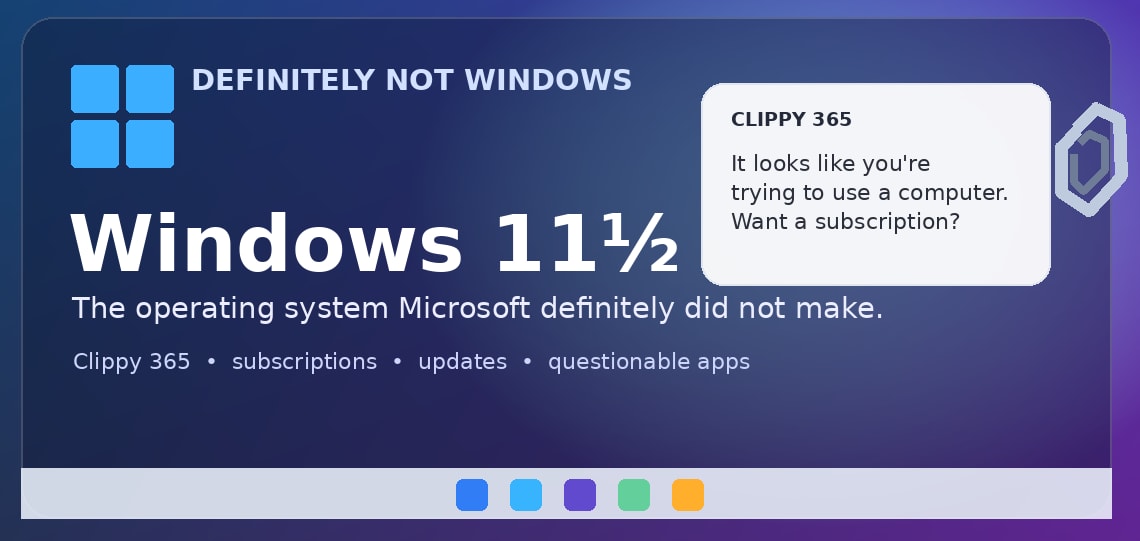
A satirical web-based parody project titled 'Definitely Not Windows' (Windows 11½) has been released to mock modern software trends. The project highlights frustrations with AI integration, aggressive subscription models, and intrusive operating system notifications.
The Rise of Satire in Software Culture
The emergence of 'Definitely Not Windows,' also known as Windows 11½, represents a growing trend in digital satire aimed at the modern computing experience. By creating an unofficial, parody operating system, developers have crafted a medium to critique the current trajectory of software development. This project explicitly frames itself as an independent commentary, ensuring users understand that it is in no way affiliated with, endorsed by, or sponsored by Microsoft Corporation.
Targeting Modern Software Pain Points
The parody specifically targets the friction points that define the contemporary user experience. Central to its critique are the increasing prevalence of forced software subscriptions, the proliferation of in-OS advertisements, and the intrusive nature of modern AI integrations. By gamifying these frustrations, the project turns the 'tiny emotional journey' of everyday tasks—such as attempting to change a default web browser—into a satirical narrative that resonates with frustrated power users.
The Role of Humor in Tech Commentary
Humor serves as a powerful tool for community expression, particularly when users feel disconnected from the design choices of major technology conglomerates. 'Definitely Not Windows' functions as a mirror, reflecting the absurdity of 'storage nags' and relentless update prompts that have become commonplace. By personifying these annoyances through a parody version of the iconic assistant Clippy, the creators highlight the intrusive nature of modern interface design under the guise of helpfulness.
Security and User Awareness
As part of its satirical structure, the project takes great care to warn users about the limitations of the experience. By explicitly stating what the project is not—a real Microsoft product, a functional login page, or a secure service—the developers proactively mitigate the risk of phishing or credential theft. This emphasis on user safety, while framed in a joking manner regarding 'compliance training,' underscores the serious reality of security risks associated with unofficial software interfaces.
Broader Implications for Industry Standards
While 'Definitely Not Windows' is purely for entertainment, its existence signals a shift in consumer sentiment. When users feel compelled to build elaborate parody projects to vent their frustration, it serves as a form of feedback regarding current software trends. Companies like Microsoft, which are currently pushing heavy AI integration and cloud-based subscriptions, may find that such projects reflect a significant segment of the user base that values simplicity and control over their local machines.
Conclusion
Ultimately, Windows 11½ is a manifestation of digital culture reacting to the complexities of the modern software ecosystem. By distilling the frustrations of ads, AI bloat, and subscription fatigue into a singular, humorous experience, the project provides a cathartic outlet for its audience. It serves as a reminder that while technology continues to evolve at a rapid pace, the user experience remains the most critical metric for customer satisfaction.