5 deadlines missed since 2020: Why Delhi’s landfill crisis continues
Source Entity
VIBHA SHARMA
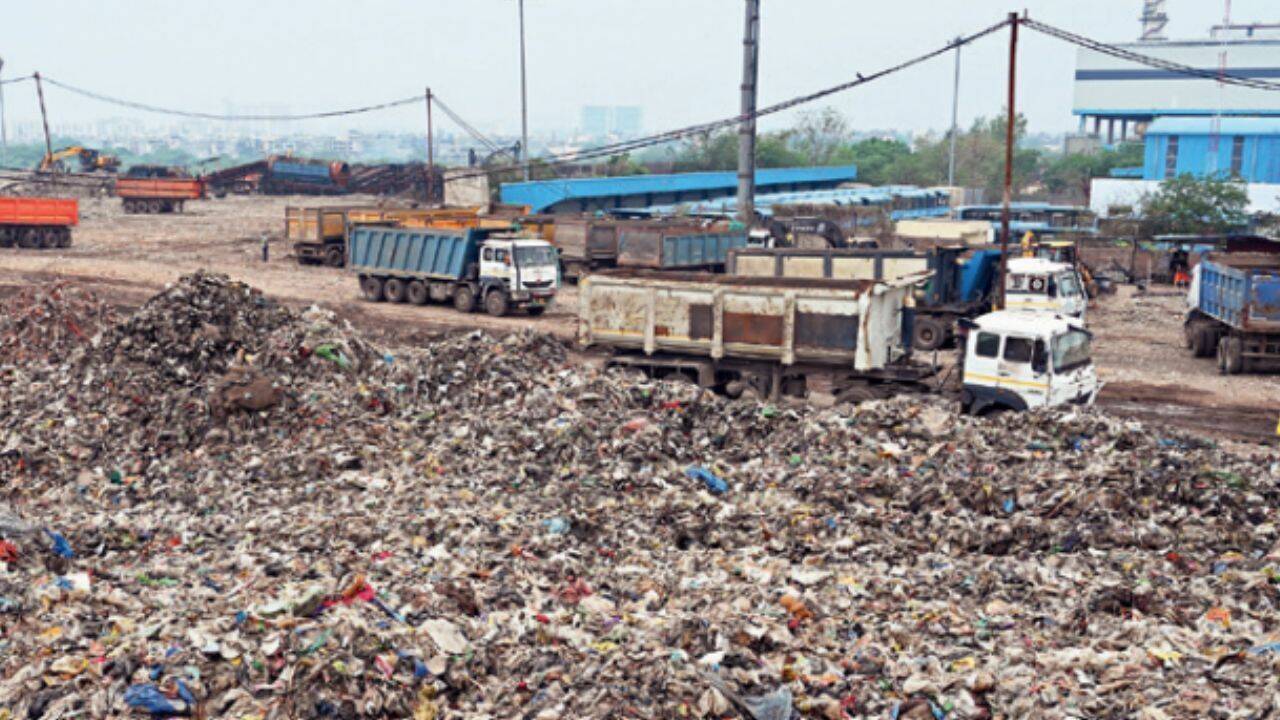
Delhi's landfill flattening deadlines are repeatedly missed by the MCD. Fresh waste continues to be dumped daily, hindering progress on legacy waste. Bio-mining targets are being exceeded at some sites, while others lag behind. New waste-to-energy plants are planned, but will take years to become operational. Residents face ongoing health and environmental challenges from the garbage mountains.
The Eternal Mountains of Waste: Analyzing Delhi's Landfill Crisis
Delhi's urban landscape is marred by towering mountains of garbage that have become symbols of systemic failure in waste management. Despite repeated promises and a series of stringent deadlines set by regulatory bodies and the government, the Municipal Corporation of Delhi (MCD) has failed to flatten these landfills. Since 2020, five distinct deadlines have come and gone without the promised resolution, highlighting a critical gap between administrative ambition and operational reality. This crisis is not merely a logistical failure but a public health emergency that continues to jeopardize the lives of millions of residents living in the shadows of these waste peaks.
The Cycle of Missed Deadlines and Administrative Inertia
The recurring failure to meet deadlines since 2020 points to a deeper issue of planning and execution within the MCD. Landfill remediation is a complex process that requires synchronized efforts in waste collection, segregation, and processing. The repeated missing of targets suggests that the deadlines were perhaps set as political milestones rather than realistic engineering goals. When a city fails five consecutive deadlines over four years, it indicates that the strategy for 'flattening' is being outpaced by the city's own growth and waste generation rates, leading to a state of perpetual crisis management rather than a sustainable solution.
The Bio-mining Paradox: Successes and Failures
To tackle the legacy waste, the MCD has employed bio-mining—a process where old waste is excavated and screened to separate recyclables, combustibles, and inert materials. While the report indicates that some sites are exceeding their bio-mining targets, others are lagging significantly. This inconsistency suggests a lack of standardized implementation across different landfill sites. The success at certain locations proves that the technology is viable, but the failure at others suggests that site-specific challenges—such as soil stability, moisture content of the waste, or local mismanagement—are hindering a city-wide victory over the garbage mountains.
The Fresh Waste Dilemma
One of the most critical bottlenecks identified is the continuous dumping of fresh waste. It is fundamentally impossible to flatten a landfill when the volume of incoming daily waste equals or exceeds the volume being processed through bio-mining. This creates a 'Sisyphus effect' where the MCD attempts to clear the mountain while simultaneously adding to its base. This highlights a failure in waste segregation at the source; until Delhi can effectively separate wet and dry waste at the household level, the landfills will continue to act as the final, overflowing destination for all urban refuse.
Infrastructure Lag: The Waste-to-Energy Gamble
As a long-term solution, the city is banking on new waste-to-energy (WtE) plants. While these plants promise to reduce the volume of waste by incinerating it to produce electricity, they are not a silver bullet. The report notes that these facilities will take years to become operational, leaving a dangerous gap in the interim. Furthermore, the efficiency of WtE plants depends heavily on the calorific value of the waste, which is often compromised by the high moisture content of organic waste common in Indian cities. Relying on future technology while current sites collapse is a high-risk strategy that ignores the immediate urgency of the crisis.
Environmental and Human Costs
Beyond the logistics, the human cost of this crisis is staggering. Residents living near these landfills face chronic respiratory issues, skin diseases, and the constant threat of landfill fires, which release toxic dioxins and furans into the air. The leaching of heavy metals into the groundwater further contaminates the local ecosystem, creating a long-term environmental disaster. The persistence of these landfills is not just an eyesore; it is a violation of the right to a clean and healthy environment for the marginalized communities residing near these sites.
Conclusion and Future Outlook
Delhi's landfill crisis is a cautionary tale of urban mismanagement. To move forward, the MCD must shift from a 'deadline-driven' approach to a 'system-driven' approach. This requires an aggressive push for 100% source segregation and the immediate scaling of bio-mining across all lagging sites. If the city continues to rely on distant promises of waste-to-energy plants while ignoring the daily influx of fresh waste, the mountains will only grow taller, and the environmental toll will become irreversible.