‘Can’t live in fear’: DU students protest against South Delhi gangrape
Source Entity
Sophiya Mathew
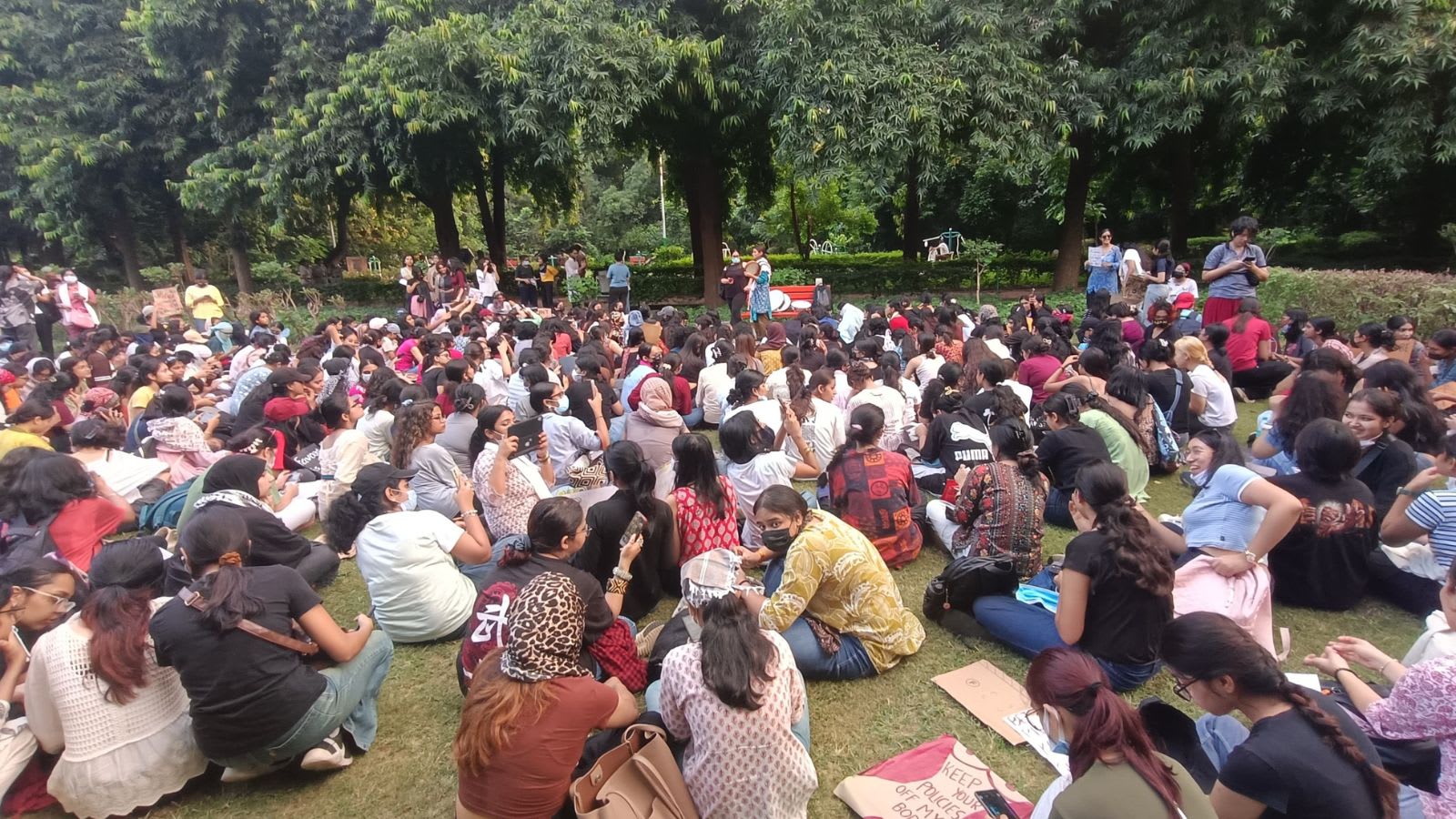
Delhi University students are protesting against a surge in sexual violence, including a recent gangrape in a DDA park. In response to safety concerns, the NDMC has initiated a project to install streetlights at 700 dark spots. Police have begun witness testimonies as the investigation into the Kalkaji park incident continues.
The Surge of Student Activism in Delhi
The recent wave of protests by Delhi University students, characterized by the rallying cry "Halla Bol!" (Raise your voice!), marks a significant resurgence in campus activism regarding women's safety. Nearly 200 students from prestigious institutions such as Lady Shri Ram College, Gargi College, Miranda House, and Kamala Nehru College marched along August Kranti Marg to demand systemic changes. This mobilization was triggered by the harrowing gangrape of a 17-year-old girl in a DDA park in Kalkaji, alongside reports of molestation in Bihar, highlighting a broader, nationwide concern regarding the vulnerability of women and children in public spaces.
The Kalkaji Incident and Police Investigation
The specific incident at the Aastha Kunj Park has become a focal point for both public outrage and legal scrutiny. Delhi Police have moved quickly to record the statements of 12 witnesses, including security guards and local workers from a nearby LPG godown. Crucially, these witnesses have provided testimony suggesting that two of the three arrested suspects—identified as Asif and Hemant—had a history of harassing people in the park prior to the crime. This evidence of prior behavioral patterns is vital for the prosecution, as it establishes a history of menace that potentially could have been mitigated by better park management or surveillance.
Infrastructure as a Safety Imperative
One of the most immediate policy responses to the students' grievances is the New Delhi Municipal Council's (NDMC) decision to address urban design failures. Recognizing that poorly lit areas act as enablers for criminal activity, the NDMC has announced an ₹18.26 crore project to install new streetlights and poles at 700 identified "dark spots" across Lutyens’ Delhi. By targeting specific corridors like Tughlak Road, Akbar Road, and Janpath Lane, the civic body aims to eliminate the environmental conditions that foster insecurity.
Broader Implications of Urban Safety
The correlation between physical infrastructure and crime prevention is a well-documented aspect of urban planning. The protests have effectively forced a conversation about how "dark spots" in a city are not merely maintenance issues, but public safety hazards that disproportionately affect women. By linking the lack of lighting to the recent gangrape, students have successfully framed infrastructure as a fundamental human rights issue, compelling municipal authorities to prioritize safety over aesthetic or routine maintenance.
Future Trends and Societal Pressure
Moving forward, the pressure on the Delhi administration to ensure accountability is expected to intensify. The fact that this is the second major demonstration in a single week underscores a growing impatience with bureaucratic inertia. As the investigation into the three suspects continues, the student movement is likely to maintain its momentum, demanding not only punitive justice but also long-term preventive measures. The success of the NDMC lighting project will likely serve as a benchmark for how the government responds to civil society pressure in the future, signaling a shift toward more responsive urban governance in the capital.
Multiple Citing Sources