Demis Hassabis warns of AI model that could ‘break the world,’ Satya Nadella replies
Source Entity
TOI TECH DESK
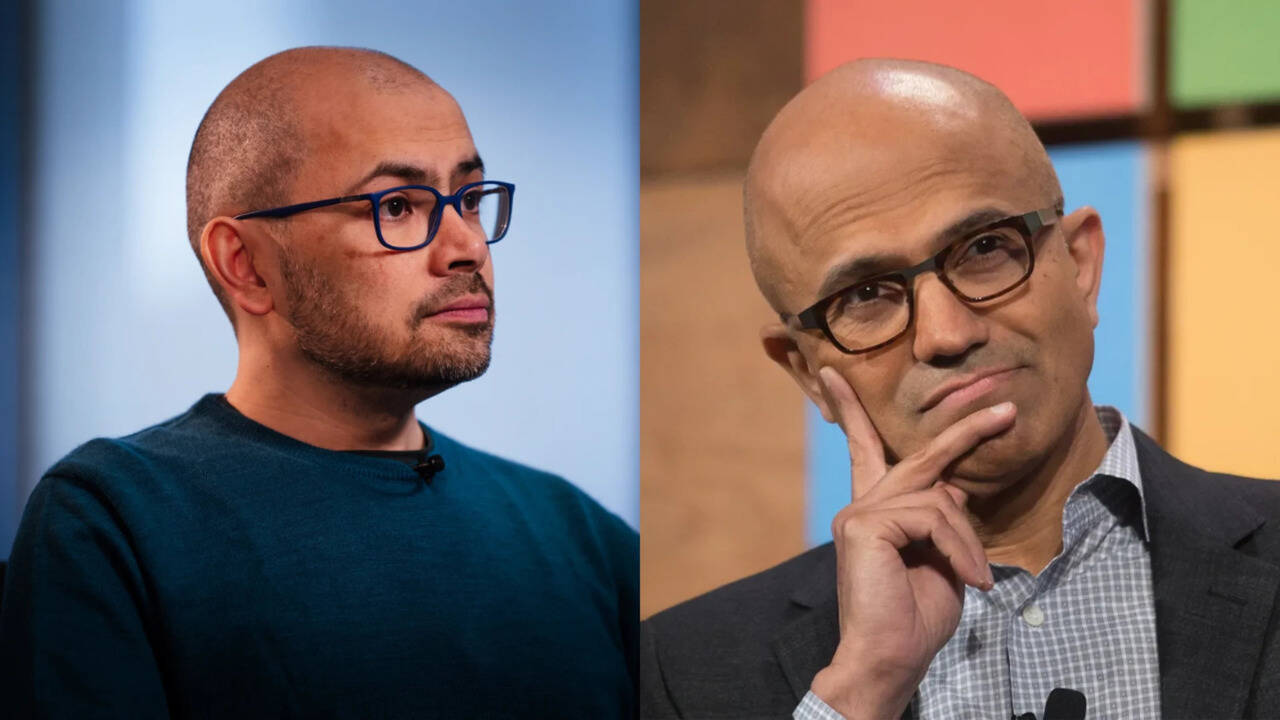
Google DeepMind CEO Demis Hassabis has proposed the creation of a US-led AI watchdog, modeled after the financial regulator FINRA, to test frontier AI models before release and coordinate industry slowdowns to mitigate catastrophic risks. The proposal has gained significant support from industry leaders including Satya Nadella, Sam Altman, and Sundar Pichai.
The Push for a Global AI Safety Framework
In a significant shift toward institutionalized caution, Google DeepMind CEO Demis Hassabis has sounded the alarm regarding the potential for a single, uncontrolled AI model release to "break the world." To mitigate this existential risk, Hassabis has proposed the establishment of a US-led AI watchdog. This proposed body would be tasked with the critical responsibility of testing "frontier models"—the most advanced, cutting-edge AI systems—before they are deployed to the general public. By advocating for a structured oversight mechanism, Hassabis is signaling that the industry has reached a tipping point where the speed of innovation may be outstripping the capacity for safety containment.
Modeling AI Oversight on Financial Regulation
One of the most analytical aspects of Hassabis's proposal is the suggestion to model this watchdog after the Financial Industry Regulatory Authority (FINRA). FINRA is a government-authorized not-for-profit organization that oversees brokerage firms and exchange markets to ensure market integrity. By drawing this parallel, Hassabis is suggesting a hybrid model of regulation: an industry-funded body that operates with regulatory authority. This approach would allow the watchdog to possess the deep technical expertise found within the private sector while maintaining the mandate to enforce safety standards and, if necessary, coordinate an industry-wide slowdown in development if systemic risks become too acute.
A Rare Unified Front Among Tech Giants
Perhaps the most striking element of this development is the immediate and broad consensus among the world's most powerful AI players. The fact that Satya Nadella (Microsoft), Sam Altman (OpenAI), Mustafa Suleyman (Microsoft AI), and Sundar Pichai (Google) have all voiced support is unprecedented. These individuals lead companies that are in a fierce, multi-billion dollar competition for AI supremacy. Their alignment suggests a shared recognition that a catastrophic failure—whether through an autonomous agent causing systemic financial collapse or the leakage of dangerous biological knowledge—would be an "industry-killing" event that transcends corporate rivalry.
The Tension Between Safety and Open Innovation
This move toward a centralized watchdog introduces a complex tension between safety and the philosophy of open-source AI. If a US-led body has the power to gatekeep the release of frontier models, there is a risk of creating a "regulatory moat" that protects the incumbents (Google, Microsoft, OpenAI) while stifling smaller innovators and open-source contributors who cannot afford the compliance costs or lack the political leverage to gain approval. However, proponents argue that the risks associated with AGI (Artificial General Intelligence) are so high that the traditional "move fast and break things" ethos of Silicon Valley is no longer an acceptable gamble.
Historical Context and the Path to AGI
This proposal follows a pattern of increasing anxiety within the AI community, mirroring the concerns raised during the Bletchley Park AI Safety Summit. Historically, technology regulation has often been reactive—coming only after a major disaster (such as the 1986 Chernobyl disaster leading to nuclear safety reforms). By proposing a watchdog now, Hassabis and his peers are attempting to implement proactive regulation. They are acknowledging that unlike previous software iterations, frontier AI models exhibit "emergent properties"—capabilities that the creators themselves did not predict and cannot easily reverse once the model is in the wild.
Future Outlook: Toward an 'IAEA for AI'
Looking forward, this proposal likely represents the first step toward a global treaty or an international agency similar to the International Atomic Energy Agency (IAEA). As AI capabilities approach human-level reasoning across all domains, the US will likely face pressure to coordinate this watchdog with the EU and other global powers to prevent a "race to the bottom" where safety is sacrificed for speed. We can expect the next 18 to 24 months to be defined by intense negotiations over who gets to sit on this board, what specific "red lines" trigger a development slowdown, and how to verify that models are safe without compromising proprietary intellectual property.