DRDO conducts maiden live jump of advanced high-altitude parachute in Ladakh
Source Entity
SURENDRA SINGH
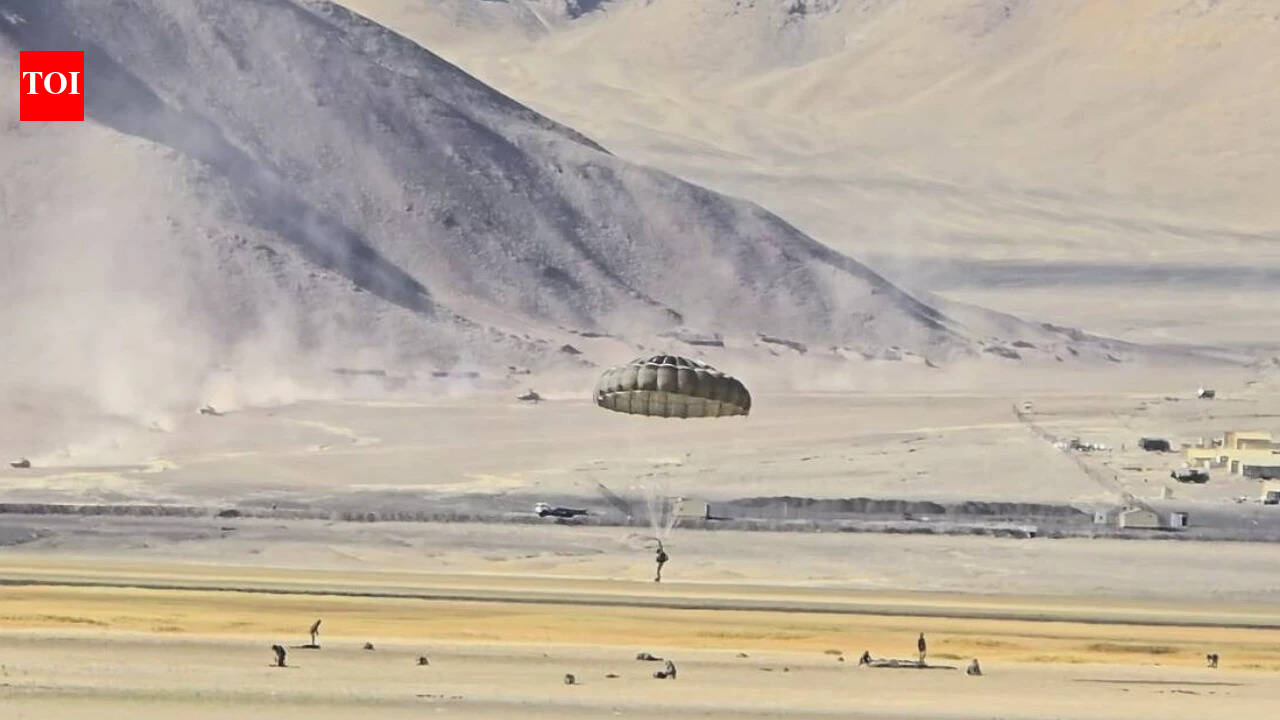
The DRDO has successfully conducted its first live high-altitude parachute jump in Ladakh at 16,000 feet. This milestone validates the system's readiness for mass deployment and supports the Aatmanirbhar Bharat initiative.
DRDO Achieves Milestone in High-Altitude Parachute Technology
The Defence Research and Development Organisation (DRDO) recently marked a significant technological leap by successfully executing the maiden live jump of an advanced high-altitude parachute system in Nyoma, Ladakh. Conducted at an elevation of 16,000 feet, this test serves as a critical validation of India's indigenous defense capabilities, proving that specialized equipment can operate reliably under the extreme environmental conditions characteristic of the Himalayan region.
Validating Precision and Safety
Beyond the feat of the jump itself, the primary objective of this exercise was to verify the system's effectiveness for mass drops. In high-altitude terrain, where air density is significantly lower and meteorological conditions are volatile, parachute stability is paramount. By successfully completing this live test, the DRDO has demonstrated that the parachute system can ensure the safety of personnel and cargo during large-scale deployments, which is essential for logistical support in high-altitude border areas.
The Strategic Significance of Nyoma
Choosing Nyoma for this trial is highly strategic. As a critical high-altitude hub in Ladakh, Nyoma presents the exact operational environment where these parachute systems would be deployed in real-world scenarios. The ability to conduct mass drops at 16,000 feet provides the Indian Armed Forces with a tactical advantage, allowing for the rapid induction of troops and supplies into remote, mountainous areas where traditional ground transportation might be compromised by terrain or weather.
Aatmanirbhar Bharat and Defense Synergy
Defence Minister Rajnath Singh has lauded this achievement as a clear testament to the success of the 'Aatmanirbhar Bharat' (Self-Reliant India) initiative. This project highlights the growing synergy between India's defense entities, proving that domestic research, design, and manufacturing can produce world-class military hardware. This reduction in reliance on foreign technology is a cornerstone of India's long-term defense strategy.
Future Implications for Logistics
Looking ahead, the successful deployment of this advanced parachute system paves the way for further enhancements in airborne logistics. With the technology now validated for mass drops, the armed forces can streamline their supply chains for high-altitude outposts. This development is likely to influence future procurement and operational planning, ensuring that the Indian military remains agile and well-equipped to defend its borders despite the daunting geographical challenges of the Ladakh region.
Conclusion
The successful test at Nyoma represents more than just a technical success; it marks a transformation in India’s high-altitude tactical capabilities. By prioritizing indigenous innovation, the DRDO is not only strengthening the nation’s defense infrastructure but also ensuring that Indian soldiers are supported by equipment specifically engineered to master the most challenging terrains on Earth.