DUSU poll results: ABVP wins 3 posts, NSUI rebel Deepanshu Shokeen bags VP seat
Source Entity
SIDDHI DHARMADHIKARI
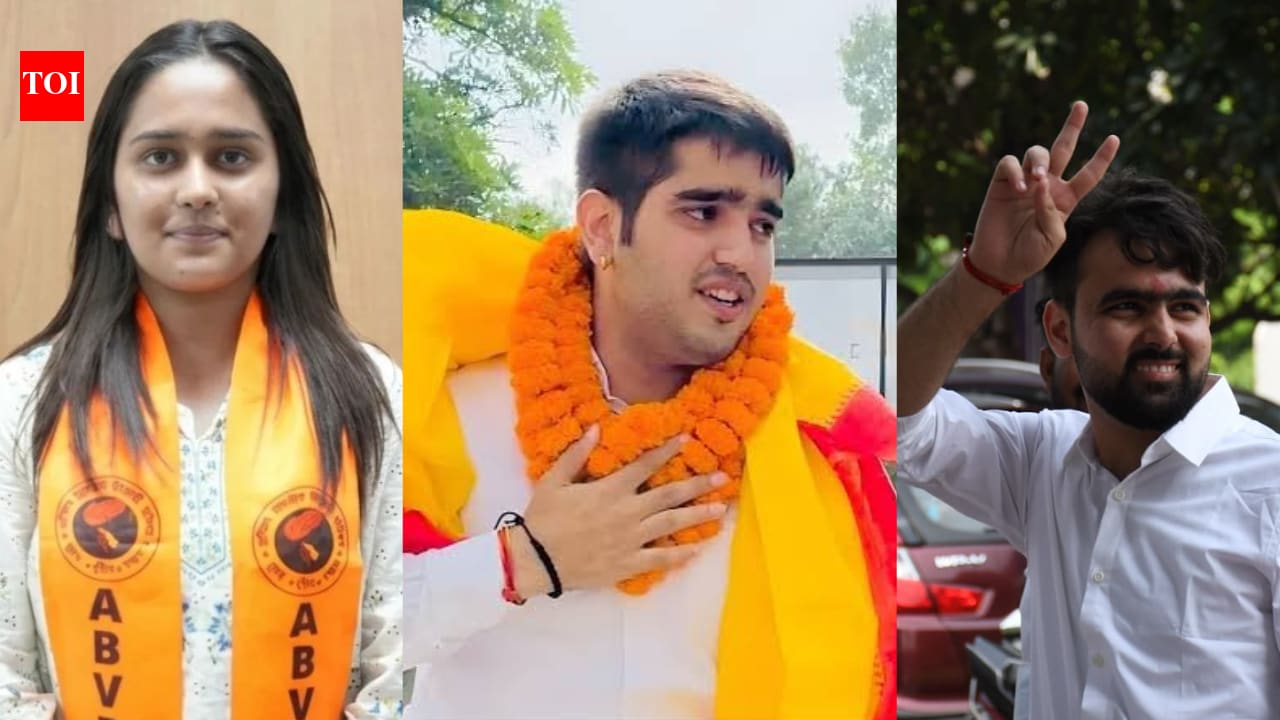
The DUSU 2026 election results are currently being counted, with a tight contest emerging between the ABVP, NSUI, and independent candidates. Initial trends show mixed leads across the four central panel posts following a 40.46% voter turnout.
The 2026 DUSU Elections: A High-Stakes Campus Battle
The Delhi University Students’ Union (DUSU) elections for the 2026-27 academic session have entered a critical phase as vote counting progresses. With a recorded voter turnout of 40.46%, the election represents a significant engagement period for the student body. The contest focuses on four central panel positions: president, vice-president, secretary, and joint secretary, drawing intense competition from major student organizations including the ABVP, the NSUI, and the AISA-SFI alliance.
Analyzing the Initial Trends
As counting commenced on Saturday, early trends highlighted a fragmented landscape. The RSS-affiliated Akhil Bharatiya Vidyarthi Parishad (ABVP) and the Congress-backed National Students’ Union of India (NSUI) have been locked in a neck-and-neck struggle, particularly for the presidency after ten rounds of counting. Interestingly, the electoral map is not purely binary; independent candidates have demonstrated surprising strength, leading the race for the vice-president position, while the Samajwadi Chhatra Sabha (SCS) has emerged as a contender for the joint secretary post.
Contextualizing the Campaign Climate
This year’s election cycle did not occur in a vacuum. The atmosphere was heavily influenced by broader grievances within the student community, most notably the recent protests at Jantar Mantar sparked by allegations of paper leaks. These events have served as a catalyst for student activism, forcing candidates to address issues of academic integrity and student welfare as primary pillars of their manifestos.
The Candidates and Organizational Strategies
The ABVP has pinned its hopes on a panel led by presidential candidate Yash Dabas, alongside Ishu Maurya, Riya Chhawadi, and Lakshya Raj Singh. Conversely, the NSUI has countered with a slate featuring Vijay Shankar Meena, Vir Chatrath, Namrata Chaudhary, and Gopal Choudhary. The Left alliance (AISA-SFI) has also maintained a presence with Ananya Raturi and her team, ensuring that the ideological spectrum of national politics continues to find a representative voice on the Delhi University campus.
Historical Precedents and Future Implications
To understand the gravity of these results, one must look at the previous academic session where the ABVP secured three out of the four central panel seats, with the NSUI capturing one. The current surge of independent candidates and the potential for a Samajwadi Chhatra Sabha victory—a group that hasn't held a central panel seat since 2009—suggests a possible shift in student sentiment. The final tally will not only dictate campus governance for the coming year but will also serve as a barometer for the influence of national political ideologies within the Indian student movement.
Multiple Citing Sources