ED files PMLA complaint in alleged visa fraud racket
Source Entity
India Latest News: Top National Headlines Today & Breaking News | The Hindu
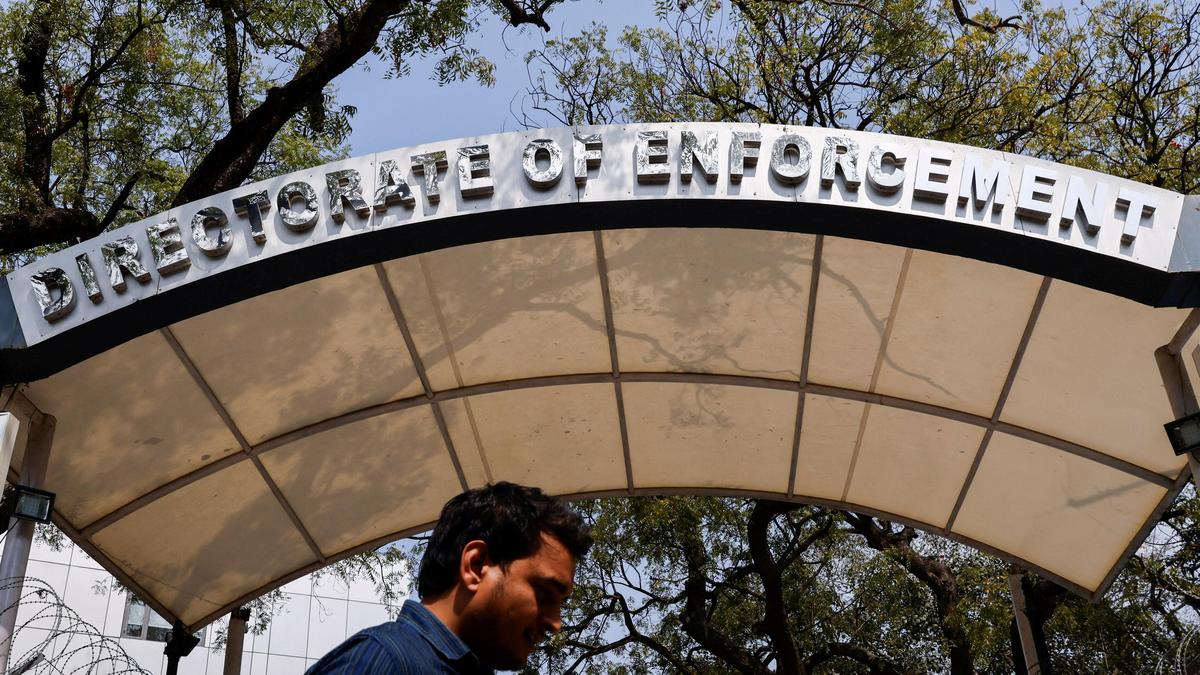
The Enforcement Directorate (ED) has filed a complaint under the Prevention of Money Laundering Act (PMLA) to probe a sophisticated visa fraud racket. The operation allegedly involved the creation of forged educational and experience certificates, as well as fake financial statements, to illegally secure U.S. student and visitor visas.
ED Crackdown on Sophisticated U.S. Visa Fraud Racket
The Enforcement Directorate (ED) has escalated its investigation into a complex visa fraud operation by filing a formal complaint under the Prevention of Money Laundering Act (PMLA). This transition from a standard criminal investigation to a PMLA probe indicates that the agency has identified a significant "proceeds of crime" element, suggesting that the racket generated substantial illegal wealth through the systematic deception of immigration authorities. The case is built upon multiple First Information Reports (FIRs) that outline a coordinated conspiracy to bypass the stringent requirements of the United States visa process.
The Mechanics of the Deception
At the heart of this racket was a sophisticated "document mill" designed to manufacture credibility where none existed. The perpetrators allegedly specialized in the creation of forged educational certificates and fabricated professional experience letters, allowing applicants to present a false persona of academic and professional achievement. Beyond credentials, the racket tackled the financial barriers of visa acquisition by producing fake financial statements and fraudulent proof of funds. By manipulating these critical documents, the operators ensured that applicants appeared to meet the solvency requirements mandated by the U.S. Department of State, thereby tricking consular officers into granting student and visitor visas.
Transition to PMLA: Targeting the Money Trail
The invocation of the PMLA is a strategic move by the ED. While the initial FIRs likely focused on the act of forgery and cheating under the Indian Penal Code, the PMLA allows the government to target the financial infrastructure of the crime. This means the investigation will now pivot toward tracing the money trail—identifying how the fees collected from applicants were laundered and where the profits were invested. By treating the earnings from this fraud as "proceeds of crime," the ED has the authority to attach assets, freeze bank accounts, and bring the kingpins of the racket under a much more stringent legal framework that often carries higher conviction rates and harsher penalties.
Systemic Implications for Genuine Applicants
Such high-profile fraud cases have a detrimental ripple effect on legitimate travelers and students. When large-scale forgery rackets are exposed, it often leads to a period of heightened scrutiny at U.S. consulates. This "trust deficit" can result in increased visa interview rigor, higher rejection rates for honest applicants, and longer processing times as consular officers implement more exhaustive verification protocols. For the thousands of genuine Indian students seeking education in the U.S., the actions of a few fraudulent consultancies can inadvertently complicate their path to international education.
Historical Context and the "Visa Mill" Phenomenon
This case is not an isolated incident but part of a broader historical trend of "visa mills" operating within the shadow economy of immigration consultancies. For years, unregulated agents have preyed on the aspirations of individuals seeking better opportunities abroad, offering "guaranteed visas" in exchange for exorbitant sums. These operations typically thrive in environments where there is a high demand for migration and a perceived gap in the ability to meet official requirements. The current ED probe highlights a systemic vulnerability where the desire for global mobility is exploited by organized criminal networks.
Future Trends and Preventive Measures
Looking ahead, this investigation is likely to trigger a broader crackdown on unauthorized visa consultancies across India. We can expect a shift toward digitized verification systems, such as the adoption of blockchain-based academic credentials, which would make the forgery of certificates nearly impossible. Furthermore, there is likely to be an increase in bilateral intelligence sharing between the ED and U.S. federal agencies, such as the FBI or Homeland Security, to create a real-time database of fraudulent documents. This inter-agency cooperation will be essential in dismantling the financial incentives that drive these rackets.
Summary
In conclusion, the ED's filing of a PMLA complaint transforms a case of document forgery into a high-stakes financial crime investigation. By targeting the economic engine of the visa fraud racket, the Indian government is not only seeking to punish the perpetrators but also to protect the integrity of the immigration process. This move serves as a stern warning to fraudulent consultancies that the manipulation of international visa systems for profit will be met with severe financial and legal repercussions.
Verification Required?