Fed raises rates: What it means for your credit cards, mortgages, savings accounts and auto loans
Source Entity
US Top News and Analysis
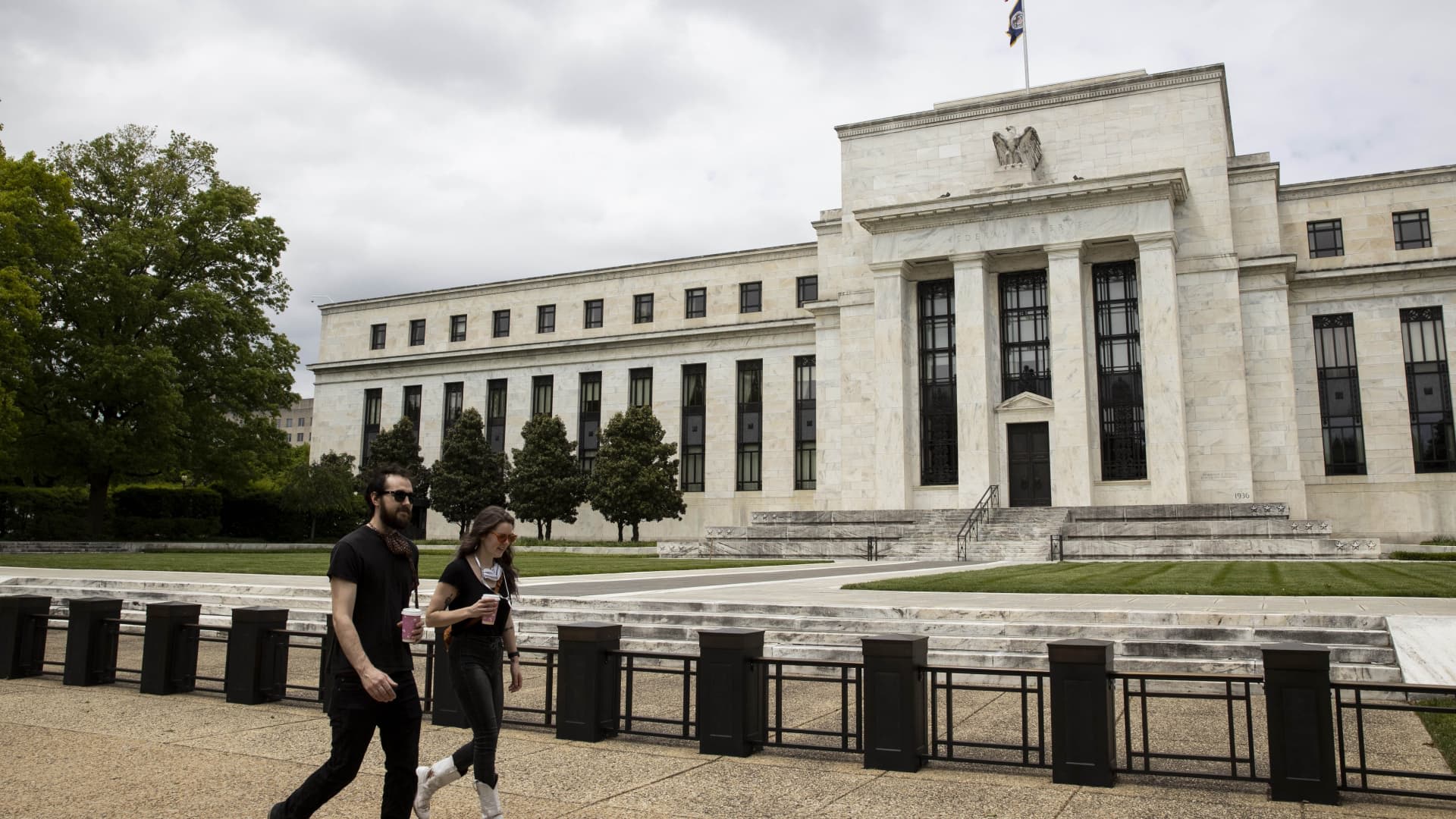
The Federal Reserve is expected to implement its first interest rate hike in over three years amid surging government bond yields. While officials like Treasury Secretary Scott Bessent attempt to manage market volatility, analysts remain skeptical about the effectiveness of such interventions.
The Federal Reserve’s Pivot: Navigating a New Interest Rate Era
The Federal Reserve stands at a critical juncture, with expectations mounting that the Federal Open Market Committee will announce a quarter-point interest rate increase this Wednesday. This move marks a significant shift in monetary policy, representing the first hike in over three years. With federal funds futures currently pricing in a 90% probability of this action, the market is bracing for a fundamental change in the cost of capital, which will inevitably ripple through consumer loans, credit cards, and investment portfolios.
The Bond Market Conundrum
Central to the current economic tension is the volatility in the bond market. Surging government bond yields have pushed the 10-year Treasury note above 5%, the highest level since 2007. This rise in yields is effectively tightening credit conditions across the broader U.S. economy. While these rising costs are a central concern for the Federal Reserve’s deliberations, historical data suggests that interest rate hikes are not a guaranteed mechanism to tame long-term yields, leading to widespread skepticism regarding the central bank's ability to exert direct control over the bond market trajectory.
Political Pressure and Institutional Autonomy
The situation is further complicated by the activist approach of Treasury Secretary Scott Bessent, who has sought to dampen rising yields through operations such as the expansion of debt buybacks. Despite these efforts, the market has largely disregarded these interventions, with Bessent attributing the instability to broader global issues. Crucially, analysts maintain that the Federal Reserve will likely resist explicit political pressure to bail out the market, prioritizing its mandate for monetary stability over short-term political objectives.
Market Outlook and Investor Strategy
Despite the impending "speed bumps" anticipated in the coming weeks, market sentiment remains cautiously optimistic. Experts like Goldman Sachs partner John Shugar suggest that the heavy lifting regarding corporate earnings has already been achieved, providing a potential buffer against volatility. Investors are currently advised to look toward specific growth areas, such as AI consumer sectors, which may offer opportunities even as the broader market adjusts to a higher-rate environment.
Long-term Implications
The shift toward higher interest rates signals a departure from the ultra-loose monetary policies of the past several years. As the Federal Reserve navigates this transition, the primary challenge will be balancing the need to address economic inflation without triggering a recessionary environment. The disconnect between government efforts to manipulate yields and the market's reaction suggests that the upcoming months will be defined by a recalibration of risk across all asset classes.
Conclusion
In summary, the Federal Reserve’s decision to hike rates is a high-stakes maneuver designed to respond to an evolving economic landscape. While political figures attempt to exert influence over bond yields, the market remains driven by complex global factors. As the Fed moves forward, investors should anticipate volatility but remain focused on sector-specific fundamentals to navigate the challenges of a tightening monetary cycle.
Multiple Citing Sources