FedEx Freight expands CTO’s role to cover commercial strategy following CCO ouster
Source Entity
Yahoo Finance
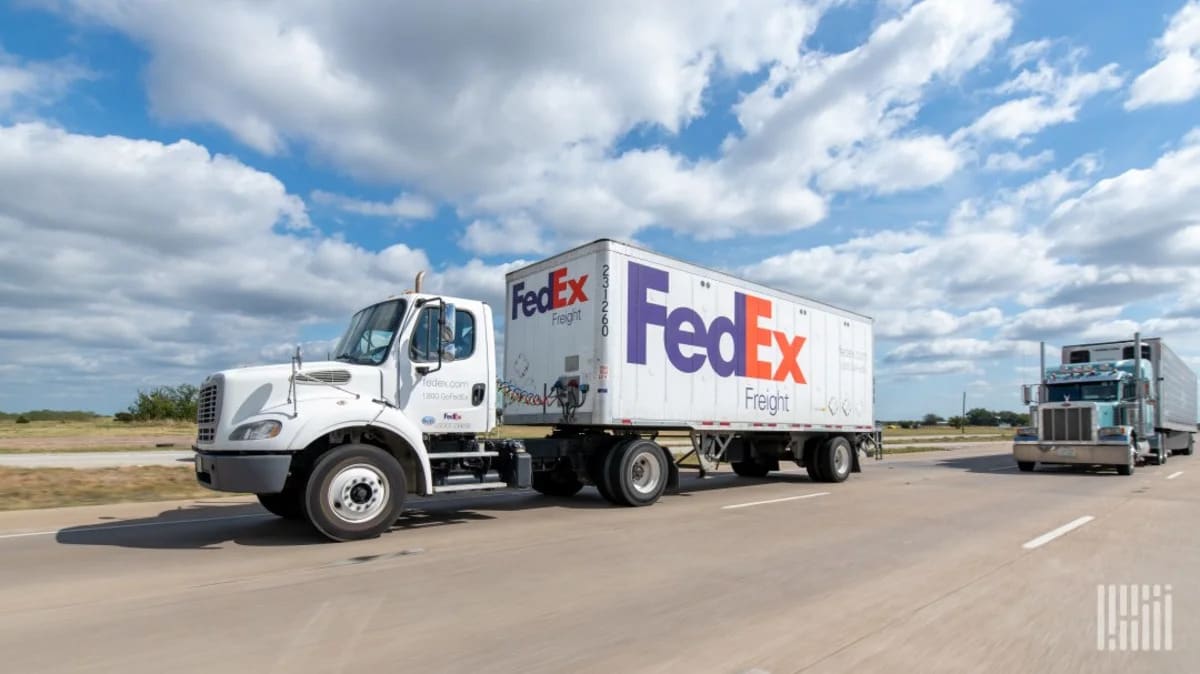
FedEx Freight has appointed Mike Rodgers as its new chief commercial and technology officer. This move follows the recent termination of former executive Mike Lyons and consolidates technology and commercial oversight under Rodgers.
Strategic Realignment at FedEx Freight
FedEx Freight has initiated a significant leadership restructuring by appointing Mike Rodgers as the new chief commercial and technology officer. This decision, announced shortly after the termination of Mike Lyons, who previously served as the chief specialized services and commercial officer, signals a deliberate shift in the carrier’s operational focus. By merging technology and commercial strategy under a single leadership role, FedEx Freight appears to be prioritizing a more integrated approach to digital transformation and market engagement.
The Rise of Mike Rodgers
Mike Rodgers is no stranger to the complexities of logistics and infrastructure. Having joined FedEx Freight in June 2025 as the chief technology officer, he has already demonstrated his value by spearheading the critical information-technology separation from the broader FedEx corporation. His extensive background, which includes nearly a decade at Pilot Company overseeing digital strategy for an expansive network of travel centers, positions him uniquely to handle the intersection of physical freight movement and digital customer experience.
Consolidating Operational Oversight
Under his expanded mandate, Rodgers will now be responsible for technology, commercial strategy, customer experience, and marketing. This consolidation is a tactical move to reduce silos within the organization. By aligning the teams that build the technology with the teams that define the commercial go-to-market strategy, FedEx Freight aims to streamline its customer-facing initiatives. This structure allows for a more agile response to market fluctuations within the less-than-truckload (LTL) sector.
Industry Implications of the LTL Sector
The LTL industry is currently undergoing a period of rapid digital evolution. Companies are increasingly relying on sophisticated data analytics to optimize routing, improve load capacity, and enhance transparency for shippers. By placing a seasoned technology leader in charge of commercial strategy, FedEx Freight is acknowledging that competitive advantage in the modern freight market is no longer driven solely by physical assets, but by the digital intelligence that powers them.
Looking Toward Future Integration
As Rodgers transitions into this dual-purpose role, the company’s ability to leverage its IT infrastructure for commercial gain will be tested. The successful separation of IT systems from the parent company was a foundational step; the next phase involves utilizing that independence to drive innovation in customer service and marketing. If this integration proves successful, it could serve as a blueprint for other logistics firms looking to bridge the gap between back-end infrastructure and front-end revenue generation.
Conclusion
In summary, the appointment of Mike Rodgers represents a pivotal moment for FedEx Freight. By centralizing authority over technology and commercial operations, the firm is positioning itself to be more responsive to the evolving needs of the logistics landscape. While the abrupt departure of the previous commercial lead introduces a period of transition, the strategic consolidation suggests that FedEx Freight is committed to a tech-forward future that prioritizes cohesive customer experiences.