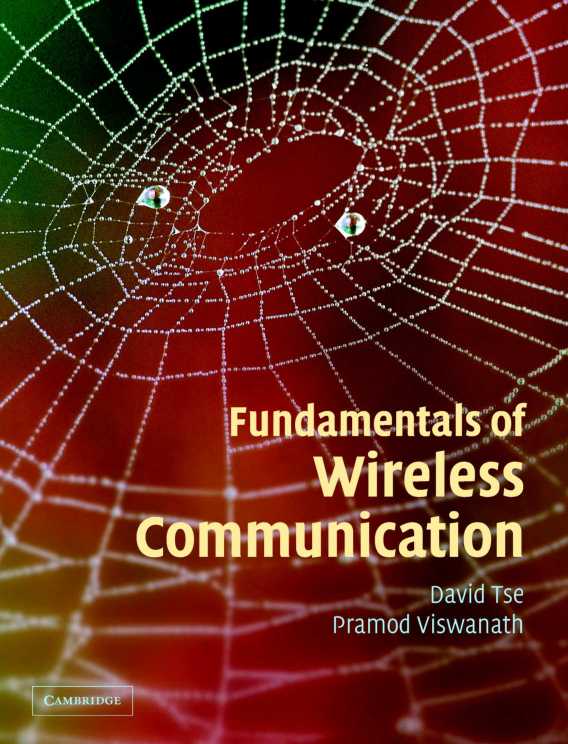
Fundamentals of Wireless Communication
Source Entity
Hacker News
<a href="https://news.ycombinator.com/item?id=48901454">Comments</a>
The Architecture of Connectivity: Analyzing the Fundamentals of Wireless Communication
Wireless communication serves as the invisible backbone of the modern digital age, enabling the seamless transfer of information without the need for physical conductors. At its core, this technology relies on the manipulation of electromagnetic waves to carry data across space. The discussion surrounding the fundamentals of wireless communication is not merely academic; it is the basis for every device from the simplest Bluetooth earbud to the most complex satellite array. By understanding these fundamentals, we can appreciate the intricate balance between physics, mathematics, and engineering that allows for global connectivity.
The Physics of Signal Propagation and Spectrum Management
The primary mechanism of wireless communication is the propagation of electromagnetic waves. These waves travel through the vacuum of space or through various media, with their behavior dictated by their frequency and wavelength. The electromagnetic spectrum is partitioned into various bands—such as VHF, UHF, and microwave—each with distinct properties. For instance, lower frequencies can penetrate walls and travel longer distances, making them ideal for broadcast radio, while higher frequencies provide the massive bandwidth required for high-speed 5G data. The management of this spectrum is a critical geopolitical and technical challenge, as interference occurs when multiple signals overlap on the same frequency, necessitating strict regulatory oversight and sophisticated filtering techniques.
Modulation and the Art of Data Encoding
Raw electromagnetic waves are simply carriers; to transmit actual information, the wave must be modified through a process known as modulation. This involves altering the amplitude (AM), frequency (FM), or phase (PM) of the carrier wave to represent binary data. Modern wireless systems utilize more complex schemes such as Quadrature Amplitude Modulation (QAM) and Orthogonal Frequency Division Multiplexing (OFDM). OFDM, in particular, is a cornerstone of LTE and Wi-Fi, as it splits a single data stream across several narrow-band subcarriers to reduce interference and maximize spectral efficiency. This allows for the high-throughput experiences users expect from modern smartphones, effectively squeezing more data into limited frequency bands.
Historical Evolution: From 1G to the Horizon of 6G
The trajectory of wireless communication is marked by generational leaps, each introducing a fundamental shift in how data is handled. The first generation (1G) was purely analog, supporting only voice. The transition to 2G introduced digitalization and SMS, while 3G brought the first iterations of mobile internet. 4G LTE revolutionized the landscape by moving toward an all-IP (Internet Protocol) network, enabling high-definition streaming and the app economy. Currently, 5G is deploying Millimeter Wave (mmWave) technology and Massive MIMO (Multiple Input Multiple Output) to drastically reduce latency and increase device density. Looking forward, 6G is expected to integrate terahertz frequencies and AI-native air interfaces, potentially blurring the line between the physical and digital worlds through holographic communication.
Overcoming the Shannon-Hartley Limit and Environmental Noise
Every wireless system must contend with the Shannon-Hartley theorem, which establishes the maximum rate at which information can be transmitted over a communications channel of a certain bandwidth in the presence of noise. Engineers must constantly battle 'noise'—random fluctuations in the signal caused by thermal agitation or external interference. To combat this, techniques such as Forward Error Correction (FEC) and adaptive modulation are used. These systems dynamically adjust the complexity of the signal based on the quality of the link; if a user moves further from a cell tower and the signal weakens, the system automatically switches to a more robust but slower modulation scheme to ensure the connection does not drop.
Future Trends: The Convergence of AI and Wireless Infrastructure
The next frontier in wireless communication is the integration of Artificial Intelligence (AI) and Machine Learning (ML) directly into the physical layer of the network. Rather than relying on static mathematical models for signal processing, future networks will use AI to predict traffic patterns, optimize beamforming in real-time, and manage interference autonomously. This 'cognitive radio' approach will allow devices to sense the spectrum and jump to unused frequencies instantaneously. Furthermore, the rise of the Internet of Things (IoT) will demand a shift toward 'massive Machine Type Communications' (mMTC), where the focus shifts from high-speed individual links to supporting millions of low-power devices per square kilometer.
Summary
Wireless communication is a sophisticated interplay of electromagnetic physics and digital signal processing. From the basic principles of wave propagation and modulation to the cutting-edge deployment of 5G and the conceptualization of 6G, the field is defined by a constant struggle to overcome physical limits like noise and spectrum scarcity. As we move toward an AI-driven infrastructure, the fundamentals remain the same, but the efficiency and scale of implementation continue to evolve, ensuring that connectivity becomes an omnipresent utility.