Passenger's jewellery stolen on Rajdhani Express; court orders Railways to pay Rs 80,000
Source Entity
TOI LEGAL DESK
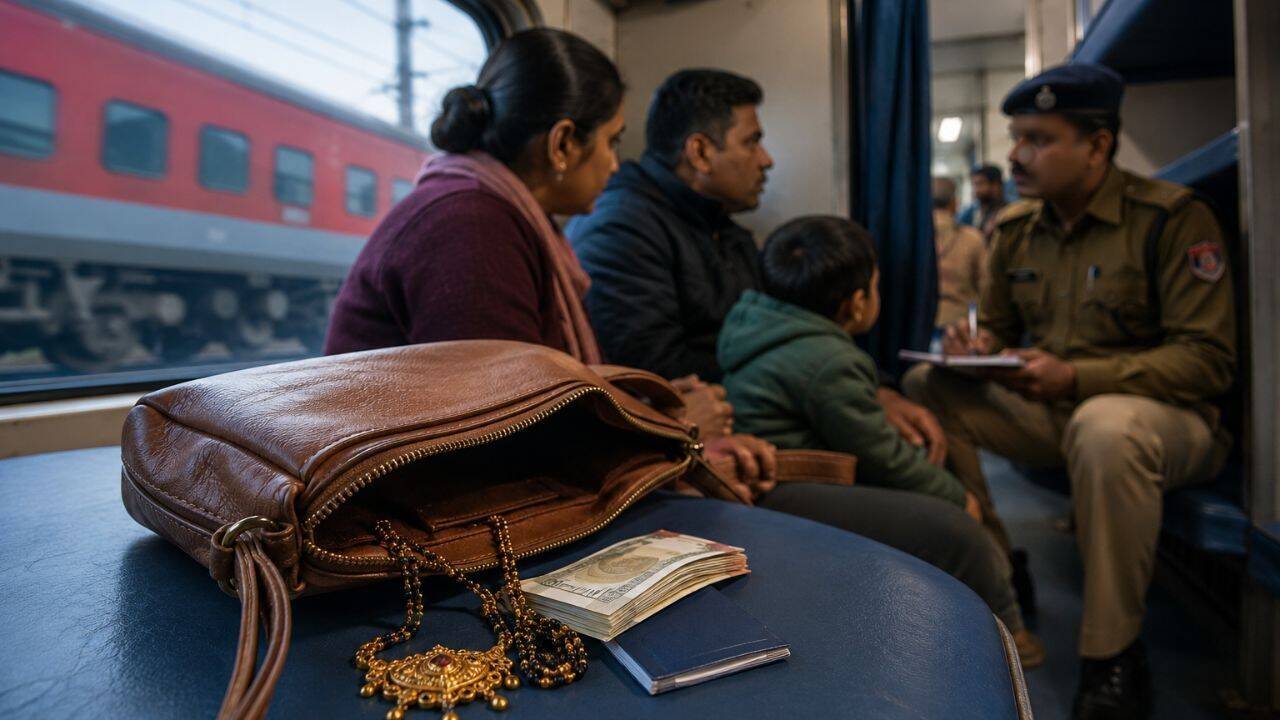
A district consumer commission ordered Northern Railway to pay Rs 80,000 to a couple. Their handbag containing a gold mangalsutra was stolen during a Rajdhani Express journey. The commission found the Railways guilty of deficiency in service for this incident. Railways contested the claim, citing un-booked luggage rules and lack of notice. However, evidence showed railway officials received the complaint and no attendant was present.
Legal Accountability in Premium Rail Travel: The Rajdhani Express Theft Case
In a significant ruling regarding passenger safety and service accountability, a district consumer commission has ordered Northern Railway to pay ₹80,000 to a couple who suffered the theft of a gold mangalsutra during their journey on the Rajdhani Express. The case highlights the critical intersection of consumer rights and the responsibilities of state-run transport services, particularly when those services are marketed as 'premium' offerings. The commission's decision to penalize the railway underscores a growing judicial trend in India toward holding service providers accountable for security lapses, regardless of internal departmental rules.
The Core Incident and the Railway's Defense
The incident began when a couple traveling on the Rajdhani Express reported the theft of their handbag, which contained a valuable gold mangalsutra. Upon seeking redress, the couple approached the consumer commission, alleging a failure in the security measures promised by the railway. In response, Northern Railway attempted to shield itself from liability by invoking technicalities. Their primary defense rested on the rules regarding "un-booked luggage," arguing that the railway cannot be held responsible for items that were not officially declared or booked in the luggage van. Furthermore, the railway claimed there was a lack of timely notice regarding the theft, attempting to frame the incident as a private loss rather than a service failure.
Judicial Findings and 'Deficiency in Service'
However, the district consumer commission dismissed the railway's arguments, focusing instead on the evidence of negligence. The commission found that the railway officials had indeed received the complaint, debunking the claim that there was no notice. More critically, the court noted the absence of an attendant on the train during the period in question. This absence was viewed as a direct "deficiency in service," as the presence of staff is a fundamental component of the security and assistance framework promised to passengers. By failing to provide the necessary personnel to monitor and assist passengers, the Northern Railway was found to have breached its duty of care.
The Paradox of Premium Branding
The Rajdhani Express is not merely a train; it is branded as a luxury service with higher ticket pricing and a promise of enhanced comfort and safety. This branding creates a higher legal and ethical expectation of security. When a passenger pays a premium for a Rajdhani ticket, there is an implicit contract that the environment will be safer than that of a standard express train. The court's ruling acknowledges this discrepancy, suggesting that the railway cannot charge premium fares while providing substandard security oversight. This case serves as a reminder that branding must be backed by operational reality.
Broader Implications for Indian Consumer Law
This judgment reinforces the power of the Consumer Protection Act in India, demonstrating that state-owned enterprises are not immune to the claims of individual citizens. For years, government departments often relied on bureaucratic immunity or complex rulebooks to avoid compensation. However, the shift toward viewing passengers as 'consumers' means that the focus has moved from whether a specific rule was broken to whether the overall service provided was deficient. This sets a precedent that could lead to an increase in claims against the Indian Railways for negligence, potentially forcing a systemic overhaul of on-board security protocols.
Future Trends in Railway Security and Liability
Looking forward, this ruling is likely to push the Indian Railways toward implementing more robust surveillance and staffing measures. To avoid frequent payouts via consumer courts, the railway may be forced to integrate better technology, such as increased CCTV coverage in coaches or more rigorous verification of on-board staff attendance. Additionally, we may see a revision in how 'un-booked luggage' rules are communicated to passengers, as the courts are increasingly unwilling to let these rules override the basic right to a safe journey.
Summary of the Verdict
Ultimately, the order for Northern Railway to pay ₹80,000 is a victory for passenger rights over institutional rigidity. By prioritizing the evidence of an absent attendant and the receipt of the complaint over the technicalities of luggage booking, the commission has affirmed that the safety of the passenger is paramount. This case stands as a cautionary tale for service providers: the gap between marketed luxury and actual service delivery can lead to significant legal and financial liabilities.