Pune building collapse: FIR against two officials of private company for negligence, safety lapses
Source Entity
India Latest News: Top National Headlines Today & Breaking News | The Hindu
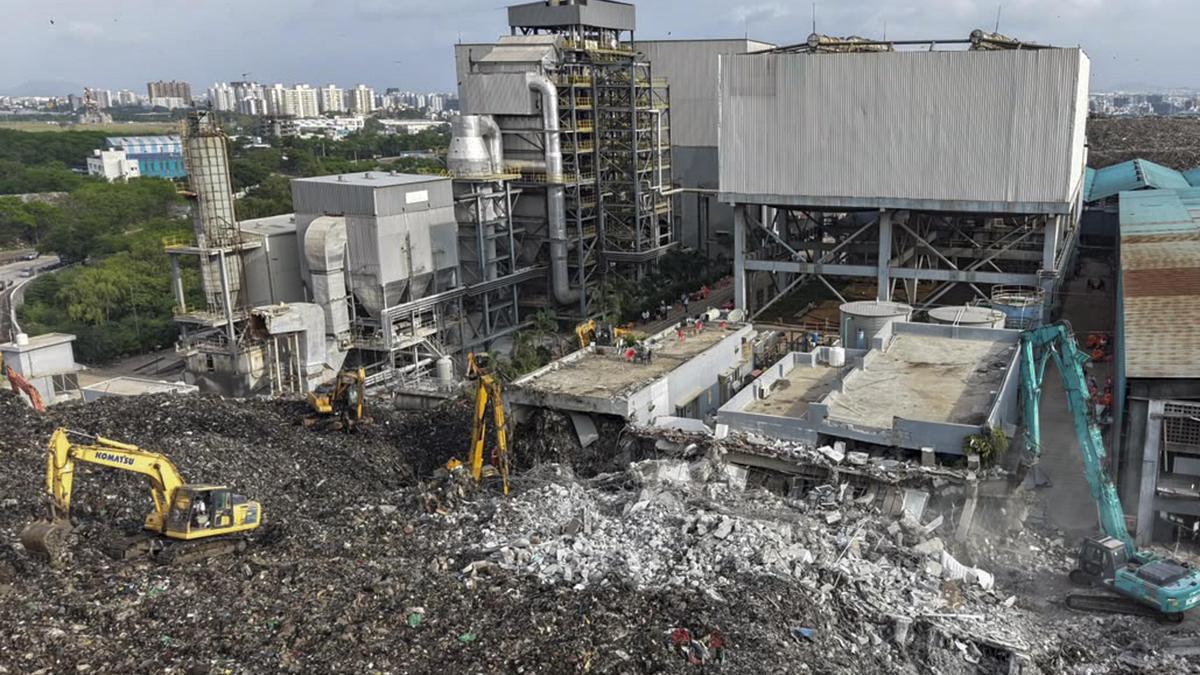
"As no security measures were adopted, a portion of SLF [mound of legacy waste] collapsed on the three-storey building on July 8, claiming nine lives," the FIR states
Tragedy in Pune: Analyzing the Fatal Collapse of a Legacy Waste Mound
On July 8, a catastrophic event occurred in Pune when a portion of a legacy waste mound, known as a Sanitary Landfill (SLF), collapsed onto a three-story residential building. The disaster resulted in the tragic loss of nine lives, sparking immediate legal action and intense scrutiny of urban waste management practices. The filing of a First Information Report (FIR) against two officials of a private company highlights a critical failure in safety protocols, with the legal documents explicitly stating that no security measures were adopted to prevent such a collapse. This incident serves as a grim reminder of the inherent dangers associated with unstable waste deposits in densely populated urban corridors.
The Peril of Legacy Waste and SLF Stability
To understand the gravity of this event, it is essential to examine the nature of "legacy waste." These are massive mounds of accumulated refuse that have been dumped over decades, often without scientific lining or stabilization. Over time, these landfills become structurally unstable due to the decomposition of organic matter, which creates internal voids and generates methane gas, increasing the risk of landslides—especially during periods of heavy rainfall common in Maharashtra. The collapse in Pune was not a random act of nature but a predictable failure of a structure that lacked the engineering oversight required to manage the sheer weight and volatility of a legacy waste mound.
Corporate Negligence and the Failure of Oversight
The core of the legal battle now rests on the negligence of the private company tasked with managing the site. The FIR indicates a total absence of security and safety measures, suggesting that the company prioritized operational convenience or cost-cutting over human life. In professional waste management, slope stability analysis and the installation of retaining walls are standard requirements to prevent landslides. The fact that a three-story building was positioned in the direct path of a potential collapse suggests a failure in both the company's risk assessment and the municipal government's zoning enforcement. This negligence transformed a waste management site into a dormant hazard that eventually claimed nine lives.
Urban Encroachment and Zoning Failures
Beyond the immediate negligence of the private contractor, this tragedy underscores a broader systemic issue: the encroachment of residential structures near hazardous waste sites. In rapidly expanding cities like Pune, the boundary between industrial waste zones and residential colonies often blurs. When low-income housing or unplanned developments are built adjacent to legacy landfills, the risk to human life increases exponentially. This event highlights the urgent need for strict "buffer zones" around SLFs to ensure that no residential buildings are within the potential "run-out" zone of a waste slide, as the proximity of the building in this case was a primary factor in the high fatality count.
Legal Implications and the Path to Accountability
The FIR against the two officials marks the beginning of a complex legal process focused on corporate liability. By charging officials with negligence, the state is attempting to pierce the corporate veil to hold individuals accountable for safety lapses. This case will likely set a precedent for how private contractors managing public utilities and waste are held responsible for disasters. If proven that the officials ignored warnings or bypassed safety audits, the legal ramifications could extend beyond criminal negligence to include massive civil liabilities and the potential blacklisting of the firm from future government contracts.
Conclusion: Moving Toward Scientific Landfill Management
In conclusion, the Pune building collapse is a heartbreaking example of what happens when urban growth ignores environmental safety. To prevent future occurrences, Pune and other Indian cities must transition from simple dumping to "biomining" and the scientific closure of legacy landfills. Reducing the height of waste mounds and stabilizing slopes is no longer optional but a necessity for public safety. The loss of nine lives must serve as a catalyst for a comprehensive audit of all legacy waste sites across the region to ensure that no other residential area is living in the shadow of a potential disaster.
Verification Required?