Anti-government slogans not sedition in democracy: Punjab and Haryana High Court
Source Entity
Ashish Shaji
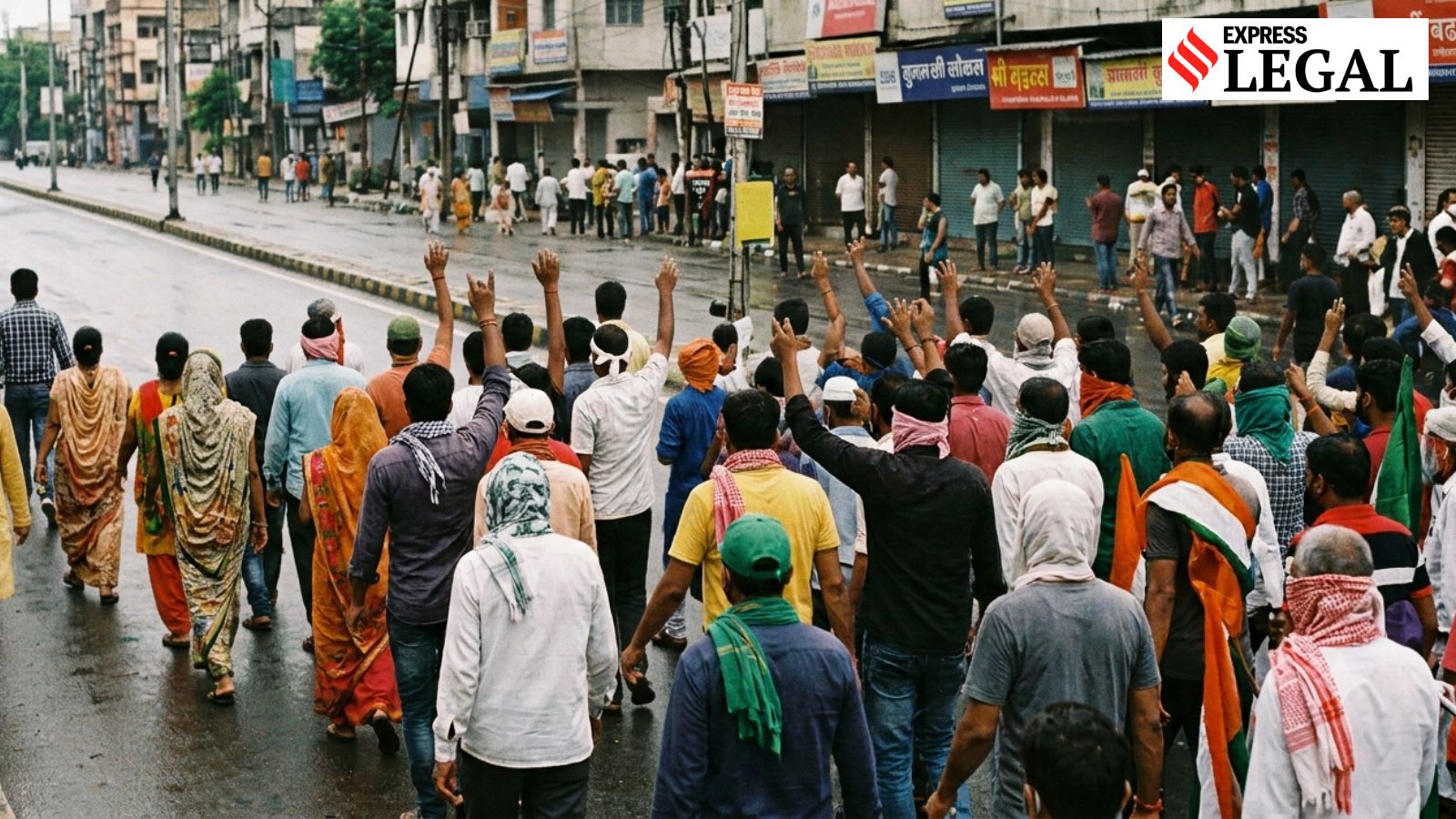
According to the prosecution, the mob damaged computers, furniture and other public property, and set an office premises on fire while raising slogans. (AI-generated image) Observing that raising slo...
Judicial Clarity on Dissent: The Punjab and Haryana High Court Ruling
In a significant affirmation of democratic freedoms, the Punjab and Haryana High Court has ruled that the act of raising slogans against the government does not, by itself, constitute the crime of sedition. This ruling arrives amidst a complex legal landscape in India, where the boundaries between legitimate political dissent and illegal incitement are frequently contested. The court's observation underscores a fundamental tenet of democratic governance: that the government of the day is subject to criticism, and expressing dissatisfaction through slogans is a protected form of speech.
Distinguishing Dissent from Criminality
A critical nuance in this case is the distinction the court makes between the expression of an opinion and the commission of a violent act. While the prosecution highlighted that a mob had damaged computers, destroyed furniture, and set fire to office premises, the court focused specifically on the charge of sedition linked to the slogans. By decoupling the act of chanting anti-government slogans from the physical crimes of arson and vandalism, the court has ensured that the legal definition of sedition is not overly broadened to include all forms of protest, even those that unfortunately devolve into violence.
Historical Context of Sedition Laws
To understand the weight of this ruling, one must look at the historical baggage of sedition laws in India, primarily Section 124A of the Indian Penal Code. A colonial-era relic, this law was originally designed by the British to suppress independence activists. For decades, the law has been criticized by human rights organizations for being used to stifle political opposition and silence journalists. The Punjab and Haryana High Court's stance aligns with a broader judicial trend in India, including directives from the Supreme Court, which have sought to limit the arbitrary application of sedition laws and emphasize that the law should only be invoked when there is a direct incitement to violence or public disorder.
Broader Implications for Democratic Protests
This judgment serves as a vital safeguard for the right to protest. In a vibrant democracy, the ability to openly criticize the administration without fear of being labeled a 'traitor' or a 'seditionist' is essential for accountability. When the state uses sedition charges to respond to slogans, it often creates a 'chilling effect' that discourages citizens from engaging in political discourse. By ruling that anti-government slogans are not seditious, the court is reinforcing the principle that the state must tolerate criticism as part of its social contract with the citizenry.
The Balance of Law and Order
Despite the protection of speech, the ruling does not grant a license for lawlessness. The mention of damaged public property and arson in the prosecution's report indicates that the individuals involved may still face severe penalties under other sections of the law pertaining to rioting, mischief, and destruction of public property. This creates a balanced legal precedent: the idea expressed in a slogan is protected, but the action of destroying property is prosecuted. This ensures that while the voice of the protester is heard, the safety and infrastructure of the state are maintained.
Future Trends in Legal Interpretation
Looking forward, this ruling is likely to influence how lower courts handle cases involving political protests and the 'seditious' nature of slogans. We can expect a shift toward more rigorous evidentiary requirements before sedition charges are sustained. As India continues to navigate the tension between national security and individual liberty, such judicial interventions will be crucial in preventing the weaponization of colonial-era laws. The trend suggests a move toward a more modern interpretation of speech, where only the most extreme forms of incitement to violence—rather than mere political hostility—are treated as threats to the state.