News in Frames: A village with no people
Source Entity
India Latest News: Top National Headlines Today & Breaking News | The Hindu
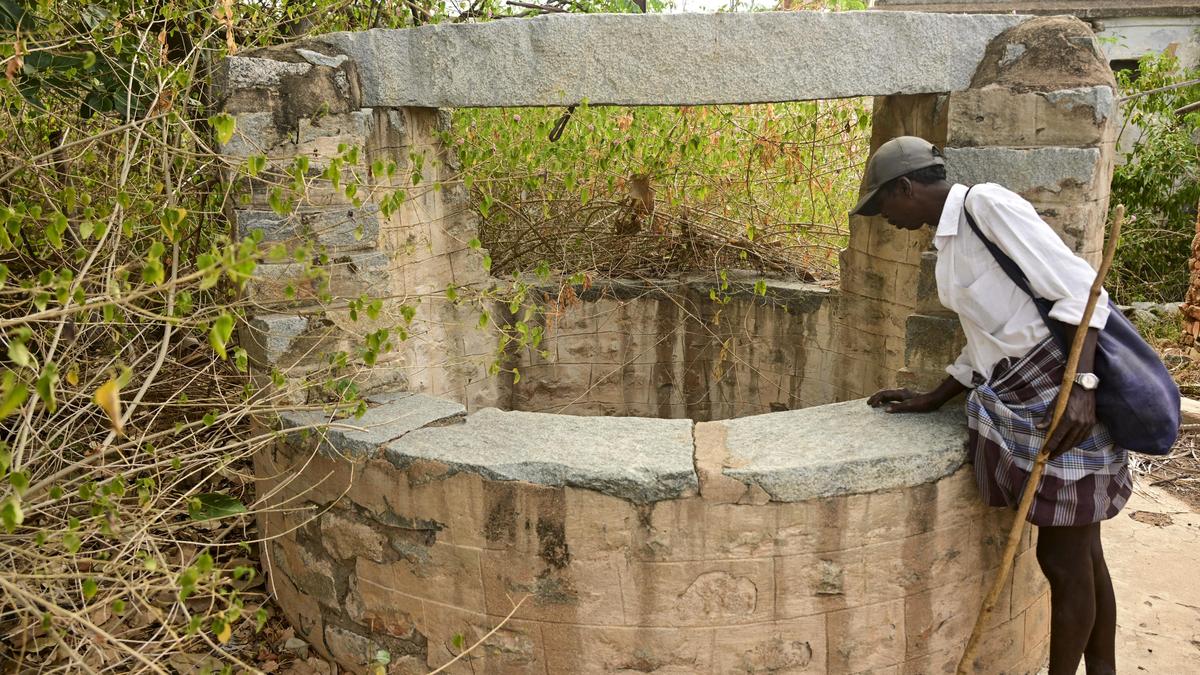
The village of Gattumeedapalle in Andhra Pradesh has become a ghost town after a decade of severe water scarcity and crop failures. Residents abandoned their homes and agricultural lands as groundwater levels depleted and rain-dependent farming became unsustainable.
The Silent Decline of Gattumeedapalle
The transformation of Gattumeedapalle from a vibrant agricultural hub to a desolate "ghost village" serves as a stark reminder of the fragile relationship between rural livelihoods and environmental stability in India. Located in the Annamayya district, approximately 125 km from Tirupati, this settlement once thrived on the back of groundnut cultivation, occupying nearly 1,000 acres of land. Over the last decade, however, the village has undergone a total depopulation, leaving behind empty structures as silent witnesses to a community displaced by ecological necessity.
The Failure of Rain-Fed Agriculture
At the heart of this exodus lies the extreme vulnerability of rain-dependent farming. For years, the local economy was anchored by nearly 300 acres of groundnut crops. As climate patterns became increasingly erratic, the reliance on seasonal rainfall proved to be a fatal flaw in the village's economic model. When the rains failed, the crops failed, and without irrigation infrastructure to buffer against these droughts, the farmers were left with no path toward financial solvency.
The Groundwater Crisis
Beyond the lack of rainfall, the depletion of groundwater proved to be the final straw for the residents of Gattumeedapalle. The extraction of water for irrigation, combined with lower recharge rates, led to a rapid decline in the water table. The situation became so dire that the remaining residents relied on a single, solitary borewell for all their drinking needs. When that resource inevitably reached its limit, the community structure collapsed, forcing even the most resilient families to abandon their ancestral homes.
Socio-Economic Displacement
The human cost of this environmental collapse is epitomized by figures like Thimmakkagari Subbi Reddy, a former groundnut farmer who was ultimately forced to relocate down the hill. This migration pattern is not unique to Gattumeedapalle but highlights a broader, concerning trend in rural India where agrarian distress triggers mass urbanization or relocation. These displaced families are often forced to trade traditional agricultural identities for precarious labor in new environments, leading to a loss of cultural heritage and local agricultural knowledge.
Broader Implications and Future Trends
The case of Gattumeedapalle serves as a microcosm for the challenges facing arid regions in Andhra Pradesh and beyond. As groundwater levels continue to drop across India, the sustainability of small-scale, rain-fed agriculture is under existential threat. Experts suggest that without significant investment in water-harvesting infrastructure, sustainable irrigation, and crop diversification, more villages face the risk of becoming ghost towns as the climate crisis intensifies.
Conclusion
The abandonment of Gattumeedapalle is not merely a local tragedy but a warning sign for regional planners and policymakers. The empty houses and fallow fields are tangible evidence of a failed balance between human activity and environmental capacity. Moving forward, interventions must focus on long-term water security and climate-resilient farming practices to prevent further rural depopulation and ensure that the agricultural backbone of India can survive the challenges of a changing climate.
Verification Required?