'There is no word like 'dar' in my dictionary': Gambhir after India win NZ series
Source Entity
HIJAM RAJU SINGH
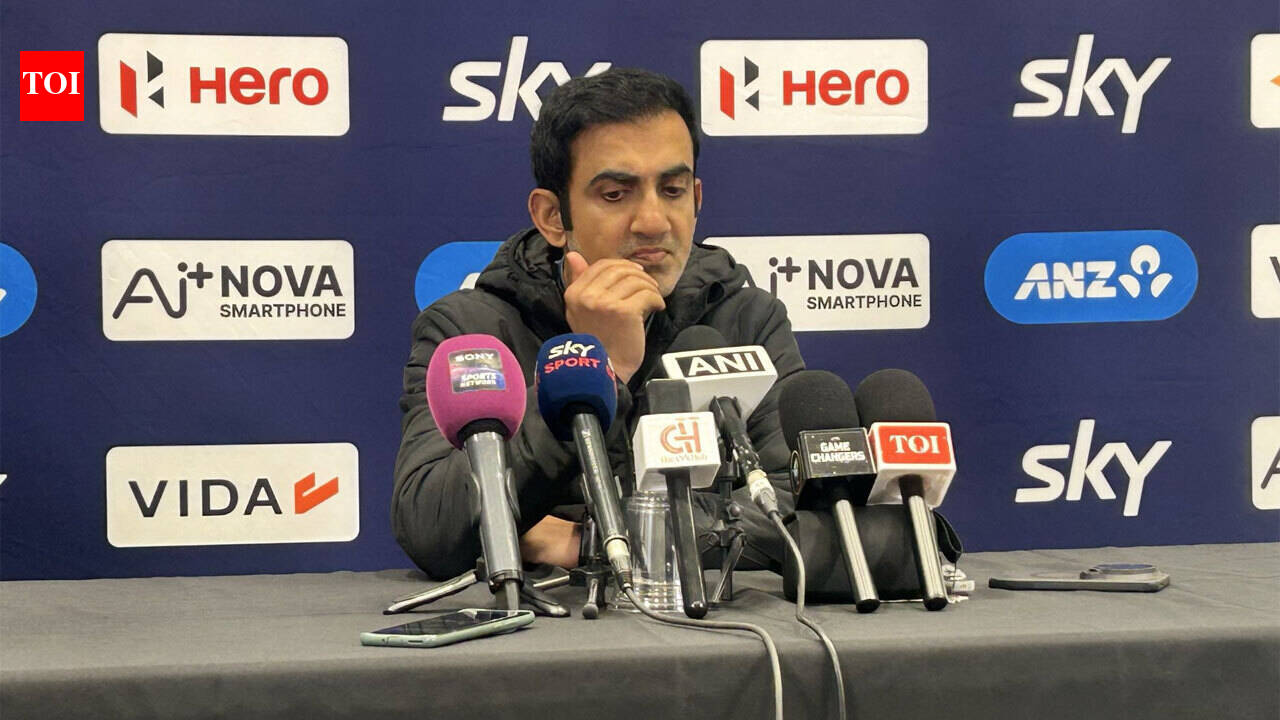
India head coach Gautam Gambhir has addressed the mental demands of his role following a 3-2 T20I series victory over New Zealand. Emphasizing a culture of professionalism, Gambhir rejected the concepts of fear and fatigue while praising his team's collective resilience.
Gambhir's Philosophy: Leadership in the Face of Pressure
Following India’s hard-fought 3-2 T20I series victory against New Zealand, head coach Gautam Gambhir has provided a rare glimpse into the psychological demands of managing the senior men's national cricket team. Gambhir acknowledged that the role is mentally draining, particularly given the rapid turnover between different formats of the game. However, he maintains that this pressure is an inherent aspect of the position he willingly accepted, framing the challenge not as a burden, but as a standard requirement for elite-level professional sport.
Rejecting 'Fear and Fatigue'
Central to Gambhir’s leadership ideology is the total elimination of excuses. In his post-match commentary, he explicitly stated that terms like 'fear' and 'fatigue'—or 'dar' in his dictionary—do not exist. By fostering this mindset, Gambhir aims to insulate his players from the external pressures that often plague high-stakes international cricket. This approach emphasizes that professionals are expected to perform regardless of scheduling constraints or the physical toll of a long season, setting a high bar for accountability within the dressing room.
Evaluating the New Zealand Series
While India emerged victorious in the series, the final score of 3-2 reflects a campaign of two halves. India secured an early advantage with three consecutive wins, but the momentum shifted as they faltered in the final two encounters. This late-series dip serves as a critical learning opportunity for the squad. Captain Shreyas Iyer has been vocal about the need for systemic improvements, specifically highlighting that the team's bowling and fielding departments must refine their execution to remain competitive in challenging conditions.
Collective Responsibility and Team Identity
Despite the setbacks in the closing games, Gambhir has remained steadfast in praising the 'Team First' ethos. He attributed the series win to a collective effort rather than individual brilliance, noting that players like Ishan Kishan and Shreyas Iyer were instrumental in handling high-pressure moments. This emphasis on unity is a cornerstone of Gambhir’s coaching style, intended to build a squad that functions as a cohesive unit rather than a collection of individual stars.
Future Trends and Strategic Outlook
Looking ahead, the Indian team finds itself in a transitional phase where adaptation is key. The acknowledgment by both Gambhir and Iyer regarding technical shortcomings suggests that the upcoming training cycles will likely focus on precision and consistency in the field. As the team continues to navigate the intense schedule of modern international cricket, the ability to manage mental fatigue while maintaining a high-performance culture will be the defining factor of Gambhir’s tenure. If the team can successfully internalize the 'no-fear' philosophy while addressing the tactical gaps identified against New Zealand, they are well-positioned to maintain their dominance in the T20I format.
Multiple Citing Sources