Google turns to Blue Origin for a rocket, but its long-term problem remains
Source Entity
Eric Berger
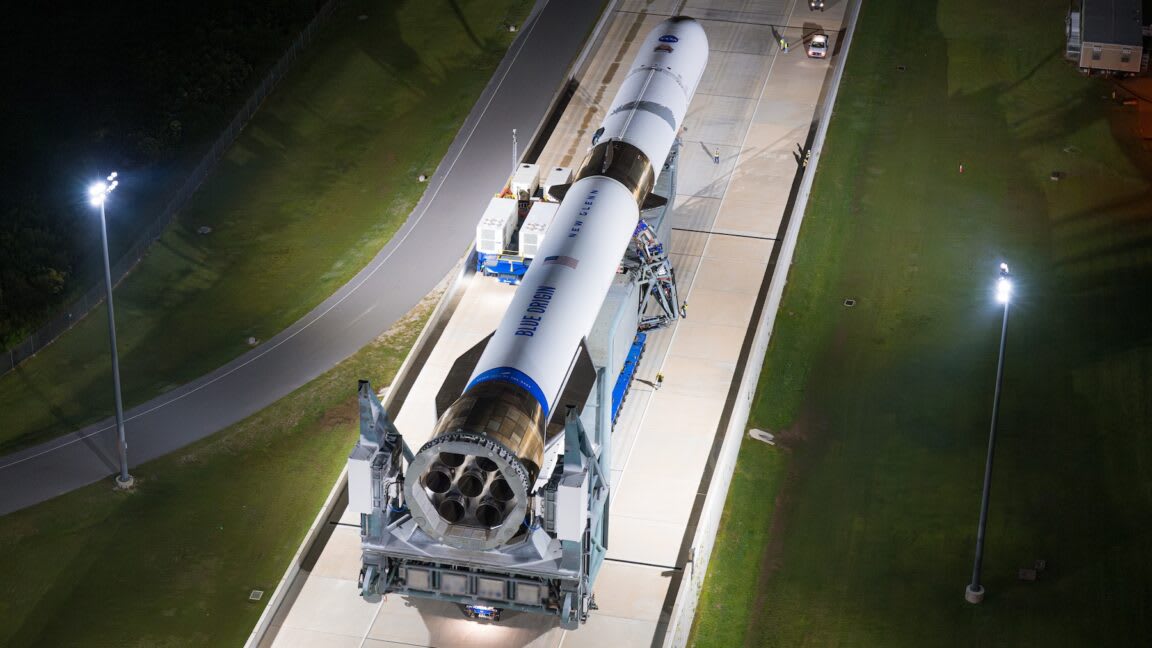
Google has partnered with Blue Origin to launch its Project Suncatcher satellites via the New Glenn rocket in 2029. This initiative aims to establish orbital data centers that leverage continuous solar energy to power scalable AI infrastructure.
Google’s Orbital Ambitions: The Project Suncatcher Initiative
Google has officially signaled a major shift in its infrastructure strategy by securing a launch agreement with Blue Origin for 2029. The collaboration centers on the use of Blue Origin’s New Glenn rocket to deploy satellites designed for the company’s ambitious 'Project Suncatcher.' This initiative, which Google first teased roughly a year ago, represents a bold attempt to move critical computing operations beyond the terrestrial environment and into the vacuum of space.
Scaling AI Through Space-Based Infrastructure
At the heart of Project Suncatcher is the challenge of scaling AI infrastructure, which currently faces significant energy and cooling constraints on Earth. By deploying satellites equipped with computing capacity equivalent to a standard data center rack, Google intends to tap into the virtually limitless solar energy available in a Sun-synchronous orbit. This orbit allows the satellites to remain in constant contact with sunlight, providing an uninterrupted power supply that could theoretically solve the intermittency issues associated with renewable energy on the ground.
The Role of Blue Origin and the New Glenn Rocket
The partnership with Blue Origin is a strategic move for Google, as the New Glenn rocket is being positioned as a heavy-lift vehicle capable of handling the complex logistics of orbital deployment. For Blue Origin, successfully launching Google's sensitive data-processing hardware would be a major validation of the New Glenn’s capabilities. This mission is not merely a transport exercise; it is an industrial experiment in establishing a permanent, high-performance computing presence in the orbital plane.
Addressing the 'Moonshot' Philosophy
Google has explicitly characterized Project Suncatcher as a 'moonshot,' a term the company reserves for high-risk, high-reward research projects that aim to solve fundamental technological bottlenecks. While the idea of orbiting data centers may sound like science fiction, the necessity for such extreme measures highlights the sheer scale of the energy demands currently placed on Earth-based server farms. As AI models grow more complex, the search for efficient, scalable, and sustainable power sources has become an existential priority for tech giants.
Long-Term Implications for Global Connectivity
If successful, this project could fundamentally alter how data is processed, stored, and transmitted globally. By offloading specialized workloads to space, Google could potentially reduce the environmental impact of its terrestrial operations while simultaneously increasing the resilience of its network. However, the project also faces significant hurdles, including the complexities of high-speed data transmission between orbit and the ground, as well as the long-term maintenance of hardware in a harsh radiation environment.
Conclusion: The Future of Orbital Computing
Looking ahead to 2029, the success of the New Glenn launch will serve as a bellwether for the future of space-based commercial infrastructure. While Project Suncatcher remains a long-term endeavor, it underscores a growing trend of major technology corporations looking toward space as an extension of their terrestrial infrastructure. Whether this 'moonshot' succeeds in revolutionizing AI scalability remains to be seen, but the intent to leverage solar-rich orbits marks a pivotal moment in the evolution of modern computing.