Google experiments with an AI-powered gaming platform
Source Entity
Lauren Forristal
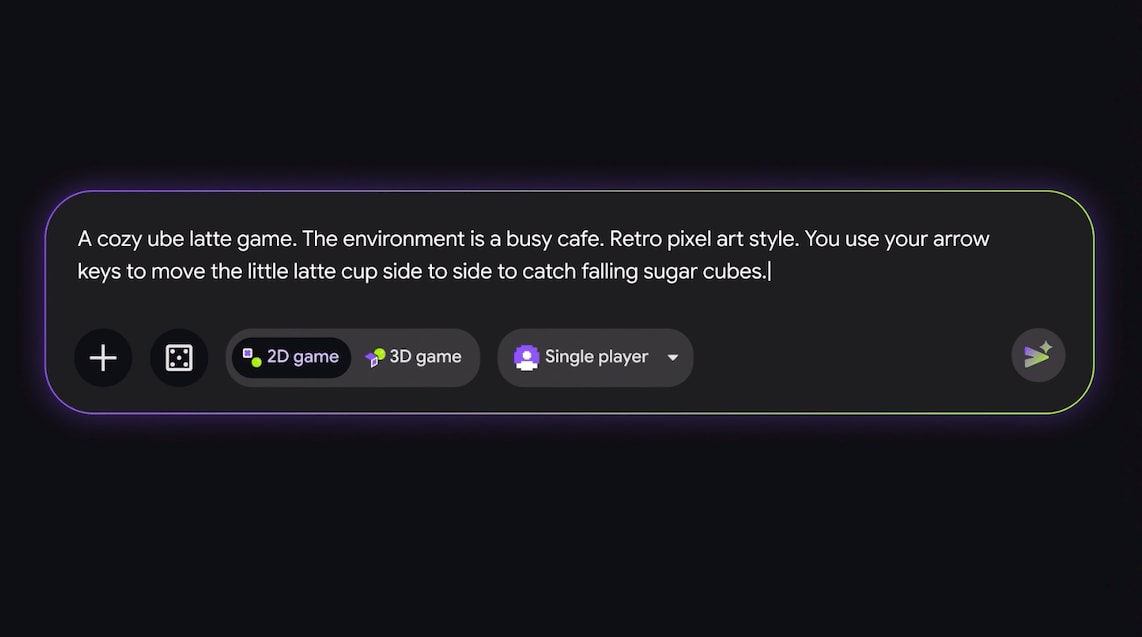
Google has launched Playground, an experimental browser-based platform that allows users to create custom games using simple AI text prompts. The tool eliminates the need for coding skills, making game development accessible to non-technical creators in the US.
The Democratization of Game Development
Google has officially unveiled 'Playground,' an experimental browser-based platform developed by Google Labs that leverages generative AI to simplify the game creation process. By allowing users to construct games through simple text prompts, Google is effectively removing the traditional technical barriers—such as coding, asset design, and complex engine architecture—that have historically gated the game development industry. This launch marks a significant shift in how interactive software is conceptualized and built.
How Playground Functions
The platform operates on a conversational interface, where users provide descriptive inputs to define game mechanics, physics, and visual styles. Whether a user wants to build a trivia game, a racing experience, or a unique 2D or 3D world, they can start from a blank canvas or utilize starter prompts for guidance. The system is designed to allow real-time testing, enabling creators to tweak rules, adjust physics, or rewrite gameplay parameters on the fly, transforming the iterative process of game design into a fluid, dialogue-driven experience.
Lowering Barriers to Entry
Historically, the barrier to entry for game development has been exceptionally high, requiring mastery of complex languages like C++ or C#, alongside skills in 3D modeling and animation. Google’s initiative aligns with a broader industry trend toward the 'no-code' and 'low-code' movement. By providing a platform that requires no prior experience, Google is positioning Playground as a tool for creative expression rather than just a utility for professional developers, potentially unlocking a new generation of amateur creators.
Strategic Implications for Google Labs
As an experimental platform, Playground serves as a sandbox for Google to test the capabilities of its AI models in complex, interactive environments. By launching this in the US for users aged 18 and older, the company can gather massive amounts of data on how human-AI collaboration works in a creative context. This data will likely influence future iterations of their AI tools, potentially integrating them further into professional-grade development software or cloud-based gaming services.
Future Trends in Generative Gaming
The launch of Playground signals a future where the line between 'player' and 'creator' begins to blur. If successful, this model could lead to a surge in user-generated content, where games are built, shared, and modified in browser environments without ever needing to download traditional development kits. As the technology matures, we can expect increased sophistication in the types of games that can be generated, moving from simple experiments to complex, multi-layered interactive experiences.
Conclusion
Google’s Playground represents a pivotal step in making the creative process of game design accessible to the masses. While it currently remains an experiment, the potential to disrupt the gaming industry by empowering non-programmers is substantial. As users begin to experiment with the platform's capabilities, the insights gained will undoubtedly shape the next generation of AI-assisted software development, further democratizing the digital landscape.