Google tried to sell AI chips to Nvidia's own cloud partner, Nvidia had a quiet answer
Source Entity
TIMESOFINDIA.COM
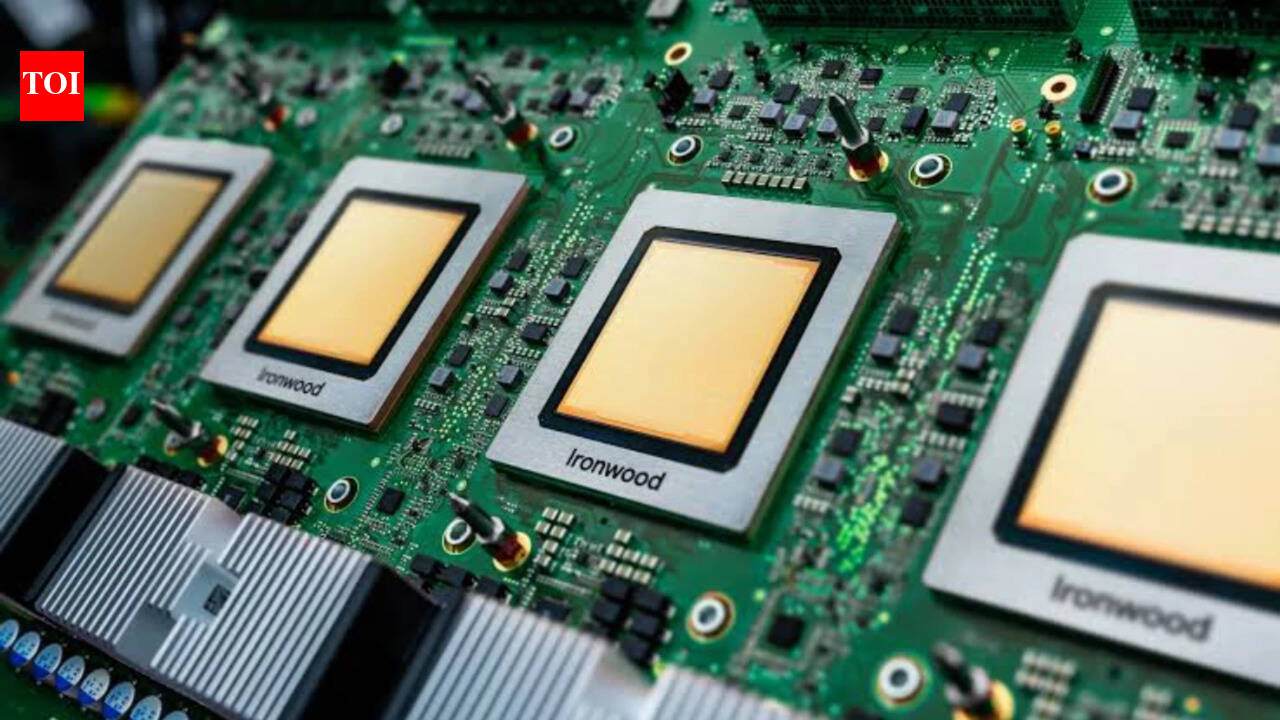
Google is challenging Nvidia's dominance in the AI hardware market by pitching its proprietary Tensor Processing Units (TPUs) to 'neocloud' startups. This move reportedly led Nvidia to offer financial incentives to its partner Nscale to discourage the switch, although Nscale denies these claims.
The Silicon Cold War: Google's Strategic Pivot to Neoclouds
The global race for artificial intelligence supremacy is increasingly being fought not just in the realm of software and algorithms, but in the physical layer of silicon. A recent report from The Information reveals a significant escalation in this hardware war: Google is actively pitching its proprietary Tensor Processing Units (TPUs) to "neoclouds"—specialized cloud startups that rent out high-performance AI computing power. This represents a strategic shift for Google, as it attempts to move its specialized hardware beyond its own internal data centers and into the broader ecosystem of independent AI infrastructure providers.
Challenging the Nvidia Hegemony
For years, Nvidia has maintained a near-monopoly on the AI chip market, primarily through its H100 and upcoming Blackwell GPUs. Nvidia's dominance is built not only on the raw power of its hardware but on the CUDA software ecosystem, which has become the industry standard for AI development. By offering TPUs to neoclouds, Google is attempting to break this cycle of dependency. TPUs are specifically designed to accelerate machine learning workloads and are often more cost-effective and energy-efficient for specific training and inference tasks than general-purpose GPUs. If Google can successfully seed its hardware into the neocloud market, it creates a viable alternative to the Nvidia-centric architecture that currently defines the industry.
The Nscale Friction and Corporate Counter-Measures
The tension of this competition is epitomized by the reported interactions between Google, Nvidia, and the neocloud provider Nscale. As an established Nvidia partner, Nscale represents the exact type of client Google needs to flip to gain market share. The report suggests that upon discovering Google's overtures, Nvidia responded with financial incentives designed to "cool" Nscale's interest in TPUs. While Nscale has officially denied receiving such offers, the mere allegation underscores the desperation of incumbents to protect their moats. In the high-stakes world of AI infrastructure, the loss of a single strategic partner to a competitor's hardware can signal a shift in market sentiment and invite further defection.
The Rise of the Neocloud Ecosystem
To understand the gravity of this move, one must look at the role of neoclouds. These startups fill a critical gap between the "hyperscalers" (like AWS, Azure, and Google Cloud) and on-premise data centers. Neoclouds offer a more agile, specialized experience for AI startups that need massive compute power without the overhead of a general-purpose cloud provider. By targeting this niche, Google is essentially trying to weaponize its internal hardware advantages to disrupt the very supply chain that Nvidia relies on to maintain its grip on the AI economy.
Broader Implications for AI Infrastructure
This conflict highlights a broader trend toward the "verticalization" of the AI stack. We are seeing a transition where the companies designing the models (Google, Meta, Microsoft) are increasingly designing the chips that run them. The move to sell TPUs externally suggests that Google sees its hardware as a product in its own right, rather than just an internal tool. This could lead to a more fragmented but competitive landscape where the choice of hardware dictates the efficiency and cost of deploying large language models (LLMs), potentially lowering the barrier to entry for smaller AI firms if TPU-based clouds become more prevalent.
Future Outlook: A Multi-Polar Chip Market
Looking ahead, the Google-Nvidia clash is likely to intensify as other players, such as AMD and various custom ASIC startups, vie for space. The industry is moving toward a future where "compute" is the most valuable currency. If Google succeeds in diversifying the hardware available to neoclouds, it will reduce the global reliance on a single vendor, potentially stabilizing supply chains that were severely strained during the initial generative AI boom. However, until a software ecosystem as robust as CUDA is established for TPUs in the wild, Nvidia's grip will remain firm, despite Google's aggressive expansion efforts.
Summary
Google's attempt to sell TPUs to neoclouds like Nscale is a direct assault on Nvidia's market dominance. The alleged retaliatory incentives from Nvidia illustrate the high stakes of the AI hardware race. As the industry evolves, the ability to provide accessible, high-performance alternatives to GPUs will be a deciding factor in who controls the infrastructure of the AI era.