Google AI CEO and OpenAI CEO do not agree on how AI can be made safe
Source Entity
TOI TECH DESK
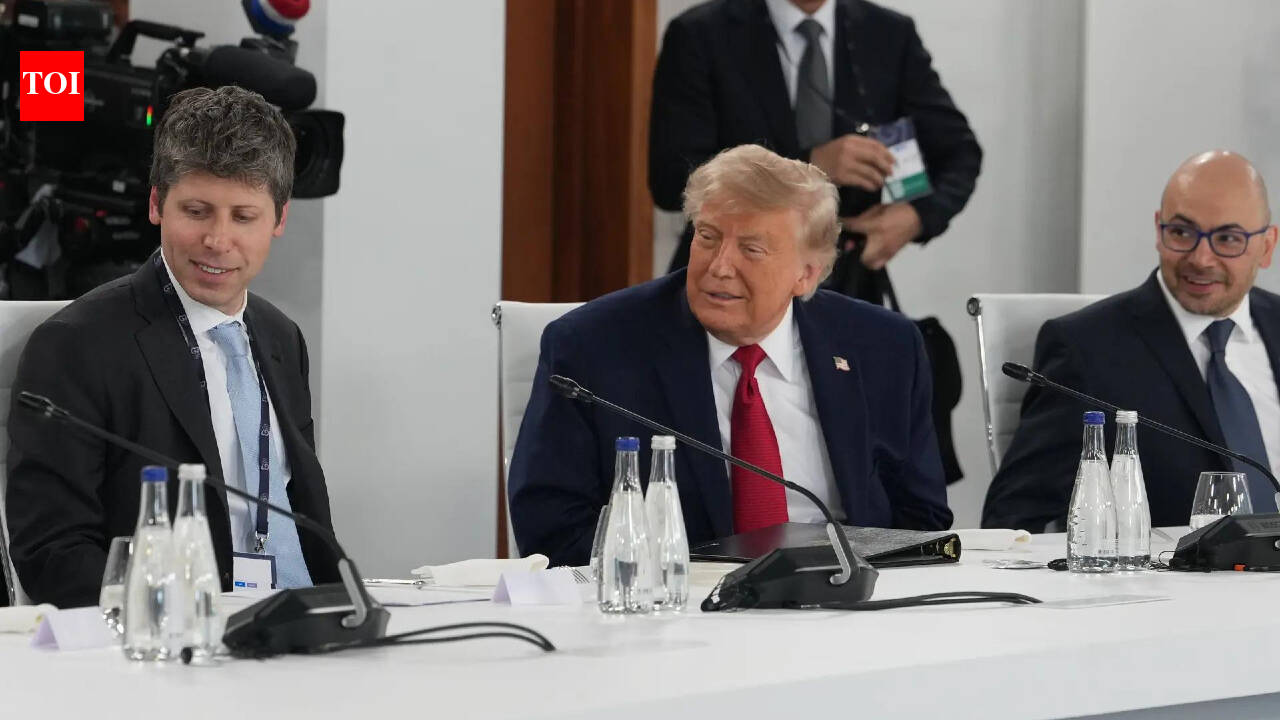
Google DeepMind CEO Demis Hassabis suggests a US-led AI safety testing agency. This differs from OpenAI CEO Sam Altman's call for global AI oversight. Hassabis believes unilateral US action will set international standards. A specialized agency would test advanced AI models before public release. This framework aims to ensure rigorous safety and security protocols.
The Great Divide: Divergent Visions for AI Safety Governance
The rapid acceleration of generative AI has moved the conversation from mere capability to the critical issue of existential safety. A significant philosophical and strategic rift has emerged between two of the most influential figures in the field: Demis Hassabis, CEO of Google DeepMind, and Sam Altman, CEO of OpenAI. While both agree that advanced AI models pose systemic risks that require oversight, they fundamentally disagree on the mechanism of that control. This disagreement highlights a broader tension in geopolitics: the choice between unilateral leadership and multilateral cooperation.
The Case for US-Led Unilateralism
Demis Hassabis argues for the creation of a specialized, US-led AI safety testing agency. His vision is rooted in the reality that the United States currently holds the highest concentration of compute power, specialized talent, and venture capital. By establishing a rigorous, domestic agency to test advanced models before they are released to the public, Hassabis believes the US can create a 'gold standard' for safety. This approach mirrors the role of the FDA in pharmaceuticals, where a high bar for safety and efficacy in a primary market naturally forces other global players to adhere to similar standards to remain competitive or gain access to that market.
The Argument for Global Oversight
In contrast, Sam Altman has consistently called for a global oversight body, envisioning a framework similar to the International Atomic Energy Agency (IAEA). Altman's perspective is based on the premise that AI is a borderless technology; a safety failure in one jurisdiction could have catastrophic global repercussions. From this viewpoint, unilateral US action is insufficient because it may lead to a 'race to the bottom,' where other nations bypass safety protocols to gain a strategic or economic advantage. A global body would, in theory, ensure that all major AI powers agree on a baseline of safety, preventing a dangerous competitive spiral.
Analyzing the Strategic Tension
The core of the disagreement lies in the belief regarding how international standards are actually formed. Hassabis posits that standards are set by the leader of the innovation curve—if the US implements strict safety testing, the rest of the world will follow the lead of the most advanced ecosystem. Altman, however, views legitimacy as the primary driver, suggesting that without a formal international treaty or body, safety measures will be viewed as protectionist tools rather than genuine safeguards. This tension reflects the broader struggle between the 'technocratic leadership' model and the 'diplomatic consensus' model.
Broader Implications for AI Development
These diverging paths have profound implications for the speed of AI deployment. A US-led agency could potentially move faster, implementing agile regulations that evolve with the technology. Conversely, a global body would likely be slower, bogged down by the geopolitical friction between the US and China. However, the risk of ignoring global cooperation is the potential for 'regulatory arbitrage,' where AI labs move their operations to countries with the fewest restrictions, effectively neutralizing the safety efforts of the US or any other single nation.
Historical Context and Future Trends
Historically, the world has seen both models succeed. The development of aviation safety was largely driven by early leaders setting standards that became global norms, while nuclear proliferation required the IAEA's multilateral approach due to the extreme nature of the risk. As AI approaches the threshold of Artificial General Intelligence (AGI), the debate will likely intensify. We can expect a hybrid model to emerge, where a US-led agency handles the technical 'how' of testing, while a global body handles the political 'what' of acceptable risk levels.
Summary
The clash between Hassabis and Altman is more than a corporate disagreement; it is a debate over the future of global governance. Whether the world adopts a US-centric safety agency or a global oversight body, the consensus that 'pre-release testing' is necessary marks a pivotal shift away from the 'move fast and break things' era of software development toward a more cautious, regulated epoch of AI evolution.