Guerrilla London Bus Ads Mock Kylie Jenner's Meta Glasses Campaign
Source Entity
Hacker News
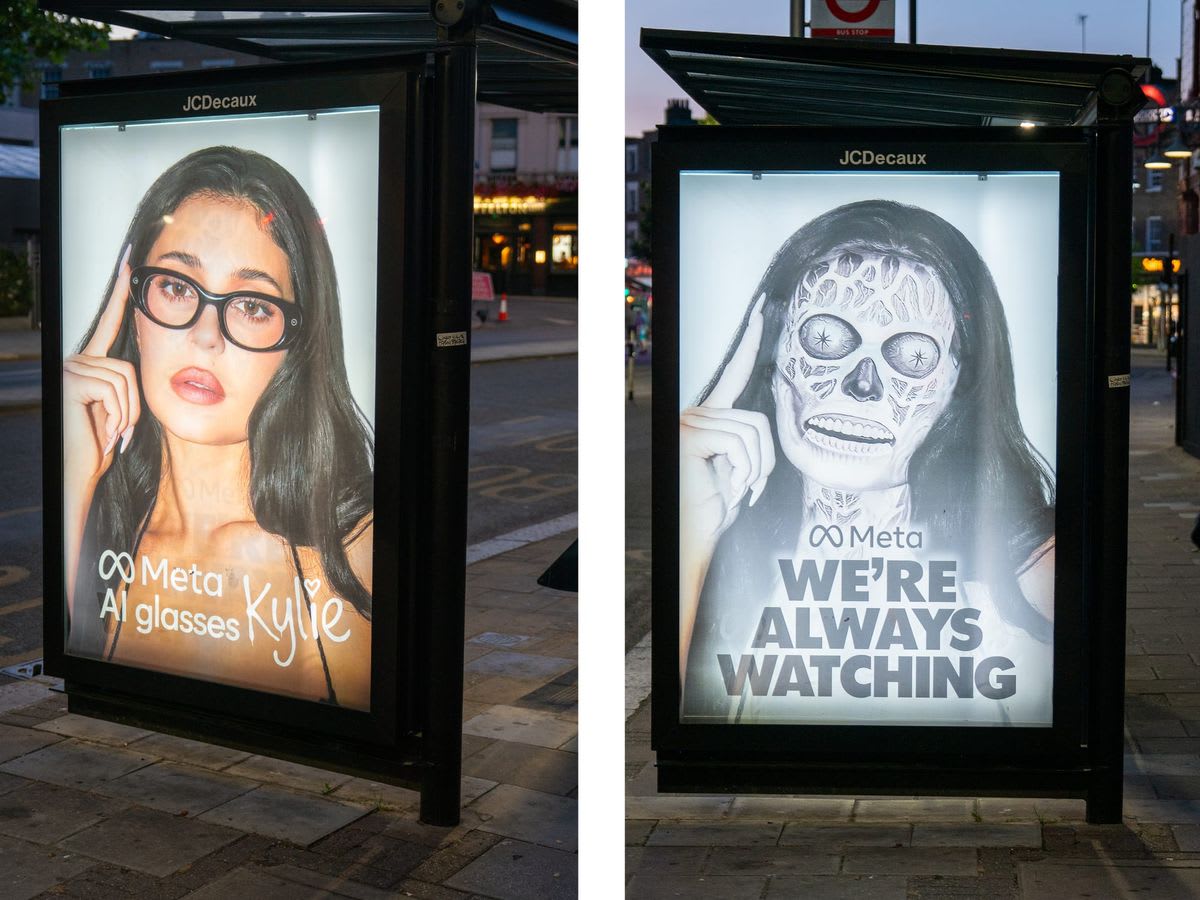
A guerrilla advertising campaign in London has mocked Meta's promotional efforts for its smart glasses featuring Kylie Jenner, highlighting the tension between high-fashion influencer marketing and public skepticism toward wearable AI technology.
The Clash of Corporate Polish and Street Satire
In a striking example of 'culture jamming,' a series of guerrilla advertisements appeared on London buses specifically designed to mock Meta's high-profile marketing campaign for its Ray-Ban Meta smart glasses. While Meta utilized the star power and aesthetic appeal of Kylie Jenner to position the wearable technology as a must-have fashion accessory, the unofficial London ads served as a sharp, satirical counter-narrative. This event highlights a growing friction between the curated perfection of influencer-led corporate campaigns and a public that is increasingly cynical toward the intersection of Big Tech and celebrity endorsement.
The Strategy Behind the Meta-Jenner Partnership
To understand the impact of the mockery, one must first analyze Meta's original strategy. By partnering with Kylie Jenner, Meta aimed to pivot the perception of smart glasses from 'geeky' or 'invasive' to 'chic' and 'aspirational.' The campaign focused heavily on the visual appeal and the seamless integration of AI into a high-fashion lifestyle. By leveraging Jenner's massive reach and her status as a trendsetter, Meta attempted to normalize the presence of cameras and AI assistants on the face, framing the device as a tool for content creation rather than a tool for surveillance.
The Anatomy of the Guerrilla Response
The guerrilla ads in London functioned by mirroring the visual language of the original Meta campaign but twisting the message to highlight the absurdity of the product's positioning. By placing these ads on public transportation—the antithesis of the luxury environments Jenner inhabits—the creators of the mockery emphasized the gap between the 'influencer fantasy' and the daily reality of the average citizen. This form of anti-marketing effectively weaponized the visibility of the London bus network to question why a device that tracks data and records surroundings should be marketed as a simple fashion statement.
The Influencer Paradox and Public Skepticism
This incident underscores the 'influencer paradox,' where the very celebrity used to humanize a brand can inadvertently make it seem more detached from the general public. Kylie Jenner represents a level of wealth and digital curation that can feel alienating to consumers. When a product as potentially intrusive as AI-powered glasses is pushed through such a lens, it often triggers a defensive reaction from the public. The London ads tapped into this sentiment, suggesting that the 'cool factor' promoted by Jenner is a thin veil for the broader implications of Meta's data collection ecosystem.
Broader Implications for Wearable AI
Beyond the immediate mockery, this event points to a significant hurdle for the adoption of wearable AI. While the hardware (the Ray-Ban frames) is aesthetically pleasing, the 'social friction' of wearing a camera on one's face remains high. The backlash seen in the London guerrilla campaign reflects a deeper societal anxiety regarding privacy and the erosion of anonymous public spaces. As Meta and other tech giants push for 'always-on' AI, they will likely encounter more of this grassroots resistance, which views the glamorization of surveillance as a cultural transgression.
Conclusion: The Future of Brand Authenticity
Ultimately, the mockery of the Kylie Jenner Meta campaign serves as a reminder that corporate narratives are no longer the only voice in the room. In the age of social media and rapid-response guerrilla marketing, brands are subject to immediate, public irony. For Meta, the lesson is that fashion cannot entirely mask the functional and ethical concerns of the technology. As wearable tech evolves, the success of these products will depend less on the fame of their ambassadors and more on their ability to earn genuine public trust in an era of extreme skepticism.