Halfspace experimental IDE for solid modeling with distance fields
Source Entity
Hacker News
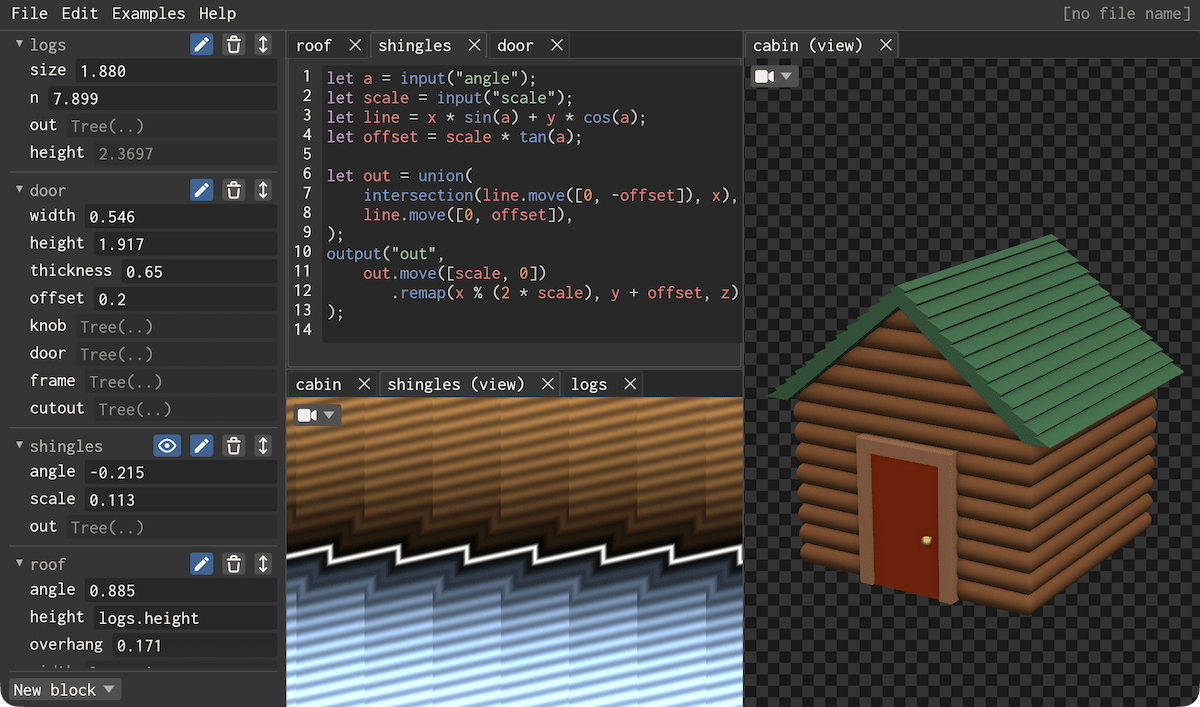
Halfspace is an experimental IDE designed for solid modeling using distance fields and the Fidget kernel. It enables real-time rasterization and the export of models as images or triangle meshes.
Introduction to Halfspace
Halfspace has emerged as a specialized, experimental Integrated Development Environment (IDE) tailored for the niche field of solid modeling via distance fields. By leveraging the Fidget kernel, the platform provides a unique environment for users to engage with implicit surfaces, marking a significant step in how developers and designers interact with complex geometric data. The tool is currently available for browser-based demonstration, though it is optimized for desktop environments due to current WebGPU limitations on mobile browsers.
The Role of the Fidget Kernel
At the core of the Halfspace experience lies the Fidget kernel, a specialized engine utilized for both rasterization and meshing. Fidget, which has been in development since 2022, serves as the computational backbone that allows for the real-time, or near real-time, rendering of distance fields within the GUI. This integration is critical because it bridges the gap between raw mathematical representation and usable 3D assets, allowing users to manipulate implicit surfaces with immediate visual feedback.
Workflow and Functionality
One of the primary value propositions of Halfspace is its versatility in output. Users are not restricted to mere visualization; the IDE supports the export of models as either static images or functional triangle meshes. This dual-export capability makes it a practical tool for those looking to transition from abstract mathematical modeling to concrete geometric applications, such as 3D printing or further integration into traditional CAD pipelines.
Development Context and Authenticity
In an era increasingly dominated by AI-generated code and automated development workflows, the creator of Halfspace has clarified that the project is entirely human-authored. Work on the IDE commenced in April 2025, and the developer emphasizes that the implementation is the result of manual effort rather than automated generation. This distinction is significant in the current tech landscape, as it highlights a commitment to artisanal, hand-coded software engineering in the domain of computer graphics.
Broader Implications for Solid Modeling
Distance field modeling represents a departure from traditional boundary representation (B-rep) methods common in legacy CAD software. By focusing on implicit surfaces, Halfspace contributes to a growing trend of tools that prioritize mathematical flexibility over rigid vertex-based structures. As the industry continues to explore non-traditional modeling paradigms, tools like Halfspace offer a glimpse into a future where geometric design is more fluid, computationally driven, and accessible through browser-based interfaces.
Conclusion and Future Outlook
While Halfspace is currently an experimental project, its focus on performance and kernel-level efficiency suggests a promising trajectory for implicit modeling tools. By providing a dedicated space for distance field experimentation, the project serves as both a functional tool and a showcase for the capabilities of the Fidget kernel. Future iterations will likely address current limitations in interaction design, such as touch support, further solidifying its place in the modern toolkit for computational designers.