Man harasses woman at Karnataka hospital; flees after she screams, slaps him
Source Entity
TNN
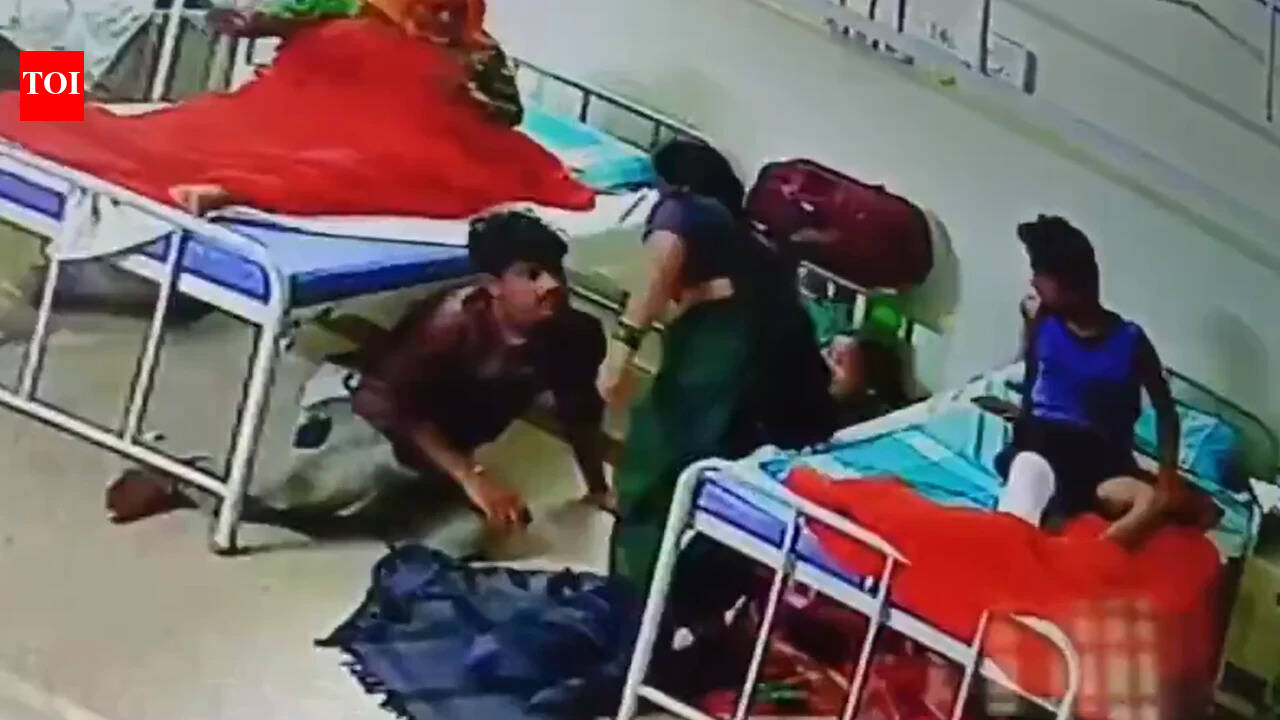
A woman attendant at a Haveri district hospital successfully fought off an intruder who harassed her while she slept near a patient. The incident has sparked outrage over systemic security lapses, following a recent string of thefts in the facility.
Security Breach at Haveri District Hospital: An Analysis
The Incident and Immediate Response
In a distressing event occurring at approximately 2:00 AM this past Thursday, a woman attendant at the Haveri district hospital in Karnataka was subjected to harassment by an unidentified intruder. While resting beside a patient she was caring for in room 109, the man entered the ward undetected and attempted to behave indecently. The victim’s quick-thinking response—screaming for help and physically confronting the assailant with a slap—forced the perpetrator to flee as other attendants arrived on the scene. The incident, which was captured on CCTV, has since become a focal point for local authorities and public outrage.
Systemic Security Lapses
This incident is not an isolated event but rather the climax of a deteriorating security environment at the Haveri district hospital. Reports indicate that over the past week alone, more than ten mobile phones and various sums of cash have been stolen from attendants. The ease with which an intruder was able to access a hospital ward in the early hours of the morning suggests a profound failure in surveillance protocols and physical access control. Victims have expressed deep frustration, noting that thieves appear to move through the facility with relative impunity during late-night hours.
Vulnerability of Hospital Attendants
Public hospitals often rely on family members or attendants to provide round-the-clock care for patients. These individuals, already under significant emotional and physical strain, are now effectively forced to serve as their own security in an environment that should be protected. The breach of privacy and safety in a space designated for healing highlights a critical disregard for the welfare of those who provide essential support to patients. The psychological impact on the victim and others in the ward cannot be overstated, as the hospital has transitioned from a place of care to a site of potential danger.
Broader Implications for Public Health Infrastructure
This event raises urgent questions regarding the oversight of state-run medical facilities in Karnataka. While the government frequently emphasizes the expansion of healthcare access, the foundational requirement of safety remains unmet in many district-level institutions. The failure to secure wards against intruders undermines public trust in the healthcare system. Without robust security measures, such as restricted entry points, consistent guard patrols, and functional surveillance, the efficacy of patient care is inherently compromised.
Future Trends and Necessary Reforms
Moving forward, the Haveri district hospital must undergo an immediate security audit. The incident serves as a grim reminder that technological solutions, such as CCTV, are ineffective as deterrents if not paired with active human intervention and restricted access policies. To prevent future occurrences, authorities must implement stringent identity verification for anyone entering wards at night and increase the presence of security personnel. Failure to address these vulnerabilities will likely lead to further exploitation of the hospital’s weak points, potentially resulting in more severe criminal activity. The community is now rightfully demanding accountability, expecting swift action to restore the safety of both patients and their caregivers.
Multiple Citing Sources