Hugging Face's new duck robot is selling fast. A Chinese chip powers it
Source Entity
US Top News and Analysis
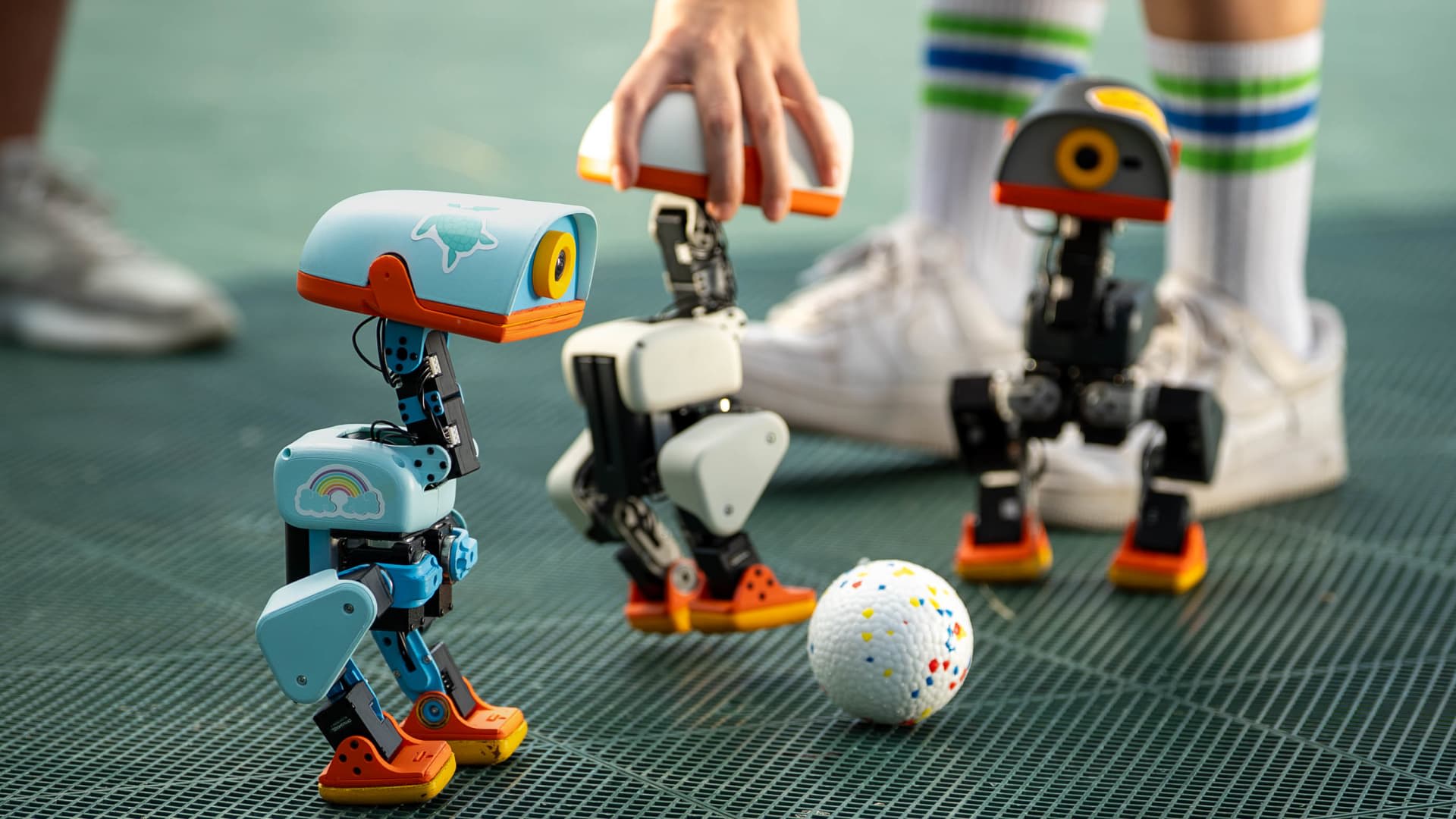
Hugging Face's subsidiary Pollen Robotics has seen massive demand for its new 'Microduck' robot, selling over 10,000 units since launch. The device highlights the complexities of global supply chains, utilizing a Chinese-made Rockchip processor based on British ARM technology.
The Rise of the Microduck: A Case Study in Robotics Demand
The recent launch of the 'Microduck' robot by Pollen Robotics, a French subsidiary of the prominent AI platform Hugging Face, has captured significant market attention. With over 10,000 units sold since its Thursday debut, the product has generated over $4 million in revenue. This rapid commercial traction, priced at $399 per unit, underscores an intensifying consumer appetite for accessible, programmable personal robotics that move beyond traditional smart home displays into interactive, physical hardware.
Supply Chain Complexity and Global Interdependence
Beyond the novelty of the duck-shaped design, the Microduck serves as a poignant illustration of the modern globalized supply chain. The device relies on the RK3566 chip, manufactured by the Shanghai-listed company Rockchip. This specific component is built upon foundational intellectual property from the British firm ARM. This architecture reflects a highly intertwined technological ecosystem, where a French-American company, Chinese hardware manufacturing, and British-designed core processing converge to deliver a single consumer product.
Operational Challenges in Rapid Scaling
The overwhelming success of the launch has created immediate logistical hurdles for Pollen Robotics. High demand has already resulted in delayed delivery times, pushing fulfillment windows past the company's initial promise of Christmas 2026. This bottleneck highlights a common pitfall for hardware startups: the difficulty of scaling manufacturing capacity to meet viral consumer interest. Maintaining quality control while ramping up production to fulfill the current backlog will be the primary operational challenge for the company in the coming months.
Technical Capabilities and On-Device Computing
The Microduck is not merely a static toy; it is equipped with a suite of sensors, motors, and on-device computing power. By utilizing the Rockchip RK3566, the robot is capable of executing a range of pre-installed actions locally. This emphasis on on-device processing is a strategic choice, likely intended to reduce latency and enhance privacy by minimizing reliance on continuous cloud connectivity—a critical trend in the development of modern personal robotics.
Future Trends in Personal Robotics
The Microduck’s performance suggests a maturing market for affordable, programmable robots. As Hugging Face continues to bridge the gap between AI development and physical application, the success of this product may signal a shift toward more modular, approachable robotics. Future iterations will likely need to address supply chain sustainability and the complexities of international trade regulations, as the industry continues to rely on a delicate web of global manufacturing partnerships to bring complex hardware to the mass market.