What the death at IIT-Bombay says
Source Entity
Latest News: Todays Latest News Headlines from India & World | Hindustan Times | Hindustan Times
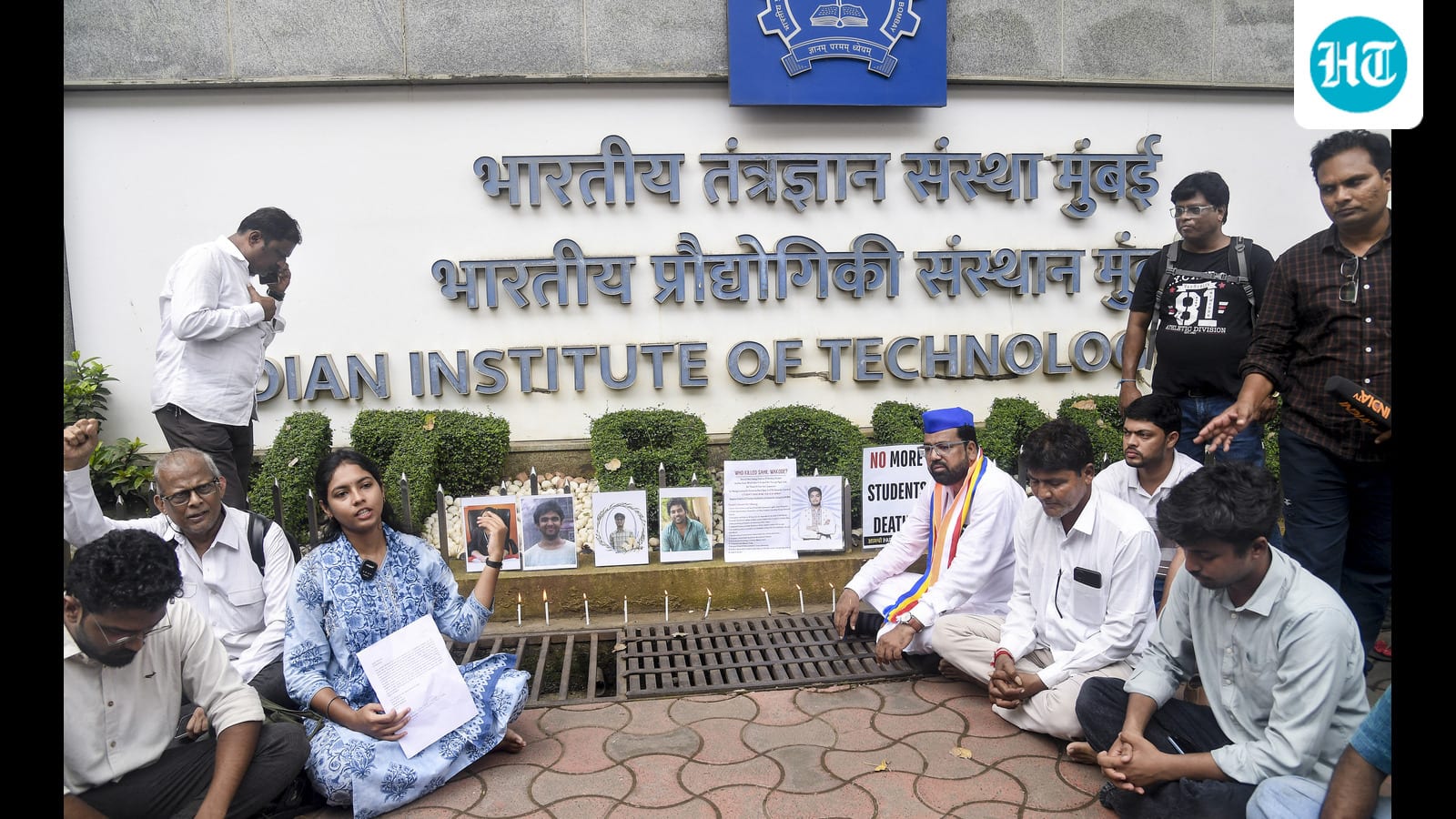
A second-year IIT-Bombay student died by suicide after being caught using AI to answer exam questions. The incident has sparked student protests demanding better mental health support and institutional accountability.
The Tragic Loss at IIT-Bombay: Examining Systemic Pressures
The recent suicide of a second-year student from the Department of Energy Science and Engineering at IIT-Bombay has sent shockwaves through the campus and the broader academic community. According to official reports, the student was discovered using a mobile phone to upload exam questions to an AI platform earlier on the day of his death. While the institute maintains that no formal disciplinary action had been initiated and that the student had been counseled, the event has acted as a catalyst for deep-seated grievances among the student body.
The Intersection of Academic Rigor and Mental Health
This incident highlights the immense pressure cooker environment prevalent in elite institutions like the Indian Institutes of Technology (IITs). The pursuit of academic excellence in such high-stakes environments often leaves little room for error or failure, creating a psychological burden that many students find difficult to navigate. Protesting students have explicitly demanded a thorough probe into the institute's approach to mental health, arguing that the administration's current mechanisms are insufficient to address the unique pressures faced by students today.
The Role of Technology in Academic Integrity
The student's attempt to use AI tools for examination purposes brings to light the evolving challenges of academic integrity in the digital age. While institutions must maintain rigorous standards to ensure fairness—preventing any 'separate code' for different backgrounds—the reliance on technology as a crutch often signals a deeper struggle with academic expectations. The debate here is not just about cheating, but about why a student might feel that such extreme measures are their only path to survival within a competitive academic framework.
Addressing Social and Structural Disparity
Beyond the immediate tragedy, the discourse surrounding the suicide has reignited conversations regarding caste-based discrimination and the challenges faced by students from Scheduled Castes (SC) and Scheduled Tribes (ST). There is a significant concern that the institutional culture at premier colleges is heavily skewed toward English-speaking, privileged cohorts, potentially alienating those from marginalized backgrounds. This creates an environment where 'adjustment' becomes an exhausting, daily struggle rather than a natural part of the educational experience.
The Path Forward for Institutional Reform
As the investigation into the circumstances of the student's death continues, the focus must shift toward structural reforms. This includes not only enhancing mental health infrastructure but also fostering an inclusive environment that acknowledges the diverse needs of its student population. The tragedy serves as a grim reminder that without systemic empathy, the pursuit of academic prestige may come at the cost of the very lives it aims to nurture. Future trends in higher education must prioritize student well-being as a metric of institutional success, equal to that of academic or research output.
Multiple Citing Sources
Verification Required?