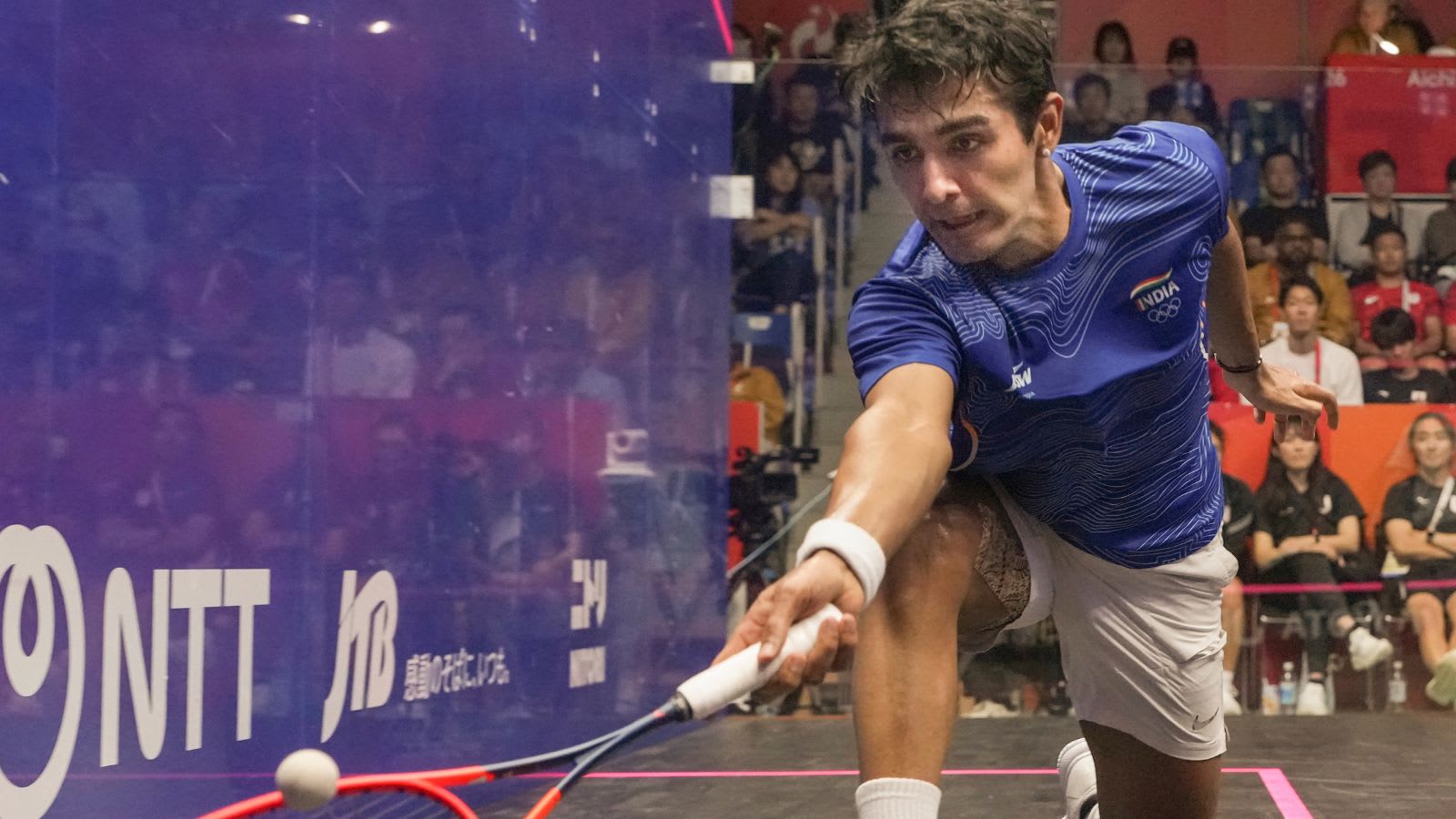
Abhay Singh eases past Pakistan’s Muhammad Irfan to enter Asian Games final
Source Entity
Bhuvan Gupta
Indian athletes are excelling at the Asian Games, highlighted by a record-breaking gold in shooting and a silver in the 10,000m. Additionally, Tejaswin Shankar's successful transition to decathlon showcases the rigorous physical evolution required for elite multi-event competition.
Resilience and Redemption: India’s Sporting Triumphs at the Asian Games
The narrative of the recent Asian Games for the Indian contingent is one defined by psychological resilience and physical transformation. At the heart of this success are shooters Suruchi Phogat and Kamaljeet Singh, who demonstrated that athletic excellence is as much about mental recovery as it is about physical skill. After facing individual disappointments, the pair was forced to reconcile with the frustration of years of preparation falling short. Their subsequent collaboration in the 10m air pistol mixed team event—resulting in a gold medal and a new Asian Games record of 484.6 points—serves as a testament to the power of adaptability in high-pressure environments.
The Psychology of High-Stakes Competition
The contrasting reactions of Phogat and Singh to their earlier setbacks highlight the diverse ways elite athletes process failure. While Phogat sought physical replenishment through a 13-hour sleep, Singh grappled with the restless anxiety of a four-hour sleep cycle. Despite these divergent internal experiences, they managed to synchronize their focus during the final. By outperforming the South Korean pair and the Iranian bronze medalists, they proved that individual setbacks can be effectively compartmentalized when an athlete shifts their focus to a collective goal.
Athletics Surge and Endurance
Beyond the shooting range, India’s performance in athletics continues to show a positive trajectory. The silver medal win by Gulveer Singh in the 10,000m final follows a notable bronze-medal performance by Seema Kumari in the women’s 10,000m. This dual success in long-distance events suggests a deepening talent pool in Indian track and field, indicating that the nation is becoming increasingly competitive in endurance disciplines that require both tactical discipline and sustained physical output.
The Anatomy of a Decathlete: Tejaswin Shankar’s Evolution
Perhaps the most compelling story of physical adaptation is that of Tejaswin Shankar. His transition from a specialized high jumper to a versatile decathlete represents a fundamental shift in sports science application. When Shankar first moved to Kansas State University in 2017, his physiology was perfectly optimized for high jumping—lean, with a high center of mass and a specific leg-to-torso ratio. To compete in the grueling ten events of the decathlon, he underwent a total training overhaul under experts like Wayne Lombard.
Future Trends in Elite Performance
Shankar’s journey from a 78kg high jumper to a 90kg decathlete with reduced body fat illustrates the future of Indian sports training: a move toward specialized, data-driven body composition management. As Indian athletes continue to break records and redefine their physical limits, the integration of strength and conditioning expertise will remain the backbone of their international competitiveness. Whether through the mental recalibration seen in shooting or the physical reconstruction seen in decathlon, these athletes are setting a new standard for what it means to represent India on the global stage.
Multiple Citing Sources