After two Asian Games medals, Harita Bhadra sets her sights on 22.45s and World Championships
Source Entity
VINEET RAMAKRISHNAN
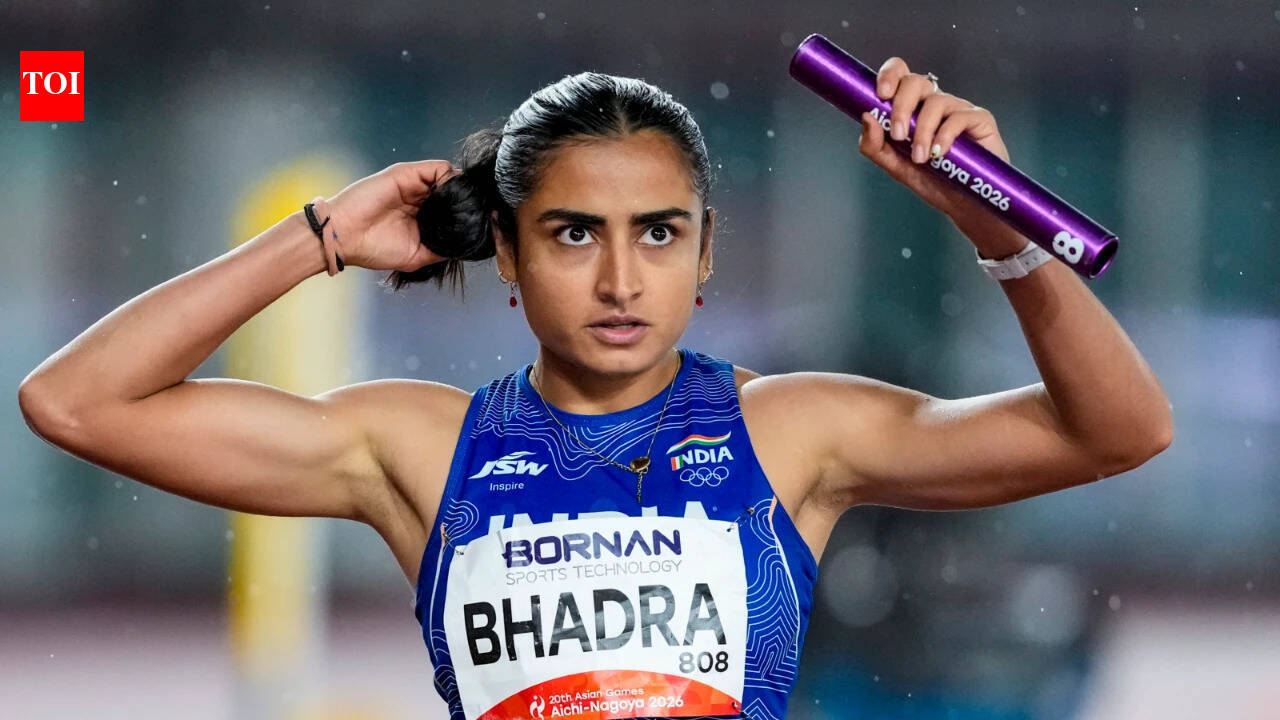
India's athletics performance at the Aichi-Nagoya Asian Games saw a mix of historic breakthroughs and tempered expectations compared to the record-breaking Hangzhou edition. While Vithya Ramraj secured the nation's lone athletics gold in the women's 4x400m relay, rising star Harita Bhadra emerged as a future prospect with two bronze medals.
A Mixed Legacy at Aichi-Nagoya: India’s Athletics Performance
The athletics contingent at the Aichi-Nagoya Asian Games faced a challenging reality check following the euphoric highs of the 2023 Hangzhou edition. While Hangzhou witnessed a historic peak with a 106-medal haul—29 of which came from athletics—the Aichi-Nagoya games reflected a more nuanced trajectory. Despite the production of several new national records, the overall medal tally indicates a shift in the competitive landscape, where incremental gains are being tested against increasingly rigorous regional standards.
The Relay Reality Check
The men’s 4x400m relay team’s performance at the Mizuho Park Athletics Stadium served as a poignant symbol of this transition. As defending champions, the pressure on the quartet was immense. However, clocking a 3:01.61, they were eclipsed by Japan (3:00.75) and Qatar (3:00.93). This result highlights a widening gap between India’s established relay dominance and the evolving tactical and physical benchmarks set by neighboring powers, suggesting that maintaining podium positions will require more than just consistency in the coming years.
Breakthroughs and Individual Grit
Amidst the collective struggle, individual brilliance provided necessary momentum. Harita Bhadra’s performance stands out as a beacon of progress. Competing in her first senior international event, Bhadra secured two bronze medals—in the 200m and the mixed 4x100m relay. Her contribution was vital, particularly in the mixed 4x100m relay, where she anchored a national record-setting run of 41.06 seconds. Her stated goal of achieving a 22.45-second mark for the 2027 World Championships reflects a professional maturation and a clear-eyed focus on global competition.
The Digital Age of Athletic Stardom
The intersection of athletic performance and digital visibility was perfectly encapsulated by Vithya Ramraj. Her role as the anchor for the women’s 4x400m relay—the only athletics gold for India—transformed her into an overnight sensation. The surge in her social media following, from 5,000 to over 65,000, underscores how modern athletes are navigating the dual pressures of track performance and public persona. This "star turn" highlights the growing cultural impact of individual athletes in India’s sports ecosystem.
Future Trends and Strategic Outlook
Looking ahead, the shift from relying on large-scale medal hauls to focusing on specific, world-class qualifying marks—as seen with Bhadra—is a positive strategic evolution. The discrepancy between the medal count at Hangzhou and the performance at Aichi-Nagoya suggests that India is moving into a phase where depth and technical refinement are more critical than raw volume. If India is to remain a powerhouse, the focus must move toward bridging the narrow margins that currently separate fourth-place finishes from podium spots.
Conclusion
In summary, the Aichi-Nagoya Asian Games served as a period of recalibration for Indian athletics. While the singular gold medal and the reliance on relay events remain core strengths, the sport is clearly transitioning into a more competitive era. By prioritizing individual growth, setting precise international qualification targets, and managing the pressures of newfound fame, India’s athletes are positioning themselves for the next cycle of global competition, provided they can sustain the momentum generated in Japan.