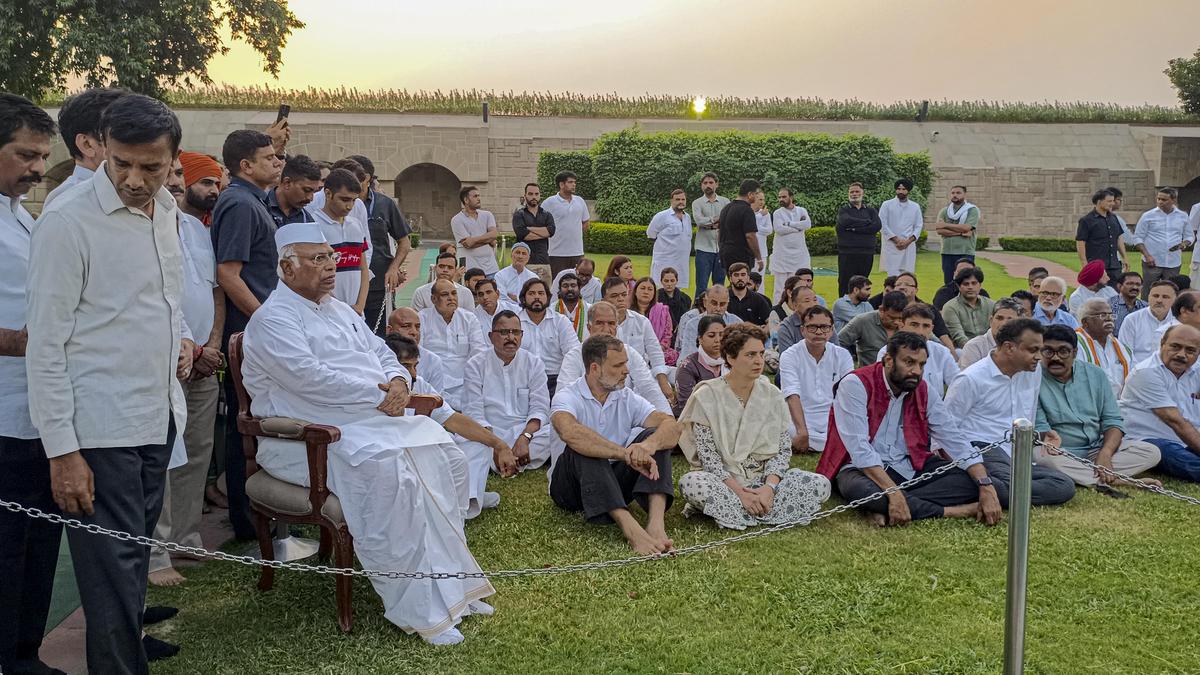
Opposition leaders ‘pray’ at Rajghat for government to ‘get wisdom’ to remove CEC; say protest will continue
Source Entity
India Latest News: Top National Headlines Today & Breaking News | The Hindu
INDIA bloc MPs, led by Rahul and Priyanka Gandhi, marched to the Election Commission to demand the resignation of CEC Gyanesh Kumar. The protest, centered on allegations regarding electoral integrity and the Special Intensive Revision exercise, resulted in a standoff with police and subsequent detention of the leaders.
Opposition Standoff: INDIA Bloc Challenges Election Commission
The political landscape in New Delhi intensified this week as members of the INDIA bloc, spearheaded by Leader of the Opposition Rahul Gandhi and Congress leader Priyanka Gandhi Vadra, organized a high-profile march toward the Election Commission of India (ECI) headquarters. The demonstration served as a direct confrontation with the current electoral administration, specifically targeting Chief Election Commissioner (CEC) Gyanesh Kumar.
The Anatomy of the Protest
As the MPs attempted to navigate the path from Parliament House toward the ECI, they were met with heavy security cordons. Police barricades placed near the NITI Aayog office effectively halted the procession, leading to a spontaneous sit-in (dharna) on the road. The visual imagery of the protest, including cutouts depicting the CEC in specific organizational attire, underscored the deep-seated ideological friction between the opposition alliance and the current election oversight body.
Core Grievances and the SIR Controversy
The protest was not merely a symbolic gesture but was rooted in specific grievances regarding the Special Intensive Revision (SIR) exercise. The opposition has raised vocal concerns about the transparency and methodology of these electoral processes. By challenging the ECI, the INDIA bloc is signaling a broader strategy of questioning the impartiality of constitutional institutions, which they claim have become aligned with the ruling dispensation.
Security Response and Political Polarization
The deployment of significant security forces around the Parliament and ECI precincts highlights the sensitivity of the current political climate. The subsequent detention of the protesting legislators by Delhi Police marks a significant escalation in the standoff. This event reflects a recurring pattern in Indian politics where the sanctity of the electoral process becomes the primary battleground for institutional legitimacy.
Broader Implications for Electoral Integrity
The slogans raised during the protest—such as "Democracy not for sale"—highlight the existential stakes as perceived by the opposition. By demanding the resignation of the CEC, the INDIA bloc is attempting to shift the narrative toward a perceived crisis of confidence in India’s democratic machinery. This move is likely to influence future parliamentary sessions and election campaigning strategies, as the opposition seeks to make institutional reform a central pillar of their platform.
Future Trends and Institutional Trust
Looking ahead, this confrontation suggests that the relationship between the opposition and the Election Commission will remain fraught with tension. The demand for greater transparency in the SIR exercise and the questioning of the ECI's leadership will likely persist as a recurring theme in the national discourse. As both sides dig in, the pressure on the Election Commission to demonstrate absolute neutrality will only grow, potentially reshaping how electoral revisions and oversight are conducted in the future.
Multiple Citing Sources
Verification Required?