China wants to get inside your head
Source Entity
Latest News: Todays Latest News Headlines from India & World | Hindustan Times | Hindustan Times
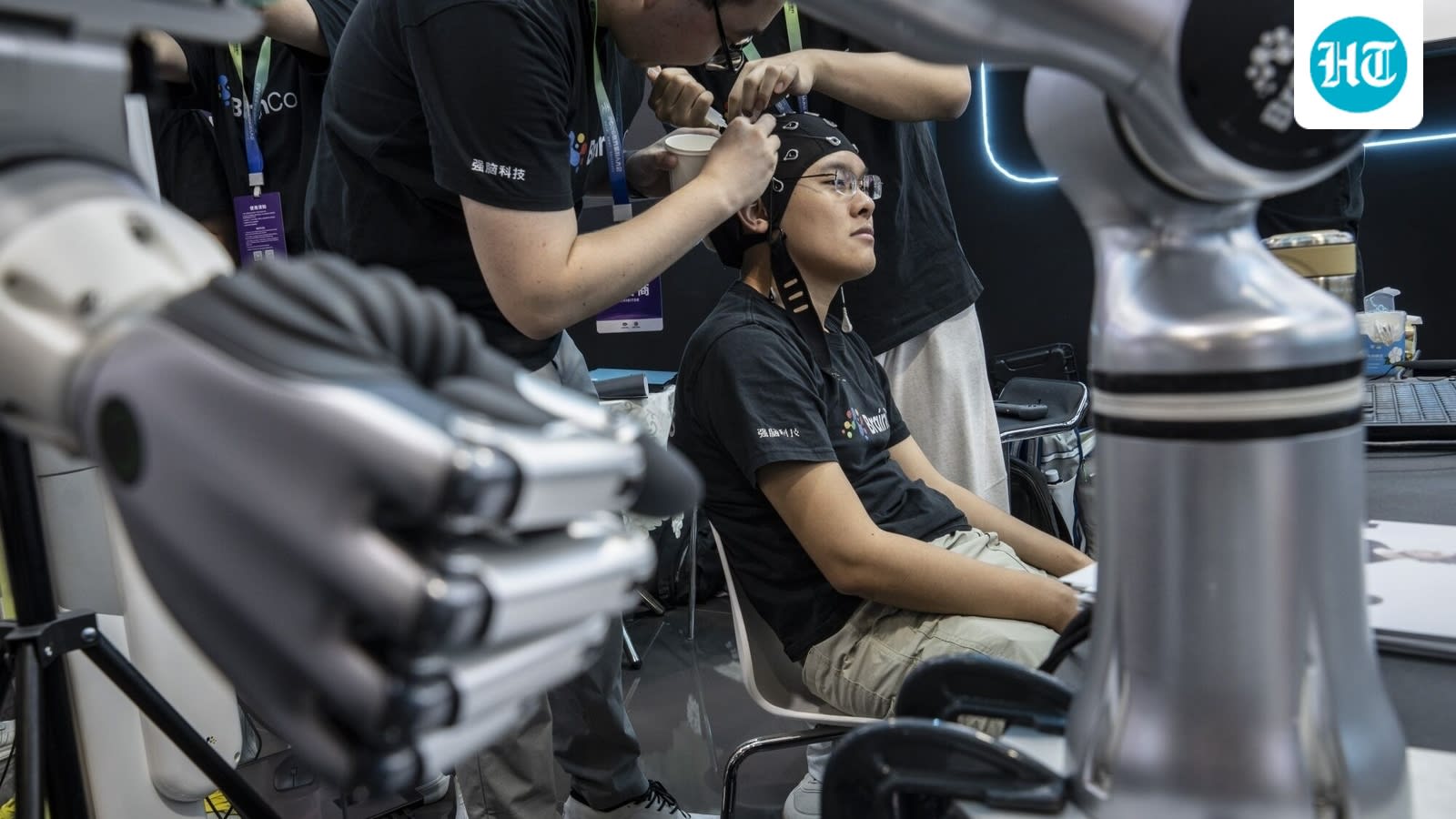
China is aggressively advancing in the neuro-tech sector, with companies like BrainCo showcasing sophisticated bionic limbs and brain-stimulating wearables. This development highlights a growing technological rivalry with the United States in the critical field of brain-computer interfaces.
The Rise of China's Neuro-Tech Ambitions
Recent demonstrations at the World Robot Conference in Beijing have shed light on the rapid progress of Chinese neuro-technology firms, most notably Hangzhou-based BrainCo. By showcasing advanced bionic limbs that operate without invasive surgery and wearable devices designed to manipulate cognitive states, China is signaling a major push into the burgeoning field of brain-computer interfaces (BCI). This development is not merely a localized success for a single startup but represents a broader state-backed ambition to lead in the next frontier of human-machine integration.
Breaking Boundaries in Prosthetics
The technological leap displayed by BrainCo, which allows amputees to perform complex tasks like playing the piano or walking with mechanical limbs that are indistinguishable from biological ones, marks a significant shift in medical accessibility. By removing the requirement for invasive surgery, these devices lower the barrier for entry for patients worldwide. This focus on non-invasive, high-performance prosthetics suggests that Chinese firms are prioritizing user-centric design to gain a competitive edge in both domestic and international medical markets.
Beyond Medicine: Cognitive Enhancement
Perhaps more controversial is the industry's move toward consumer-grade neuro-stimulation. The demonstration of masks that pump low-amplitude electrical micro-currents into the frontal lobe to induce relaxation suggests a future where neuro-tech moves from the hospital to the home. While these devices claim to offer benefits like stress reduction, they also raise significant ethical and regulatory questions. As these technologies become more accessible, the definition of what constitutes a medical device versus a lifestyle product will likely blur, creating a new regulatory landscape that global governments are currently ill-equipped to navigate.
The Geopolitical Tech Rivalry
This surge in neuro-tech development must be viewed through the lens of the intensifying tech rivalry between China and the United States. As both nations race to dominate artificial intelligence and advanced robotics, brain-computer interfaces have emerged as a critical strategic domain. The ability to interface directly with the human brain holds immense potential for military, medical, and industrial applications. China's proactive exhibition of these technologies suggests that Beijing views the mastery of human-computer integration as a pillar of its future economic and national security strategy.
Future Trends and Ethical Implications
The trajectory of BrainCo and similar entities suggests an inevitable trend toward the commercialization of neuro-data. As these devices collect increasingly intimate information about human brain activity, the security and privacy of this data will become a paramount concern. Future developments will likely involve tighter integration with AI models to better interpret neural signals, potentially leading to a new era of human-machine collaboration. However, this progress will necessitate a robust international conversation regarding the ethics of neural data ownership and the potential for cognitive enhancement or manipulation.
Conclusion
China's rapid advancements in neuro-tech, as evidenced by the exhibitions in Beijing, underscore a pivotal shift in global technological power dynamics. While the immediate benefits for amputees and individuals seeking stress relief are tangible, the long-term implications of these brain-computer interfaces extend far beyond medical aid. As the rivalry between global powers continues to push the boundaries of what is possible, the world must prepare for a future where the line between human cognitive processes and digital architecture becomes increasingly thin.
Verification Required?