'People first': India's envoy to US strikes defiant note as Trump's 100% tariffs loom
Source Entity
SUBHADRA SRIVASTAVA
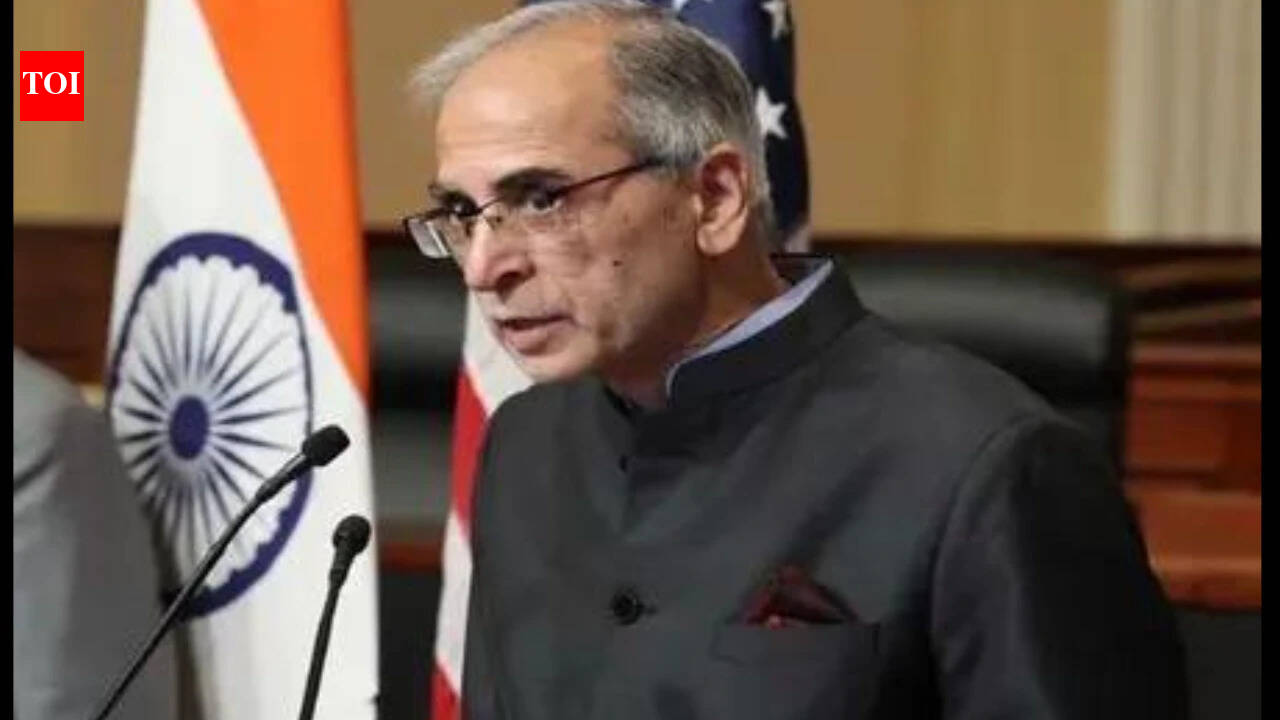
India's Ambassador to the US, Vinay Mohan Kwatra, has defended India's energy policy amid potential 100% US tariffs on nations purchasing Russian oil. The standoff highlights a significant friction point between US foreign policy goals and India's commitment to energy security and affordability.
The Energy Sovereignty Standoff: India and the US
A Diplomatic Defense of National Interest
India’s Ambassador to the United States, Vinay Mohan Kwatra, has recently issued a firm defense of New Delhi’s energy procurement strategies. This response comes in the wake of the US House of Representatives passing legislation that empowers President Donald Trump to impose tariffs of up to 100% on nations that continue to source oil and gas from Russia. By labeling his stance "People First," Ambassador Kwatra emphasized that India’s primary obligation remains the economic welfare and energy security of its own population, rather than alignment with external geopolitical sanctions.
The Mechanics of the Proposed Tariffs
The legislation, which passed the House with a 262-159 vote following its passage in the Senate, represents a significant escalation in US efforts to isolate the Russian energy sector. By targeting major economies like India and China, the bill seeks to leverage the threat of prohibitive tariffs to force a shift in global supply chains. This legislative maneuver places the incoming administration in a position to fundamentally alter the economic relationship between Washington and New Delhi, testing the durability of their strategic partnership.
Balancing Geopolitics and Domestic Needs
India has long maintained that its energy policy is dictated by the need to secure affordable supplies for a rapidly growing economy. For a nation with a large developing population, the volatility of global oil prices is a significant macroeconomic concern. By continuing to purchase Russian energy—often at competitive rates—India has managed to insulate its domestic market from the extreme price spikes seen elsewhere. The current diplomatic friction arises because these pragmatic economic choices directly conflict with the US-led effort to deprive Russia of petrodollars.
Historical Context and Strategic Autonomy
Historically, India has prided itself on 'strategic autonomy,' a policy of maintaining independent foreign relations that prioritize national interest over bloc membership. This approach has allowed India to maintain a unique middle ground, engaging with both the West and other global powers. The current threat of tariffs from the US, however, challenges this autonomy by effectively imposing a cost on India’s sovereign decision-making. This creates a difficult dilemma for diplomats who must balance a critical security partnership with the US against the necessity of stable energy imports.
Future Trends and Economic Implications
Looking ahead, the implementation of these tariffs could lead to a significant realignment of global trade. If the US proceeds with these measures, it may force India to accelerate its transition to renewable energy or diversify its oil suppliers further to avoid punitive economic costs. Conversely, it could lead to a period of heightened trade protectionism that tests the strength of the US-India bilateral relationship. The outcome will likely depend on whether the US views energy compliance as a prerequisite for broader strategic cooperation or whether it allows for the nuanced exceptions that India currently advocates for.
Conclusion: The Path Forward
As the bill moves to President Trump for his signature, the international community is watching closely to see how this 'People First' philosophy will be received in Washington. The tension underscores the complex reality of modern international relations, where domestic economic imperatives often collide with global geopolitical strategies. For now, India remains committed to its current energy trajectory, signaling that while it values its relationship with the US, it will not compromise on the fundamental necessity of affordable energy for its citizens.