Prediction markets are becoming more professionalized, but also harder to beat
Source Entity
US Top News and Analysis
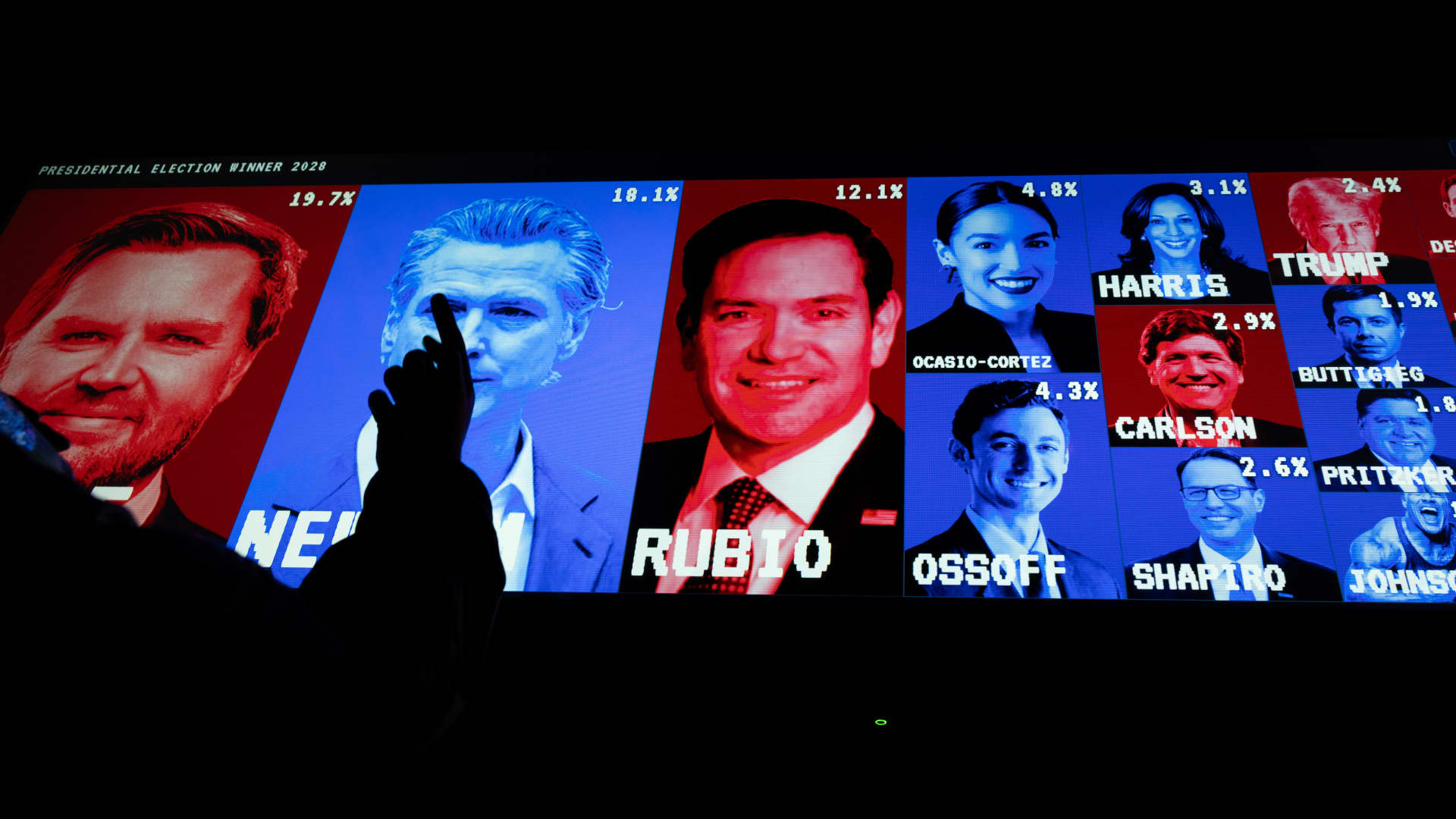
Prediction markets are shifting toward institutionalization, bringing increased liquidity but making it significantly harder for individual traders to maintain profitability. Data shows that a tiny fraction of highly skilled accounts capture the majority of profits by reacting faster to market-moving information.
The Institutionalization of Prediction Markets
The landscape of prediction markets is undergoing a profound transformation as these platforms increasingly court Wall Street and professional financial entities. Once viewed as niche experiments or speculative novelties, platforms like Polymarket are now attracting significant institutional interest. This shift, while bringing deeper liquidity to the markets, is fundamentally altering the competitive environment for all participants involved.
The Erosion of the Individual Trader's Edge
Historically, prediction markets were dominated by retail participants who could capitalize on market inefficiencies and mispricing. However, the entry of professionalized liquidity providers creates a more hostile environment for the average user. As institutional capital enters the fray, the margin for error narrows significantly. The market is becoming increasingly efficient, meaning that simple speculative strategies that once yielded consistent returns are now being rapidly outpaced by sophisticated algorithms and professional traders.
Data-Driven Dominance
Evidence of this shift is starkly visible in recent academic analysis of over $13 billion in trade volume on Polymarket. The findings indicate that a mere 3% of accounts are responsible for capturing roughly 27% of the total dollar profits. These 'persistently skilled' actors distinguish themselves not through luck, but through their ability to process information and adjust market prices toward eventual outcomes with remarkable speed and precision. This concentration of profit highlights a growing disparity between high-frequency, well-resourced entities and the broader user base.
The Role of Speed and Information Arbitrage
At the core of this professionalization is the concept of information arbitrage. Skilled traders are consistently outperforming others by reacting more rapidly to publicly available news. In a market where prices are meant to aggregate information, the speed at which that information is integrated determines the winner. Institutional players, equipped with advanced analytical tools and automated response systems, are effectively setting the pace, leaving little room for slower, manual participants to find profitable entries.
Future Trends and Market Sustainability
Looking ahead, the professionalization of these markets suggests a future where they function more like traditional financial exchanges. While this increases the 'truth-seeking' accuracy of the markets by incorporating more expert analysis and capital, it simultaneously raises the barrier to entry. For the platform operators, this represents a transition toward legitimacy and scale; for the individual trader, it represents a difficult transition from a hobbyist's game to a professional's arena.
Conclusion
In summary, the maturation of prediction markets is a double-edged sword. While it validates the utility of these platforms as serious forecasting tools, it simultaneously eliminates the 'easy' profits that once defined their early stages. As the market continues to evolve, success will likely remain concentrated in the hands of those who possess the technological infrastructure to process news and data at institutional speeds.