Iran offers $30,000 for killing or capturing US soldiers, double if done by women
Source Entity
Latest News: Todays Latest News Headlines from India & World | Hindustan Times | Hindustan Times
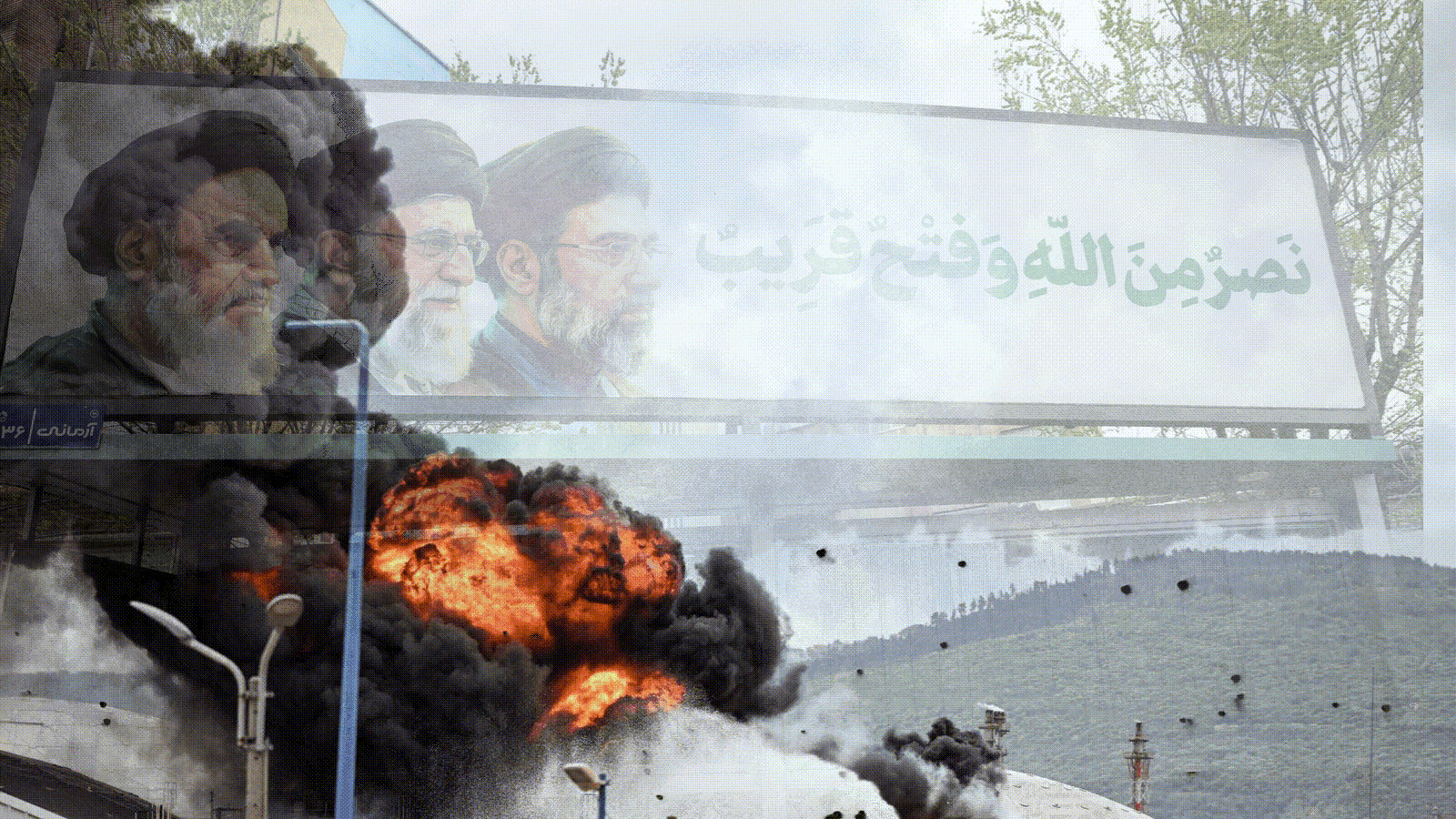
Iran has announced a $30,000 bounty for the killing or capture of U.S. soldiers, with increased rewards for actions taken by women. This move escalates ongoing regional tensions and follows reports of 17 U.S. military fatalities since the conflict began.
Escalation in West Asia: Iran Announces Bounty on U.S. Personnel
A Provocative Strategic Shift
In an alarming development that further destabilizes the volatile West Asia region, Iranian military leadership has reportedly announced a financial bounty for the killing or capture of United States soldiers. According to statements attributed to army chief Habibullah Hatami, the reward is set at $30,000 per individual, with a significant financial incentive doubling that amount for actions carried out by women. This announcement marks a sharp increase in the rhetoric being exchanged between Tehran and Washington, reflecting a deepening hostility that has already resulted in 17 confirmed U.S. military fatalities since the onset of the current conflict.
Historical Context and Regional Tensions
This move occurs against a backdrop of long-standing friction, characterized by periodic exchanges of strikes targeting the interests of both nations. The conflict, which effectively began on February 28, has fundamentally altered the security architecture of the region. A primary point of contention remains the Strait of Hormuz, a critical maritime chokepoint whose status has become a major hurdle in any potential diplomatic peace process. The inability of both parties to resolve maritime navigation rights continues to serve as a catalyst for ongoing military posturing.
The Role of Asymmetric Warfare
By incentivizing the targeting of U.S. forces, Iran appears to be leveraging asymmetric tactics to counter conventional military pressure. The specific mention of a 'bonus' for female operatives suggests an attempt to expand the scope of potential combatants beyond traditional military structures. While there has been no significant deployment of U.S. ground forces within Iran, save for a targeted rescue mission in April for a downed pilot, the declaration serves as a psychological deterrent aimed at discouraging U.S. incursions into Iranian territory.
Diplomatic and Political Complications
Beyond the direct confrontation with the United States, Iran is navigating a complex web of regional disputes. The government is currently locked in a diplomatic standoff with Qatar, a key U.S. ally, regarding the status of missing Iranian pilots. This secondary conflict complicates the broader geopolitical landscape, as it forces regional powers to choose sides, thereby increasing the risk of the conflict spilling over into neighboring territories.
Future Implications and Regional Stability
Looking ahead, the implementation of such a bounty system threatens to permanently derail any prospects for de-escalation. The normalization of placing a price on the heads of foreign military personnel signals a move away from state-to-state conventional conflict toward a more unpredictable, insurgency-style engagement. As both nations continue to trade strikes, the risk of a miscalculation leading to a wider, full-scale regional war remains dangerously high. International observers remain concerned that without a significant diplomatic intervention, the cycle of violence will continue to escalate, further endangering regional maritime trade and global stability.
Verification Required?