Irish datacenters now guzzle 23% of the country's electricity
Source Entity
Hacker News
<a href="https://news.ycombinator.com/item?id=48884322">Comments</a>
The Energy Crisis in the Emerald Isle: Datacenters and the Grid
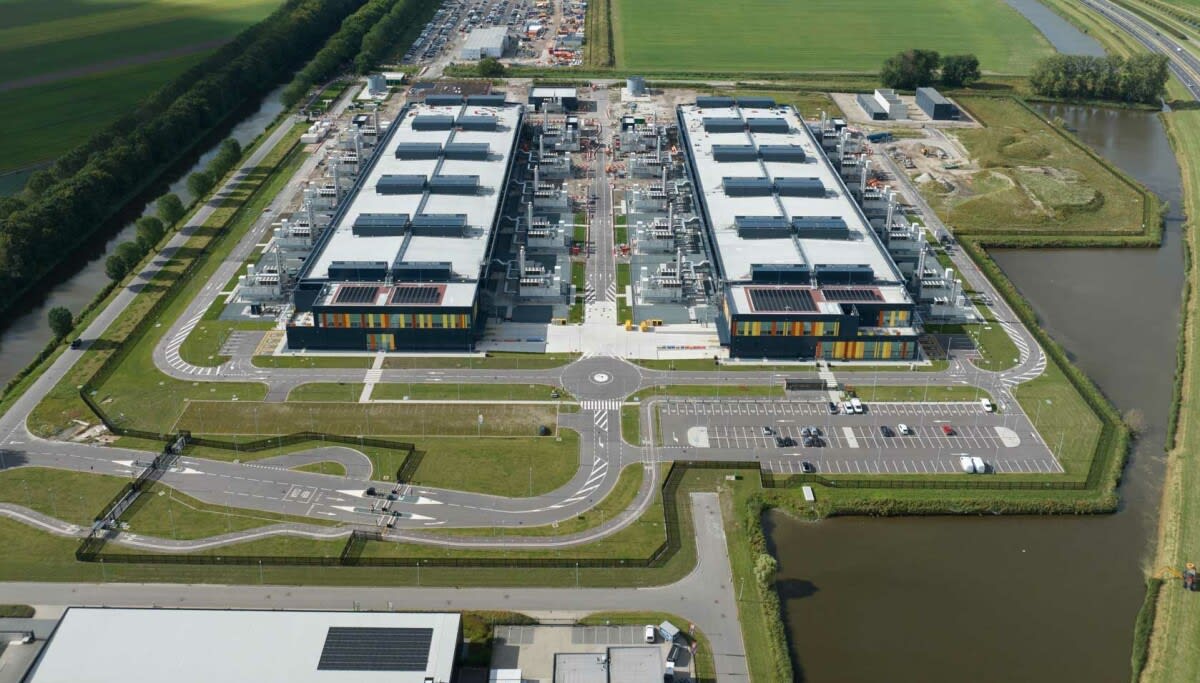
Ireland has long been a global magnet for Big Tech, serving as the European headquarters for giants like Google, Amazon, and Microsoft. However, this economic success has come with a staggering environmental and infrastructural cost. The revelation that datacenters now consume 23% of the country's total electricity is not merely a statistic; it is a warning sign of a systemic imbalance between industrial growth and energy capacity. This surge in power demand threatens to undermine Ireland's national energy security and complicates its transition toward a low-carbon economy.
The "Cluster Effect": Why Ireland Became a Hub
To understand how datacenters reached such a dominant share of the power grid, one must look at the historical convergence of policy and geography. Ireland's traditionally low corporate tax rates made it an irresistible destination for Foreign Direct Investment (FDI). Coupled with a temperate climate that reduces the energy required for cooling server racks and a strategic position as a landing point for transatlantic fiber-optic cables, Dublin became one of the most densely concentrated datacenter hubs in the world. While this brought immense wealth and high-paying jobs, the pace of construction far outstripped the pace of grid modernization.
Grid Instability and the Risk of Brownouts
The sheer volume of electricity required to keep these facilities operational puts immense pressure on EirGrid, the state-owned transmission system operator. When a single sector consumes nearly a quarter of a nation's power, the margin for error during peak demand—such as cold winter evenings—becomes perilously thin. There is a growing concern among policymakers and citizens that the prioritization of industrial power needs could lead to "brownouts" or mandatory load-shedding for residential consumers. This tension highlights a critical conflict between the needs of the global digital economy and the basic utility requirements of the local population.
The AI Catalyst: A Looming Power Surge
The current 23% figure is likely a baseline rather than a peak. The global shift toward Generative AI and Large Language Models (LLMs) is expected to exponentially increase power demands. AI workloads require specialized GPUs that consume significantly more electricity than traditional cloud storage or web hosting servers. As tech companies race to integrate AI into every facet of their service offerings, the energy appetite of Irish datacenters is predicted to climb further, potentially pushing the grid toward a breaking point unless radical changes in energy procurement are implemented.
Climate Contradictions and EU Targets
Ireland is currently caught in a paradox: it aims to be a leader in the green transition while hosting some of the most energy-intensive infrastructure on earth. Under European Union climate mandates, Ireland must aggressively reduce its carbon emissions. However, the reliance on gas-fired power plants to meet the shortfall in electricity created by datacenters threatens to inflate the country's carbon footprint. This creates a political friction point where the government must balance its relationship with the tech sector—a pillar of the GDP—against its legal and ethical obligations to the planet.
Toward a Sustainable Digital Infrastructure
Moving forward, the Irish government and regulatory bodies are likely to move beyond simple permits toward strict energy mandates. This could include requiring new datacenters to provide their own on-site power generation via renewables or mandating the use of waste heat for district heating systems in nearby residential areas. The era of "unlimited growth" for the datacenter sector in Ireland is effectively over; the focus must now shift toward efficiency, circular energy economies, and a diversified geographical distribution of data hubs to prevent a single point of failure for the national grid.
Conclusion
The fact that datacenters consume 23% of Ireland's electricity is a landmark case study in the hidden costs of the cloud. While the digital economy provides immense value, it requires a physical foundation of power and cooling that cannot be ignored. Ireland now stands at a crossroads, needing to redefine its relationship with Big Tech to ensure that the pursuit of digital innovation does not come at the expense of national energy stability and environmental sustainability.