Man’s VRS Rs 65.21 lakh payout taxed as salary; ITAT Pune says it is capital receipt
Source Entity
TOI BUSINESS DESK
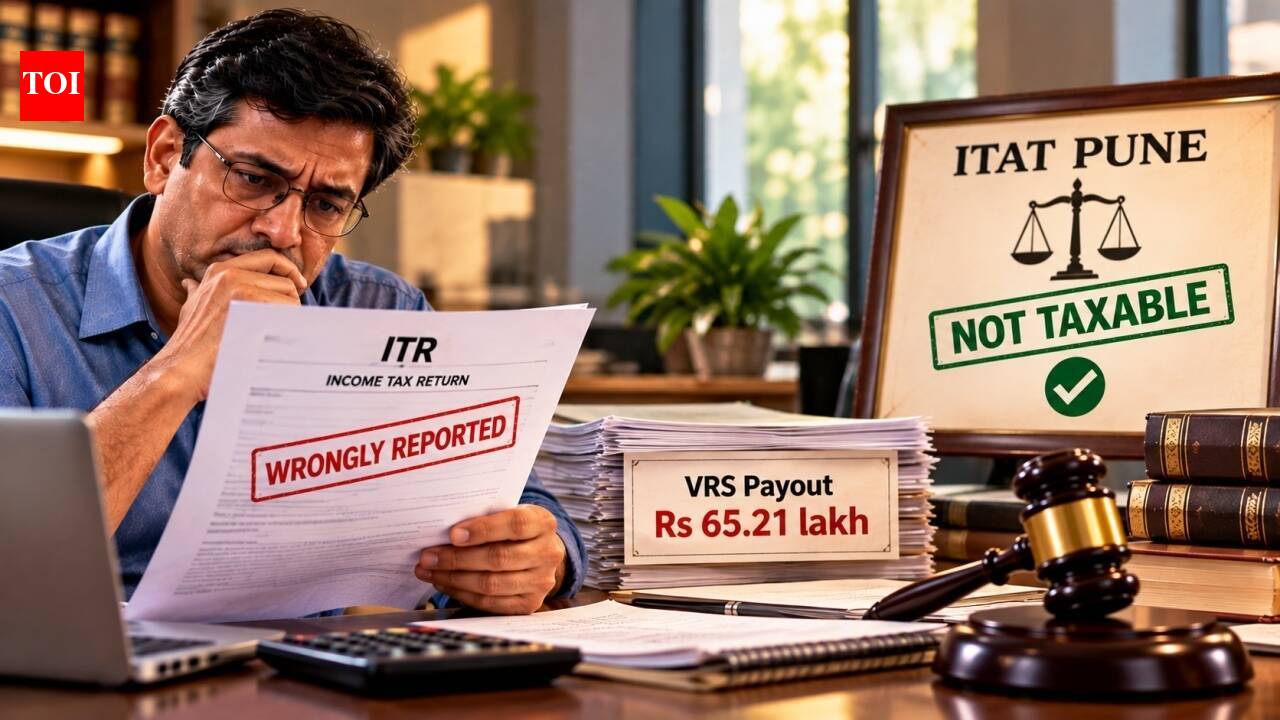
The ITAT Pune has ruled that a Rs 65.21 lakh voluntary retirement payout is a non-taxable capital receipt rather than salary. This decision reverses the initial tax treatment of the payment, which had been incorrectly reported as advance salary.
Understanding the ITAT Pune Ruling on VRS Payouts
The recent decision by the Income Tax Appellate Tribunal (ITAT) Pune regarding a Rs 65.21 lakh voluntary retirement scheme (VRS) payout marks a significant precedent for taxpayers. An employee based in Aurangabad, facing the closure of his plant in FY 2018-19, opted for a financial exit scheme provided by his employer. The total sum of Rs 65,21,105 included various components such as ex-gratia payments, severance pay, and early bid incentives. The core of the dispute arose when the taxpayer initially classified this entire sum as 'advance salary' in his Income Tax Return (ITR), leading to a subsequent denial of tax relief under Section 89.
The Legal Conflict: Salary vs. Capital Receipt
The fundamental issue addressed by the tribunal was the characterization of the payment. While the taxpayer initially treated the funds as salary—likely due to the inclusion of notice period pay—the ITAT Pune looked beyond the terminology to the nature of the transaction. By categorizing the amount as a capital receipt, the tribunal acknowledged that the payment was not compensation for services rendered in the ordinary course of employment, but rather a settlement for the permanent loss of an employment opportunity due to the plant closure.
Implications of the Section 89 Denial
Section 89 of the Income Tax Act is designed to provide relief to taxpayers who receive salary in arrears or in advance, preventing them from suffering a higher tax burden due to the bunching of income. The fact that the taxpayer was initially denied this relief suggests that the tax authorities viewed the lump-sum payment as a standard income event. By reclassifying the receipt as capital, the ITAT has effectively bypassed the need for Section 89 relief entirely, as capital receipts that do not fall under specific taxable heads are generally exempt from income tax.
Historical Context and Taxpayer Behavior
The confusion regarding the classification of VRS payouts is a common issue for employees in the manufacturing sector, particularly during plant shutdowns. Many taxpayers, fearing the implications of an audit or lacking professional guidance, often default to reporting large sums under 'salary' categories in their ITR filings. This case highlights the importance of distinguishing between payments intended to compensate for lost livelihood and those intended as remuneration for past work.
Future Trends in Tax Litigation
This ruling serves as a vital reminder for professionals and taxpayers to seek precise legal characterization of severance packages before filing. As companies continue to restructure or close regional plants, the frequency of such disputes is likely to increase. Future litigants can now leverage the ITAT Pune's reasoning to argue that lump-sum exit payments, when tied to the permanent cessation of a role or business unit, should be viewed through the lens of capital preservation rather than taxable income.
Conclusion
The ITAT Pune’s verdict is a landmark win for the taxpayer, providing much-needed clarity on the taxability of VRS payouts. By confirming that such severance funds are capital receipts, the tribunal has protected the taxpayer from an undue tax liability that would have been triggered by the incorrect classification of the funds as salary. This ruling emphasizes the necessity of understanding the legal nature of financial windfalls and ensures that employees are not unfairly penalized when their employment is terminated through no fault of their own.