At UN, Russia Backs India's Bid For Permanent Security Council Seat
Source Entity
NDTV News Search Records Found 1000
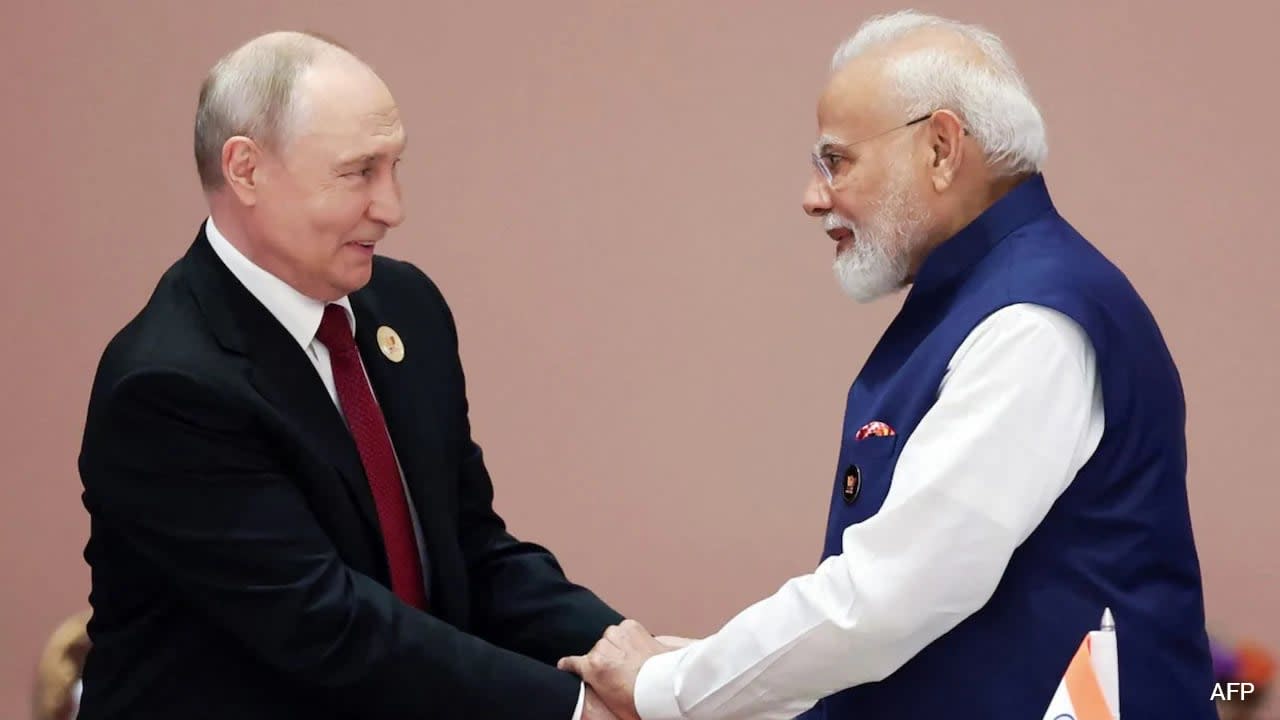
External Affairs Minister S. Jaishankar held high-level meetings with his Russian and Iranian counterparts on the sidelines of the 81st UNGA. He emphasized that groupings like BRICS complement rather than compete with the UN, while addressing critical geopolitical concerns amid new US sanctions.
Diplomatic Engagements at the 81st UNGA
External Affairs Minister S. Jaishankar is currently leading the Indian delegation at the 81st session of the United Nations General Assembly (UNGA) in New York. Amid a packed schedule, his bilateral meetings with Russian Foreign Minister Sergey Lavrov and Iranian Foreign Minister Seyed Abbas Araghchi underscore India's commitment to maintaining strategic autonomy in a complex geopolitical landscape. These discussions, which also included a meeting with US Secretary of State Marco Rubio, took place during a period of heightened scrutiny over global energy markets.
Navigating Sanctions and Energy Diplomacy
The timing of these meetings is particularly significant, occurring shortly after the United States signed a new law imposing sanctions on countries engaged in the purchase of oil and gas from Moscow and Tehran. India’s engagement with both Russia and Iran serves as a delicate balancing act, as New Delhi seeks to protect its energy security interests while navigating the restrictive framework imposed by Washington. These discussions reflect the ongoing challenge of maintaining traditional partnerships while adapting to shifting international regulatory pressures.
Redefining Global Multilateralism
During his time in New York, Minister Jaishankar addressed the perception that emerging power blocs like BRICS are designed to undermine the United Nations. Speaking at an Observer Research Foundation (ORF) event titled ‘Ruptures & Ramparts: Building Bridges for a Changing World,’ he dismissed the notion as a “false choice.” He argued that smaller groupings are inherently supportive of the global order and serve as vehicles to advocate for necessary reforms within the UN structure, rather than functioning as its replacements.
Addressing Regional and Maritime Security
Beyond institutional reform and energy trade, the discussions in New York have touched upon urgent security concerns. With rising attacks on commercial shipping in the Gulf region, the safety of seafarers remains a top priority for the Indian government. By engaging directly with regional powers like Iran, India is actively seeking to address these vulnerabilities, ensuring that the protection of its citizens and the stability of maritime supply chains remain central to its foreign policy agenda.
Looking Ahead: The UNGA Address
As the High-Level Week concludes, the focus shifts to Minister Jaishankar’s scheduled address to the General Assembly. Slotted for the 18th position on Saturday morning, his speech is expected to synthesize India’s vision for a reformed multilateral system. By advocating for a more representative and effective United Nations, India aims to position itself as a bridge-builder, capable of navigating the tensions between established Western alliances and emerging global partnerships.
Conclusion
The diplomatic efforts led by EAM Jaishankar at the 81st UNGA demonstrate India's nuanced approach to contemporary international relations. By balancing engagement with diverse global actors—ranging from the US to Russia and Iran—and championing the reform of the United Nations, India continues to assert its role as a key player in shaping the future of global governance. The emphasis remains on pragmatic cooperation, ensuring that national interests are upheld without compromising on the pursuit of a more equitable world order.
Multiple Citing Sources
Verification Required?