Jamie Dimon responds to him taking up 'White House job' that many think he is set for
Source Entity
TOI TECH DESK
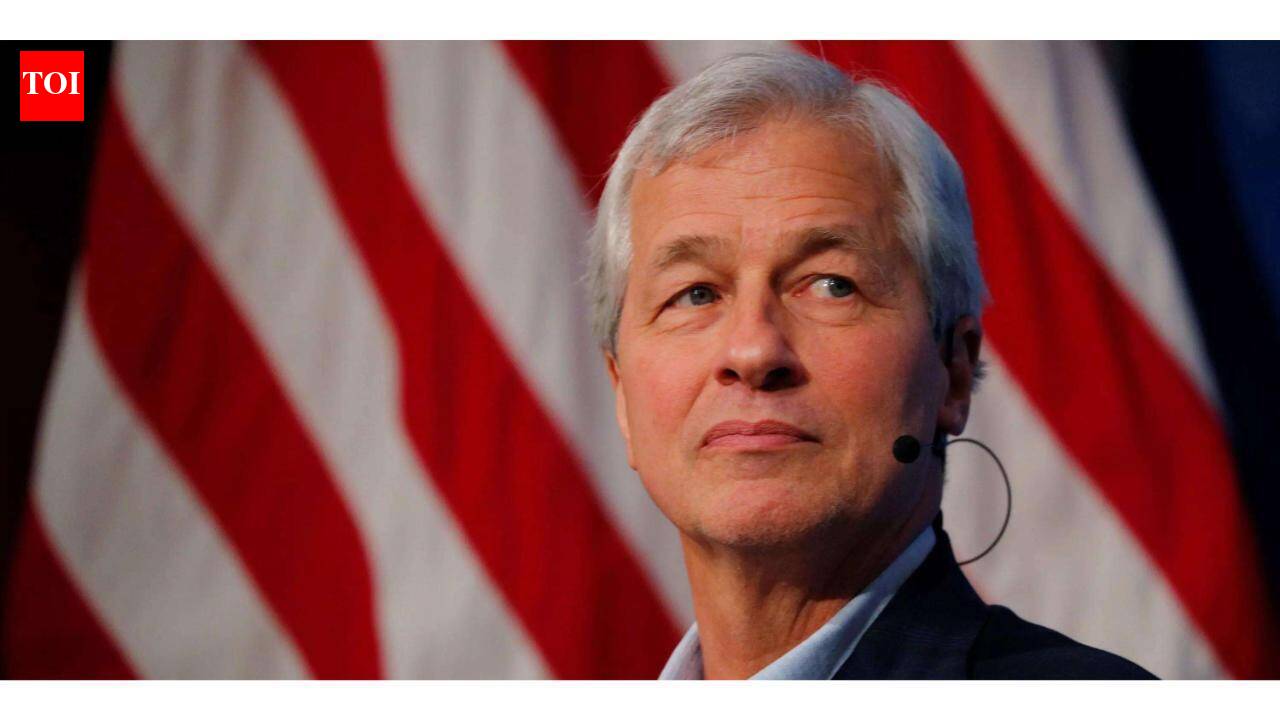
JPMorgan Chase CEO Jamie Dimon has dismissed rumors of pursuing a political career or a White House position, citing his age and health. Instead, he envisions a future in academia or authorship. Dimon also cautioned against over-reliance on global coalitions, pointing to Europe's economic challenges as evidence that governments must prioritize creating competitive business environments to drive growth.
The End of an Era: Jamie Dimon’s Stance on Political Ambitions
For years, financial markets and political circles have speculated that Jamie Dimon, the formidable CEO of JPMorgan Chase, would eventually transition from the helm of the world's largest bank to a high-ranking government position. Given his influence over global capital markets and his frequent consultations with policymakers, the narrative of a 'White House job'—perhaps as Treasury Secretary or a similar economic advisor—has become a recurring theme. However, Dimon has recently provided a definitive reality check to these expectations, explicitly dismissing the possibility of a political career.
Prioritizing Health and Legacy over Power
Dimon's refusal to enter the political arena is grounded in personal pragmatism. By citing age and health as the primary barriers, Dimon signals a shift in priority from the high-stress environment of public office to a more reflective phase of his life. Rather than navigating the volatility of Washington D.C., he has expressed a desire to pivot toward intellectual contributions, specifically through writing books or teaching. This trajectory is common among titan-level executives who seek to codify their leadership philosophies and mentor the next generation of financial leaders, effectively trading political power for a lasting academic and literary legacy.
The Critique of Global Coalitions
Beyond his personal career trajectory, Dimon used this platform to offer a sharp critique of current global economic strategies. In his response to Canadian Prime Minister Mark Carney, Dimon challenged the efficacy of broad global coalitions. He argued that while the concept of international cooperation is appealing, the actual results are often underwhelming. By pointing to Europe's recent economic struggles, Dimon suggests that an over-reliance on multilateral agreements can lead to stagnation if not paired with aggressive, national-level economic competitiveness.
Fostering Competitive Business Environments
Central to Dimon's analysis is the belief that governments must stop relying on the 'safety net' of coalitions and instead focus on creating 'attractive business environments.' From his perspective, growth is not a byproduct of diplomatic cooperation but a result of strategic policy choices that incentivize investment, reduce bureaucratic friction, and encourage innovation. This perspective reflects a classic market-driven approach, suggesting that the most successful nations will be those that prioritize the ease of doing business over the optics of global alignment.
Broader Implications for Global Finance
Dimon's comments carry significant weight because they reflect the mindset of one of the most powerful individuals in global finance. His skepticism toward global coalitions may signal a broader trend where major financial institutions push for more sovereign-focused, competitive economic policies. As he prepares for an eventual exit from JPMorgan, his move toward academia may allow him to influence economic policy from the outside, providing a theoretical framework for the 'business-first' governance he advocates.
Conclusion
Jamie Dimon's dismissal of political aspirations marks a turning point in the narrative surrounding his leadership. By rejecting the allure of the White House and critiquing the current state of global economic cooperation, Dimon has reaffirmed his commitment to market pragmatism over political ambition. His future transition into teaching and writing will likely ensure that his views on business-friendly governance continue to shape economic discourse long after he leaves the CEO's office.