There Is No AI (It's Just People) with Jaron Lanier
Source Entity
Hacker News
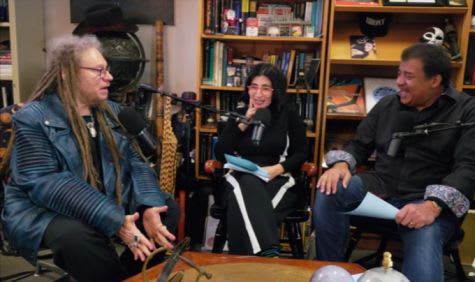
Pioneering technologist Jaron Lanier discusses his unique role as a critic within Microsoft, advocating for more independent voices in the tech industry. He challenges the perception of AI, suggesting it is fundamentally driven by human input rather than autonomous intelligence.
The Human Element in Artificial Intelligence
Jaron Lanier, widely recognized as the father of virtual reality, recently engaged in a candid discussion regarding the nature of artificial intelligence and the structure of corporate accountability in the tech sector. Lanier posits a provocative thesis: that the current iteration of 'AI' is not a sentient entity but rather a complex system fundamentally reliant on human labor and input. This perspective challenges the prevailing narrative of autonomous machine intelligence, shifting the focus back to the human architects and data contributors who underpin these systems.
The Role of the Corporate Critic
Central to Lanier’s commentary is his unique professional arrangement with Microsoft. As a high-level technologist, he maintains a contractual agreement that explicitly allows him to criticize the company’s direction and technology, provided he clarifies that his views do not represent the organization at large. This model of internal dissent is rare in Silicon Valley, yet Lanier suggests it is a necessary evolution for companies wielding significant global influence. By maintaining this autonomy, he acts as a check against the 'groupthink' that often permeates large-scale technological development.
Beyond the Buzzwords: The 'No AI' Thesis
Lanier’s assertion that 'there is no AI' serves as a critical deconstruction of industry marketing. By framing AI as 'just people,' he highlights the often-invisible human labor required to train models, moderate content, and curate datasets. This insight is crucial for understanding the ethical implications of AI development. If we acknowledge that these systems are reflections of human choices and labor, we must also demand greater accountability for the societal biases and economic impacts these systems generate.
Expanding the Model of Dissent
Lanier expresses a desire to see this model of independent, critical roles become the industry standard. He references figures like Vint Cerf as examples of leaders who maintain intellectual independence within large tech structures. This movement toward institutionalized dissent could serve as a guardrail against the rapid, unchecked deployment of new technologies that may have unforeseen consequences on public discourse, privacy, and the labor market.
Future Implications for Tech Governance
As AI continues to be integrated into the fabric of daily life, the tension between corporate profit motives and public interest will only intensify. Lanier’s approach suggests that the solution is not necessarily to halt progress, but to integrate critical human oversight directly into the corporate hierarchy. If more tech giants adopted a culture that encourages vocal, public-facing internal critics, the industry might move toward a more transparent and responsible developmental lifecycle.
Conclusion
In summary, Jaron Lanier’s insights offer a necessary corrective to the hype surrounding artificial intelligence. By emphasizing the human foundation of these technologies and advocating for protected spaces for internal dissent, he provides a roadmap for a more accountable tech future. His perspective invites us to look past the veneer of automation and engage directly with the human decisions that shape the future of our digital world.